
 Shop
 My
 Custom




Why I Created This Macro Calculator

So many of you have asked me about how many calories, carbs, protein, and fat to eat. Calculating the macronutrients you need can be overwhelming and time-consuming, which is why I created this free macro calculator to make it easy!
Just input a few details and it will tell you exactly what to do. And what makes my calculator different from most is that you can choose what lifestyle you want to follow — a keto diet, a more flexible low carb approach, or simply balanced healthy eating.
I’ve followed all these at some point, and found this calculator helped to confirm I’m on the right track. Try it with me!

How To Calculate Macros
Calculating macros starts with the base daily calories you burn (based on factors like age, gender, and weight) and then factors in other variables (like activity level and your fitness goals for fat loss or muscle building). If you want to learn more about macros and how to calculate them manually, check out my article about macros here.
My free macro calculator will calculate your calorie intake, plus the macro breakdown that’s right for you. Just fill out the form below and hit “Calculate Macros”!
Free Macro Calculator
Have questions? Check the FAQ below!
Free Printable: Low Carb & Keto Food List
Get It Now
Free Macro Calculator
Answers To Your Macro Questions
I get a lot of questions about macros and this calculator. Feel free to leave me a note in the comments at the bottom of this page, but first, check this FAQ because I’ve got a lot of info right here already!
What are macros?
Macros is short for macronutrients: fat, protein and carbohydrates. These are the building blocks of the foods we eat. All of them have calories: Fat has 9 calories per gram, and protein and carbs have 4 calories per gram. You can read more about how macros work here.
There are also micronutrients, which are vitamins and minerals essential for balanced nutrition, but macro calculators (including mine) don’t typically cover these.
Do I have to calculate my macros, or can I just eat the right foods?
You don’t have to calculate your macros, and many people have success by simply eating healthier or low carb foods. (In fact, after years of doing so, I decided not to anymore.)
But, if you are just starting out, have not achieved the results you want by just choosing your foods, are already relatively close to goal weight, or want to follow a more strict low carb or keto diet, then getting your exact macro requirements can help you. And my free macro calculator is the easiest way to get them!
What is the difference between low carb, keto, and balanced in the macro calculator?
Your calorie needs are generally the same regardless of how you eat, but the macro split of carbs, fat, and protein will vary depending on the lifestyle you choose:
- Keto: My macro calculator will set your carbohydrates to a limited amount first, because the primary goal is ketosis and restricting carbohydrates will achieve this. (The default is 25 grams, but you can change it.) Then, it calculates your protein requirement, which is based on your lean body mass and a protein ratio based on your activity level. The remaining calories come from fat.
- Low carb: The calculator will determine your macros by taking recommended percentages of total calories from fat, protein, and carbohydrates. You can adjust the percentages if you want to.
- Balanced: This works the same as low carb (above), but defaults to a higher percentage of carbs. Again, you can change it to your preference.
How many calories should I eat a day?
Calories to eat daily is one of the main components of my macro calculator. It calculates your Total Daily Energy Expenditure (TDEE) first, which is the number of calories you burn per day. This is determined by your gender, age, height, weight, and activity level.
I use the Mifflin-St. Jeor equation for calculating Basal Metabolic Rate (BMR), which is the number of calories you burn for basic, life-sustaining functions. According to this study on PubMed, this formula has been shown to be most accurate. Then, your activity level combined with BMR determines your TDEE.
If you want to lose weight or build muscle, the macro calculator adds or subtracts calories to/from your TDEE to help you reach your goals.
How are macros calculated? Are you sure the calculation is right?
Please see the question above about calories to eat in a day — the answer is the same.
What percentages should I select in the macro calculator?
My free macro calculator will automatically pre-fill recommendations for your lifestyle — keto, low carb, or balanced — based on your inputs and activity level. You can modify them to suit your needs if you want to, but if you’re unsure, these macronutrient ratios are a good place to start:
- Keto: 25g net carbs (typically between 20g and 30g is a good starting point), 0.6 protein ratio if you are sedentary (higher if you are active)
- Low carb: 40-70% fat, 15-30% protein, 15-30% net carbs
- Balanced: 20-35% fat, 15-30% protein, 40-60% net carbs
Should I count total carbs or net carbs?
I recommend using net carbs for the foods you’re eating, because this makes it easier to fit in plenty of vegetables, so you get enough fiber and micronutrients.
However, some people get better results counting total carbs. If you’re diabetic, the ADA recommends counting total carbs as well. You can learn more about total carbs vs. net carbs here.
What is the protein ratio?
The protein ratio determines your ideal protein intake per day. It’s calculated based on grams of protein in relation to your lean body weight (meaning everything except fat), so it depends on your body composition (how much fat, muscle, bone, and water your body has).
My macro calculator only uses protein ratio for a keto diet; other diets use percentages instead. For keto, while it’s important to meet your daily protein goal, too much can kick you out of ketosis.
Below are the general guidelines for protein ratio based on activity level, according to this NIH article. But you don’t have to figure this out — my free macro calculator automatically does it for you!
- Sedentary – 0.6g to 0.8g protein per pound of lean body mass
- Lightly Active – 0.7g to 0.9g protein per pound of lean body mass
- Moderately Active – 0.8g to 1g protein per pound of lean body mass
- Very Active – 1.0 to 1.2g protein per pound of lean body mass
- Athlete / Body Builder – 1.2g protein per pound of lean body mass
Notice that each has a range, and you can experiment with what feels comfortable for you and gets you the results you want.
What about your lean body mass — how do you figure out what that is? This is the weight of everything in your body that isn’t fat. The calculator will automatically figure this out, but you can also manually calculate it:
Lean Body Mass = Your Total Weight – (Your Total Weight X Your Body Fat %)
How do I get my body fat percentage?
Body fat percentage can be calculated using various scanners (like a DEXA scan at a gym or doctor’s office) for the highest accuracy, or you can measure using skin calipers at home.
The most convenient way, though, is to simply compare how you look visually to these pictures:
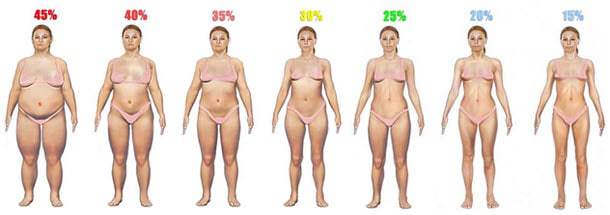
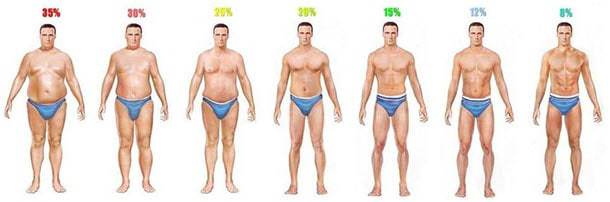
Image source: https://www.builtlean.com/2012/09/24/body-fat-percentage-men-women/
What does the “Deficit” or “Gain” in the macro calculator mean?
This is the percentage of calories that you want to go over or under what you’d need to maintain your weight, depending on your goal.
- To lose fat: Select “Lose Fat” as your goal, then specify the deficit. The generally accepted calorie deficit for weight loss is 500-750 calories per day, which typically amounts to 10-15% of calories you burn (sources here and here). With a higher deficit, you might lack nutrients or lose muscle mass.
- To gain muscle: Select “Gain Muscle” as your goal, then specify the gain (calorie surplus %). Eating more calories than you need will result in weight gain, which will be in the form of muscle growth if you do strength training. I don’t recommend a surplus higher than 10%, because more can result in fat gain.
- To maintain your weight: Select “Maintain Weight” as your goal in the free macro calculator. You won’t need a deficit or gain.
Where can I find macro-friendly recipes?
I’ve got over 1000 healthy, macro-friendly recipes right here on Wholesome Yum! You can find my low carb recipes here and my balanced healthy recipes here. Some of them overlap, of course.
Where can I get support or specific questions about my macros answered?
The best place to get support is in my healthy support group here. It’s FREE and I’d love to have you in our community!

Use My Meal Plan To Hit Your Macros
So, how do you plan your meals to actually meet your macros? I designed my Wholesome Yum App to do just that. You can also reference my low carb food list if you’re aiming to follow low carb or keto macros.
The app will calculate your macros for you based on the lifestyle you choose — low carb, keto, or balanced — and build a custom weekly meal plan to help you reach your goals! 🎯
You can customize the plan with over 1000 easy, healthy recipes, and it’ll even build your grocery list for you. Plus, it works on your iPhone, Android, or desktop computer, and will sync across your devices, so it’s ready wherever and whenever you are.














212 Comments
Susan
0Do you have this app for a phone ?
Wholesome Yum M
0Hi Susan, I don’t have an app, but you can access the website via phone.
Judith Costa
0OK I get the carb 5% and protein 23% and I am puzzled about the fat 72%…what do I need to be eating here? I do not eat much dairy or coconut products but use flax oil,olive oil and ghee (blood type O) so what are your suggestions for eating fat? I am eating low-carb 25-30 carbs a day for 1 month now. I used a ketosis strip and my result is just a trace. I have lost about 10 lbs so far.
Wholesome Yum M
0Hi Judith, Remember to use fat as a lever. You don’t have to eat that much fat if you are satisfied with where you are at. If you are still hungry and are looking for higher fat snacks, consider things like olives, bacon, nuts, avocado, or even adding small amounts of butter to veggies or steaks during your meal times.
Michele
0I have been on the Keto diet for 3 months, it was slow at first, but I have lost a lot of inches and a total of 12 pounds. I used your calculator, and I try hard to stay within the net carbs, but I have been taking in less calories than the 1880 that was recommended. If I take in fewer calories, do you usually tend to see a quicker decline in weight loss?
Wholesome Yum M
0Hi Michele, Calories don’t directly correlate with rate of weight loss. If you are looking to lose weight, then I suggest looking at the amount of fat you are consuming in a day and possibly adjust that. With keto, fat is used as a lever. You don’t have to eat the full amount of fat listed in your macros if you don’t need it. Eat until you are no longer hungry.
Darlene
0I don’t understand how to count Macros on low carb diet
Wholesome Yum M
0Hi Darlene, This article on starting keto may help you to understand macros better.
Tatyana
0Thank you for your work. I am from Russia. Articles and recipes help me.
Judy
0For a keto diet, if you are sedentary this is recommended:
25g net carbs – typically between 20g and 30g is a good starting point
0.6 protein ratio – this will be higher if you are active
Is this 25 net carbs the total carb count for one day? How do you get the total protein count for the day?
Wholesome Yum M
0Hi Judy, If you scroll down under the calculator it gives you a breakdown of your macronutrient needs each day. I hope this helps!
KAT Whitehouse
0I put my figures into the calculator and…..where’s the answer? I went up and down this page and don’t see the calculated macros. Thank you.
Wholesome Yum M
0Hi Kat, Try the page again. The results should jump you to the bottom of the page with ratios and daily caloric intake set for you.
Victoria
0Hello. I am new to the Keto diet. This has article and the macro calculator has been very informative. I just feel a little confused… what is the best way to figure out what 143g of fat, 93g of protein, and 25g of carbs really means? As in, how do determine what foods and portions are within those limits? Keto is sounding very difficult and laborious and I’m starting to reconsider following the diet lol (just joking, kind of). Any help would be very much appreciated! Thank you.
Wholesome Yum M
0Hi Victoria, Beginning any new diet is a lot of work! There are a lot of rules to learn and foods to acclimate to. This is also the case with keto or low carb. Start by reading labels and learning how many carbs are in the foods you eat. If your goal is to get to 25g carbs or less a day, then work on that first. It will become easier as you go, please be patient and stick with it! Here is a Keto Food List Guide to help you learn which whole foods to add to your day.
Patricia Walker
0I have several issues, high BP, High cholesterol, and low level Diabetes. I am 226 lbs and only 5’3″ and 54 yrs old. Not very active due to arthritis in my feet but I am trying to work through the pain. I want to lose at least 50 maybe even 75 pounds. I need to see results or I get very down on myself. Do you have any great ideas that could help me, I have started a journal of food intake and carbs, cals, protein etc. I think that I am going to try and aim for 1200-1300 cal’s per day, I am not a huge carb fan, ie rice, potato or pasta so I tend to do protean some veg and my major fault fruit. Is there anything you would suggest in helping me get started and sticking with a plan
Maya | Wholesome Yum
0Hi Patricia, Welcome! I hope you’ll join our keto support group here to get the support you need.
Fred
0How do I figure if it’s protein or fat? I can’t figure out what to eat fat or protein. I don’t cook. My girlfriend cooks for me and she is a vegetarian.
Wholesome Yum M
0Hi Fred, Have you read this article yet? Low Carb & Keto Diet Plan: How to Start a Low Carb Diet
Bernice
0I would like to try the keto lifestyle but am not a breakfast or lunch person I usually eat a cheese stick at 11am the lunch/dinner around 4/430
Then do some snacks at 7ish all of which I’m told is a no no
Can you please send some helpful advice.
II really would like to eat more healthy and cut out sugar
Thank you
Wholesome Yum A
0Hi Bernice, many people have had this kind of problem in our facebook low carb support group — that would be a good place to bring your questions!
Cheryl Fafara
0Hi I just did the Keto quiz to calculate my macros and this is how it came out. Fats are 138 g
Protein is 123g and carbs is 25. I am wondering what my calorie count would be daily with these stats?
Wholesome Yum M
0Hi Cheryl, The calories are listed above the macros chart. I hope that helps!
Jen
0I don’t understand how I would calculate net carbs from my foods? If I am eating something that says total carbs 2%………is that in a serving? And how does that relate to net carbs?
Wholesome Yum M
0Hi Jen, I have an article here that explains everything you need to know about net carbs here.
Mimi
0Can I freeze food on this Keto diet? I’m just starting.
Wholesome Yum A
0Absolutely, Mimi! I have notes for freezing on every recipe — check each one for specific directions.
Nancy Alexander
0New to this! I have a hard time eating SO MANY fats. If I consume less, can’t my body just burn my extra fat that I’m hoping to lose anyway?
Wholesome Yum A
0Hi Nancy, consider fat a “lever” on a keto diet. You don’t have to meet your entire fat requirement as long as you’re eating enough to feel full.
Diana
0i have to be doing something really wrong i cant get macros right…it says I can have 175 calories a day…im kinda lost with it …I weight 168 just do light work ……want to loose fat weight ..stop when im at 120….body fat 36% protein 6%…can someone help me put the right info in so im doing this right…
Wholesome Yum A
0Hi Diana, macros questions would be great to bring to our low carb Facebook support group!
Danielle Reiss
0Hi! What is the best app for tracking macros. Rather than seeing percentages I’d like to see total fat, total carbs, total calories, etc. for the day. Thank you!
Wholesome Yum A
0Hi Danielle, there are many options! I’d recommend asking our low carb support group to get more answers.
Karen
0This is really great and helpful info. Thank you for the guidance. How does someone know if low carb or keto is better for them?
Wholesome Yum A
0Hi Karen, it depends on many different factors and your personal preferences. That would be a great question to bring to our low carb support group.
Cynthia Chataway
0My biggest challenge is to calculate the fat. I don’t know what 110 grams of fat looks like. Do you have a fat chart with easy totals?
Wholesome Yum A
0Hi Cynthia, I don’t have that because fat macros look different for a lot of people. Many of my recipes are low carb, high fat, but you can also supplement with fat bombs or other fat sources alongside or in your food. This would be a great question to ask our low carb support group!
Amber Walker
0It says I am supposed to eat 72% fat. What foods do I eat primarily. The proteins are only 22%. I understand the net carbs, and proteins, but not sure what foods to eat to get 72% of fat. Thanks.
Wholesome Yum
0Hi Amber, I have a comprehensive keto food list that could give you some ideas on which fats to use.