
 Shop
 My
 Custom




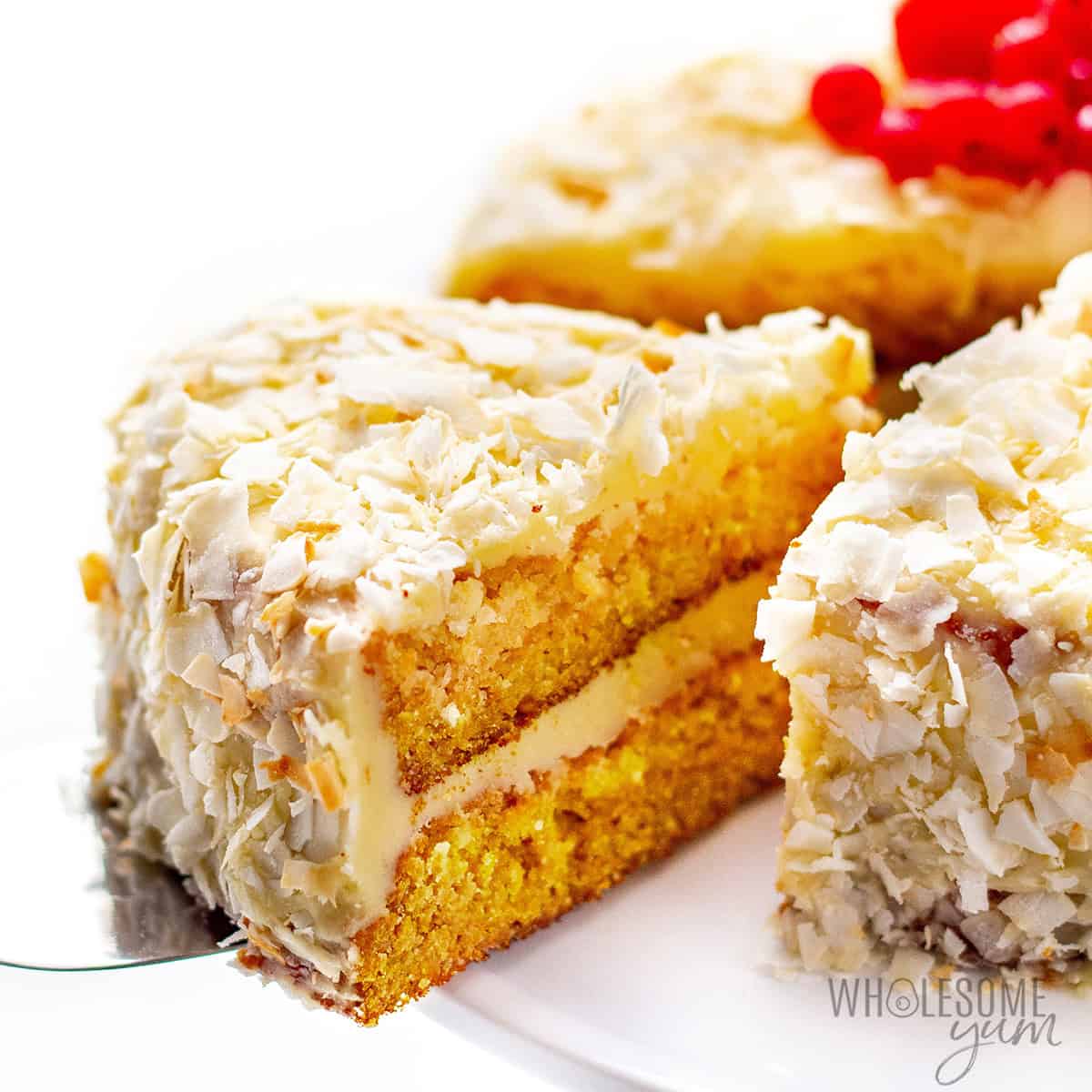
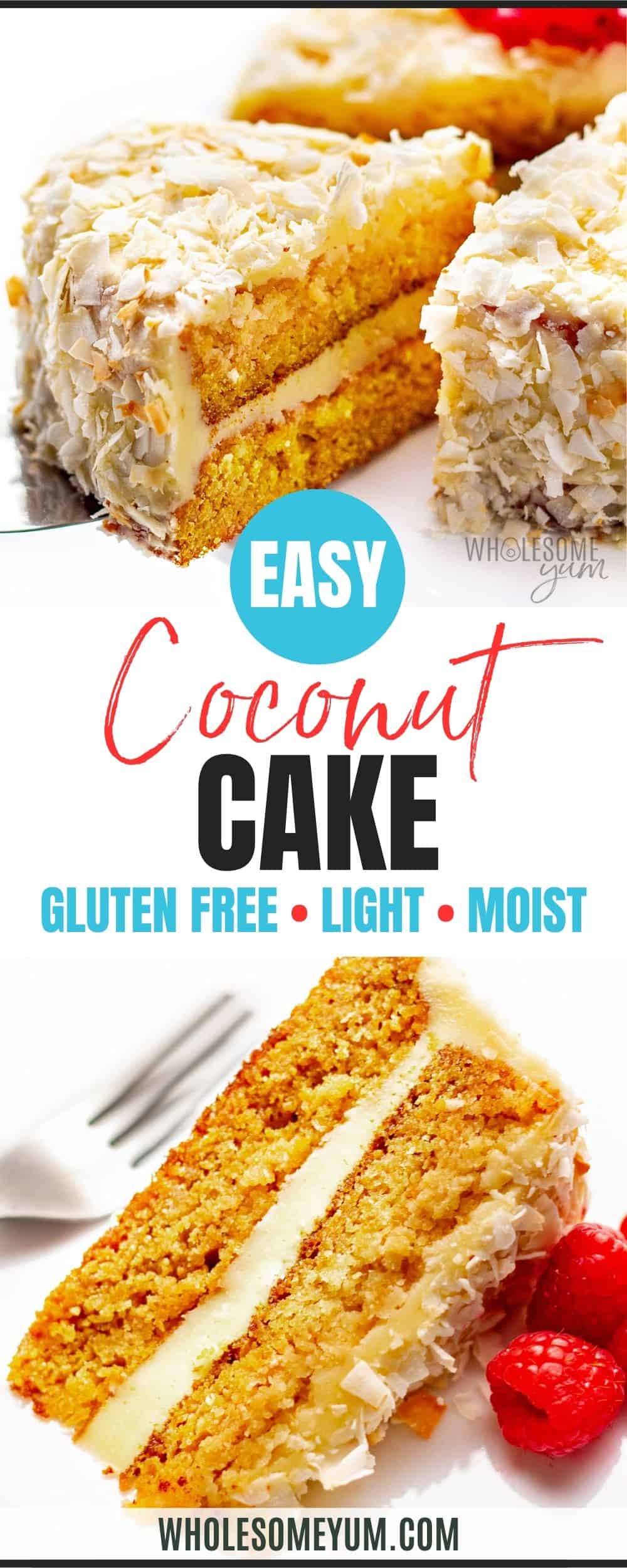
The Coconut Cake To Make When You Want To Impress

I’ll be honest, I usually prefer almond flour for baking, but I know it’s not for everyone. I made this coconut cake after many of you asked me for a nut-free cake option. It turned out to be amazing for so many other reasons:
- Bright coconut flavor in every bite – If you love my coconut cream pie, this coconut cake has that same creamy, toasty flavor, in the form of a buttery crumb cake instead of a creamy pie. I made sure the coconut actually shines here, so unlike some recipes, mine uses actual coconut flour — not just all-purpose flour with coconut flour. That means it’s naturally gluten free, too.
- Rich and moist, never dense – Coconut flour recipes can be tricky and can easily dry out, because this flour absorbs moisture like a sponge. This one bakes up super tender, thanks to the sweetener I use and a couple special wet ingredients that lock in moisture.
- Perfect for celebrations, or just because – I’ve served this at birthdays, Mother’s Day, and other family gatherings, but it’s just as good with an afternoon coffee.
Truly, this is the best coconut cake recipe I’ve ever tried. If you’re ready for a soft, coconut-filled dessert that’s sure to impress, this is the one. Make it with me!

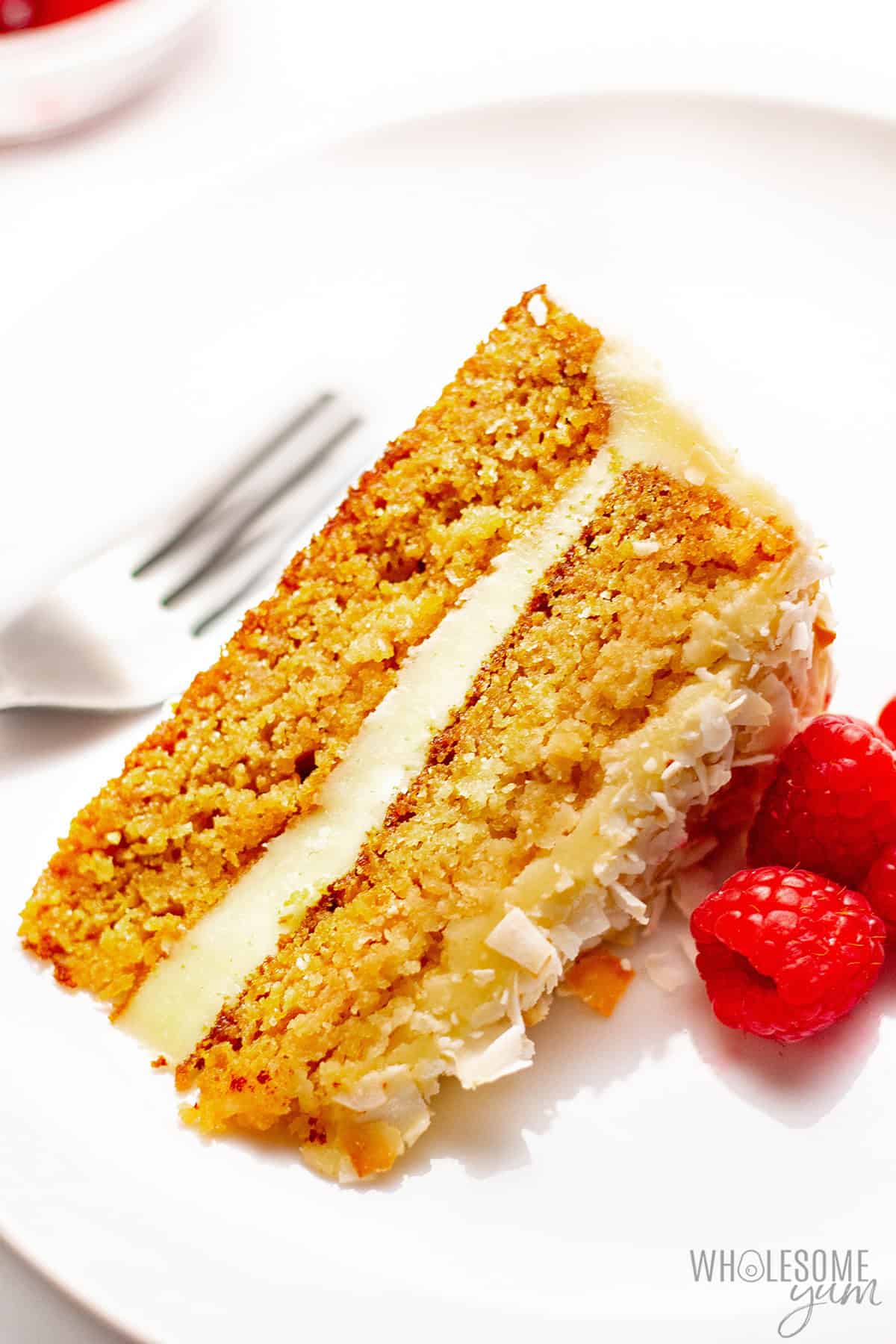
“This recipe is easy and oh so delicious! Truly decadent and satisfying. My friends couldn’t believe it was sugar free! I’ve made it three times now, so I’ve almost memorized it! I love using the springform pans and being able to bake both layers at the same time. If you like coconut, this cake is for you!”
-Dottie
Ingredients & Substitutions
Here I explain the best ingredients for my coconut cake recipe, what each one does, and substitution options. For measurements, see the recipe card.
- Coconut Flour – I use my Wholesome Yum Coconut Flour for its superfine texture and right level of moisture, because some brands absorb too much or too little. Because coconut flour absorbs a lot of moisture, it’s not interchangeable with other flours, and even different brands can affect the texture.
- Besti Monk Fruit Allulose Blend – This granulated sweetener tastes just like sugar with no aftertaste, but the most important part is that it keeps the cake moist. If you choose another sweetener, check my sweetener conversion chart for accurate amount, but know that the result will be more dry. The only one that will turn out the same is plain allulose.
- Coconut Milk Beverage – Use the pourable kind from a carton, not canned coconut milk. The canned version is too thick. Unsweetened almond milk , hemp milk, or regular milk works too, but I prefer coconut milk since it’s a coconut cake.
- Unsalted Butter – For richness and flavor. Just make sure it’s softened, so it creams easily with the sweetener. If you need a dairy-free option, butter-flavored coconut oil is the closest swap.
- Eggs – Flax eggs may work as a substitute, but I don’t usually recommend replacing this many eggs with them, as it’s tough to get the same level of structure. Let me know how it goes if you try!
- Sour Cream – My secret ingredient to lock in moisture! Plain Greek yogurt or dairy-free coconut yogurt make good alternatives.
- Vanilla Extract – Just a splash makes the whole cake taste warmer and richer. If you want more coconut flavor, swap with coconut extract instead.
- Baking Powder – Coconut flour cake won’t rise as much as a regular one with white flour, but baking powder still helps. Make sure it’s fresh, or it won’t work well.
- Buttercream Frosting – I make my own sugar free buttercream frosting and scale it to 18 servings, so there’s plenty for this cake. You can also use my cream cheese frosting recipe and add a splash of coconut extract for a coconut cream cheese frosting.
- Unsweetened Coconut Flakes – Optional, but I love them sprinkled all over the cake. They add texture and look so pretty. You can also use shredded coconut if you prefer.
- Sea Salt – To bring out the sweetness.
FREE 5-Ingredient Recipe EBook
GET IT NOW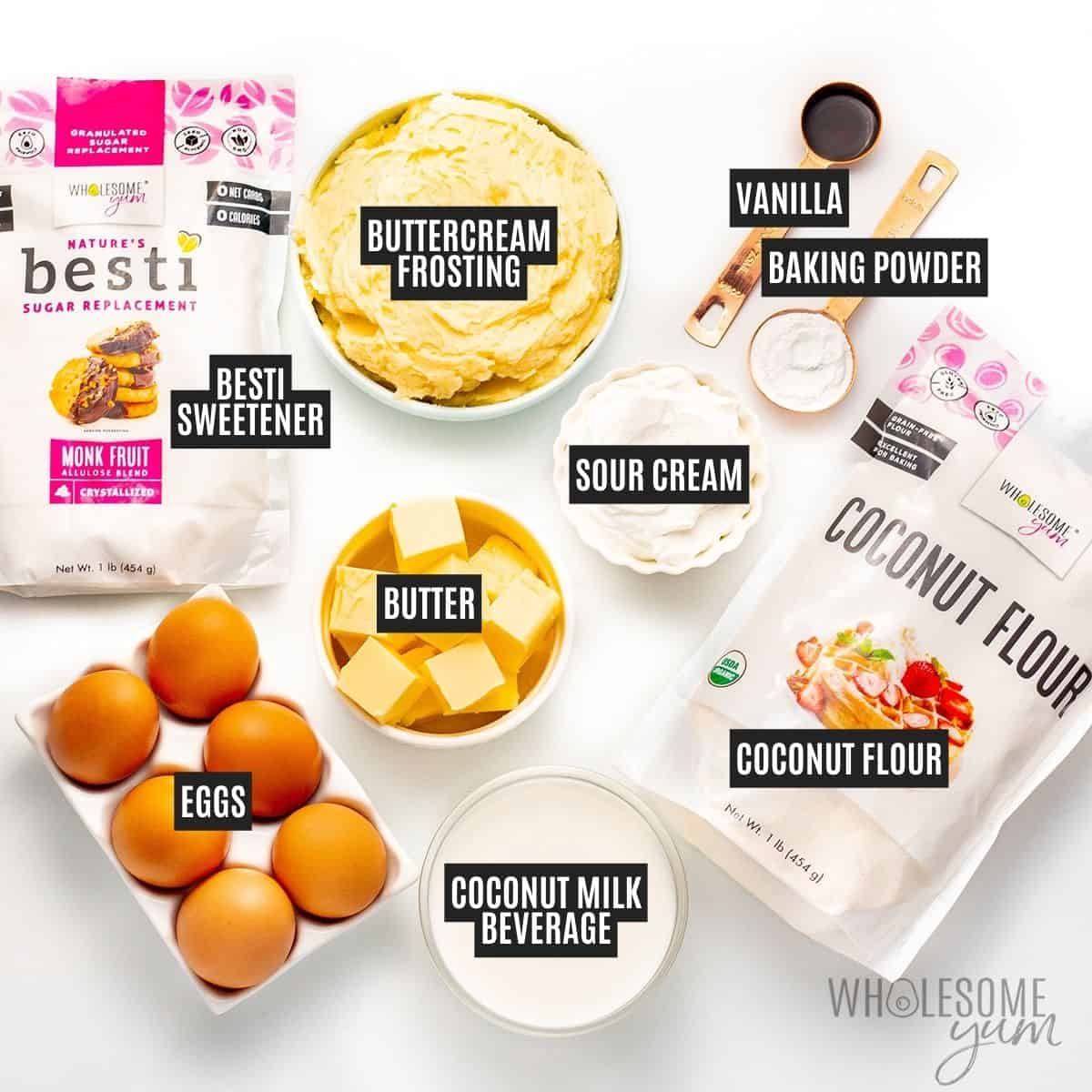
How To Make Coconut Cake
I have step-by-step photos here to help you visualize the recipe. For full instructions with amounts and temperatures, see the recipe card.
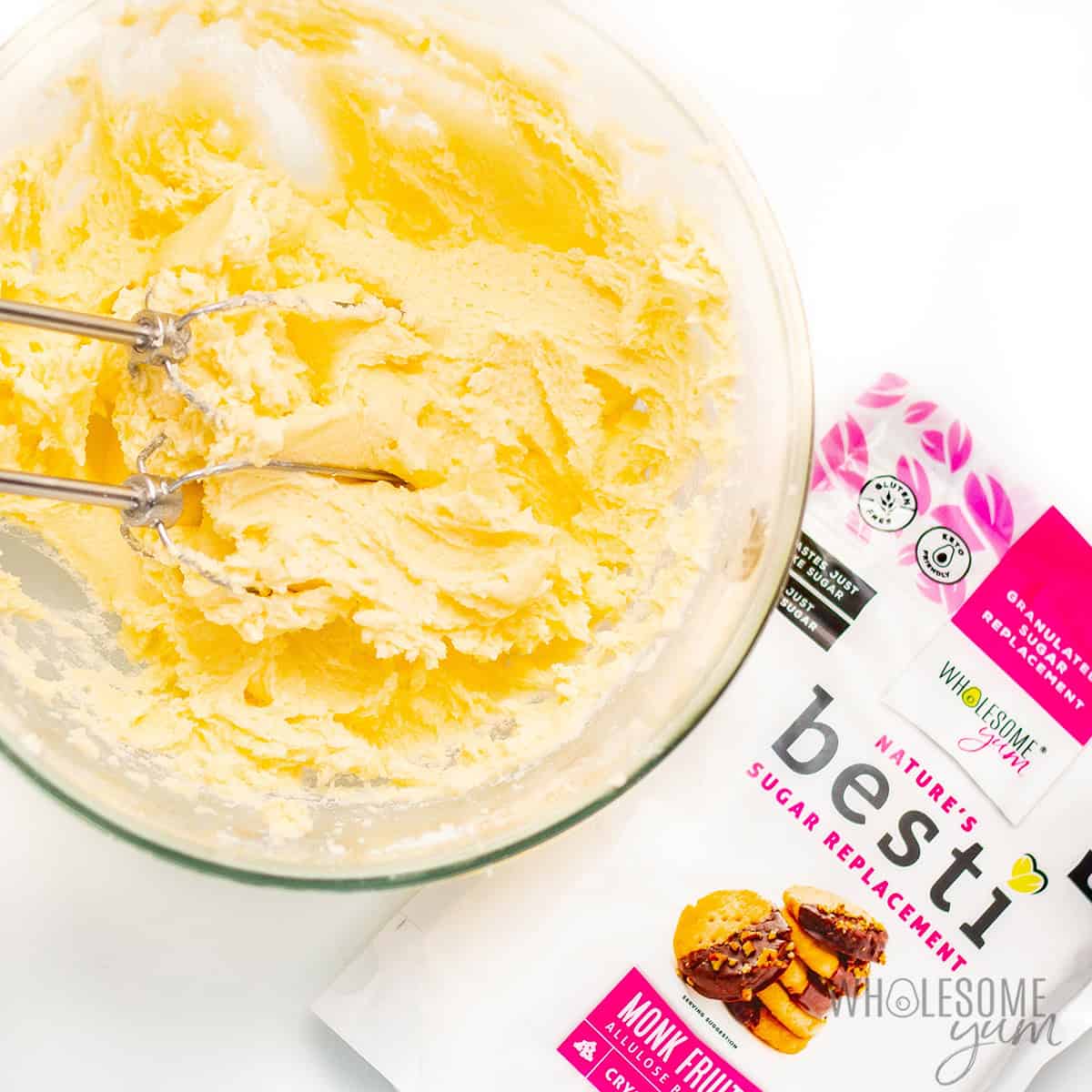
- Cream the butter and Besti. In a large mixing bowl, use a hand mixer to beat them together until light and fluffy.
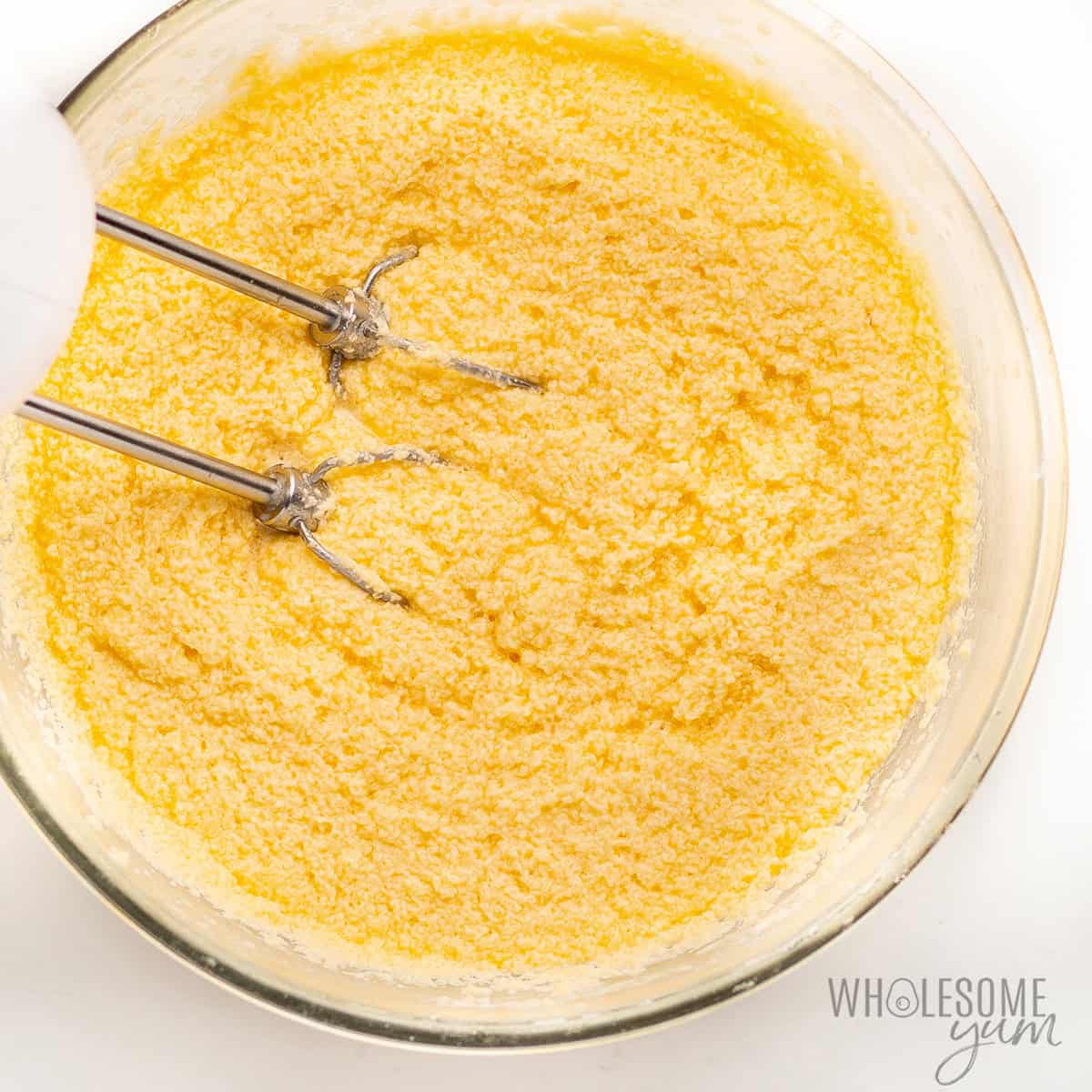
- Add the wet ingredients. Beat in the eggs one at a time, then mix in the coconut milk, sour cream, and vanilla.
- Add the dry ingredients. Beat in the coconut flour, baking powder, and salt on low speed, until smooth. Scrape the sides of the bowl as needed.
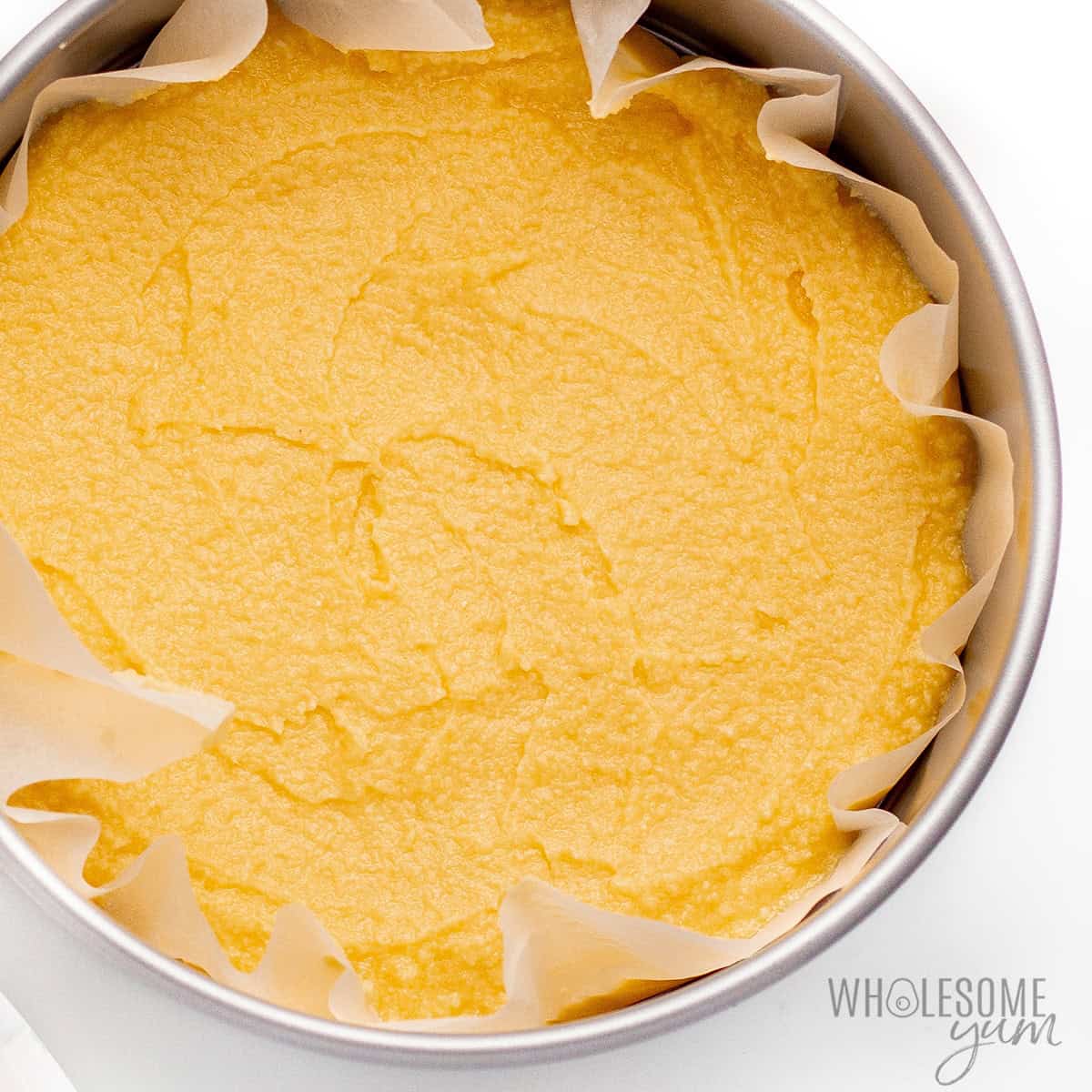
- Bake the layers. Divide the mixture between two 9-inch cake pans lined with parchment paper, and smooth the tops. (I lined up the sides in my pictures below, but it usually works fine when I just line the bottom using these parchment paper rounds.)
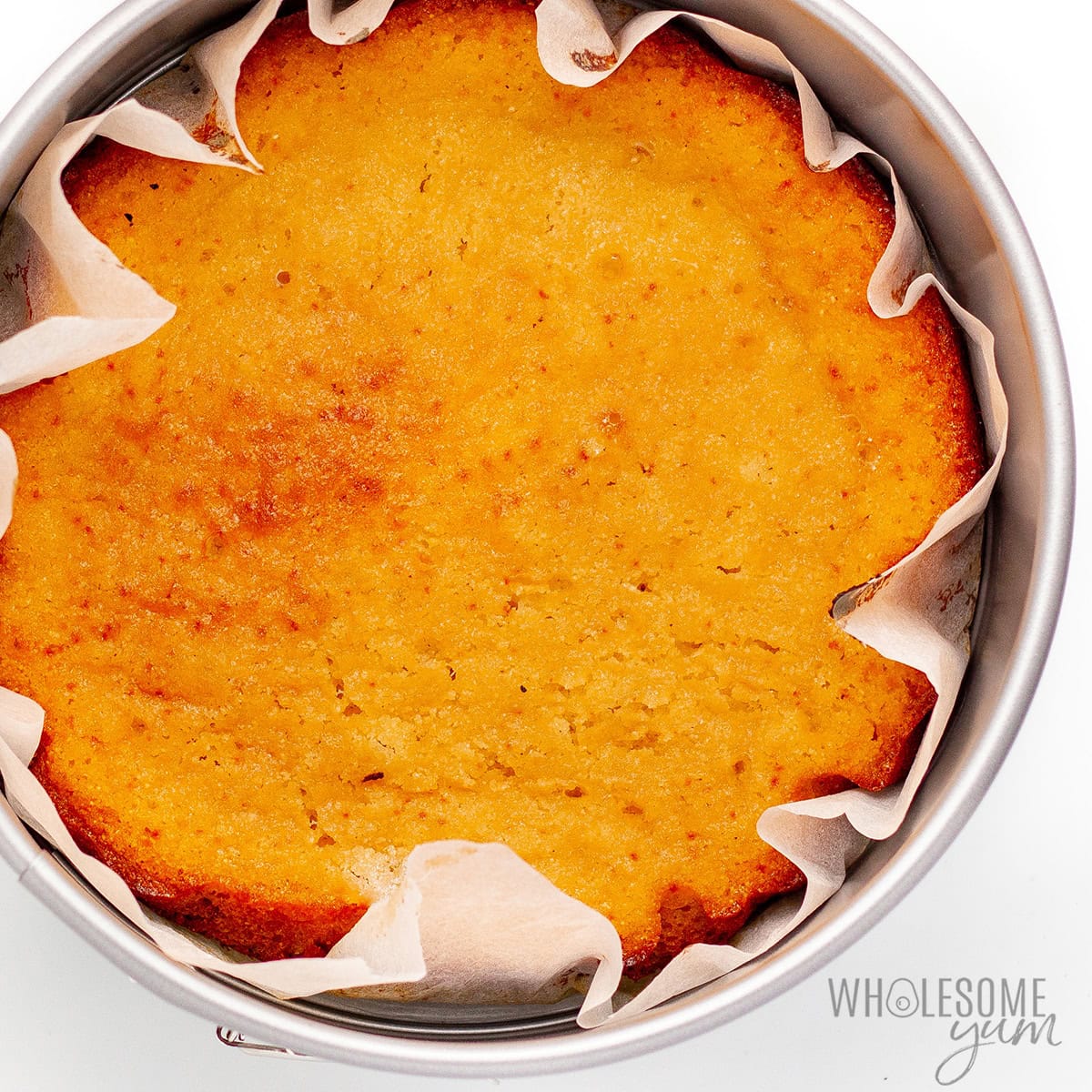
- Bake the cakes. They’re ready when a toothpick inserted in the center comes out clean and the top is golden brown. Let the layers cool completely before removing from the pans.
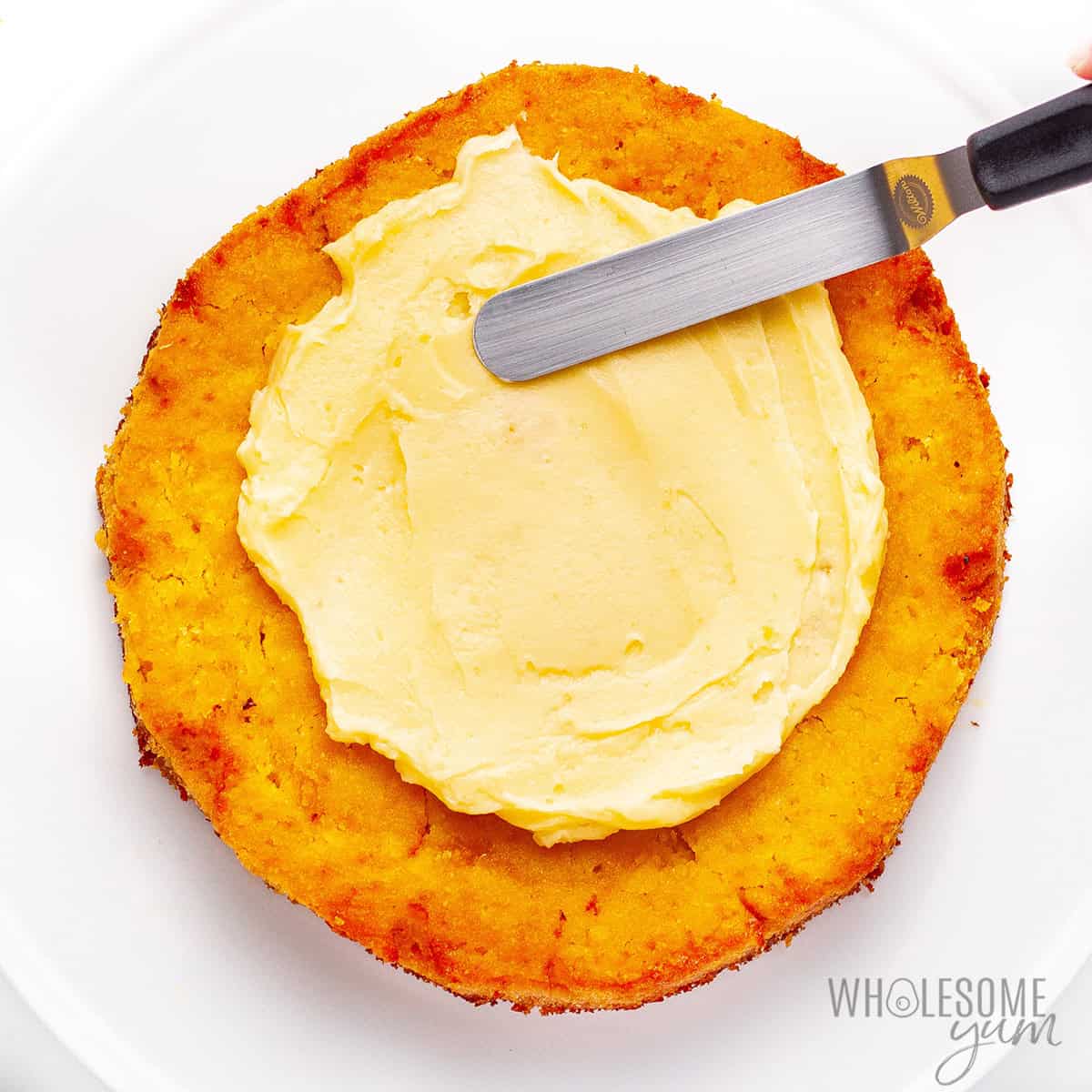
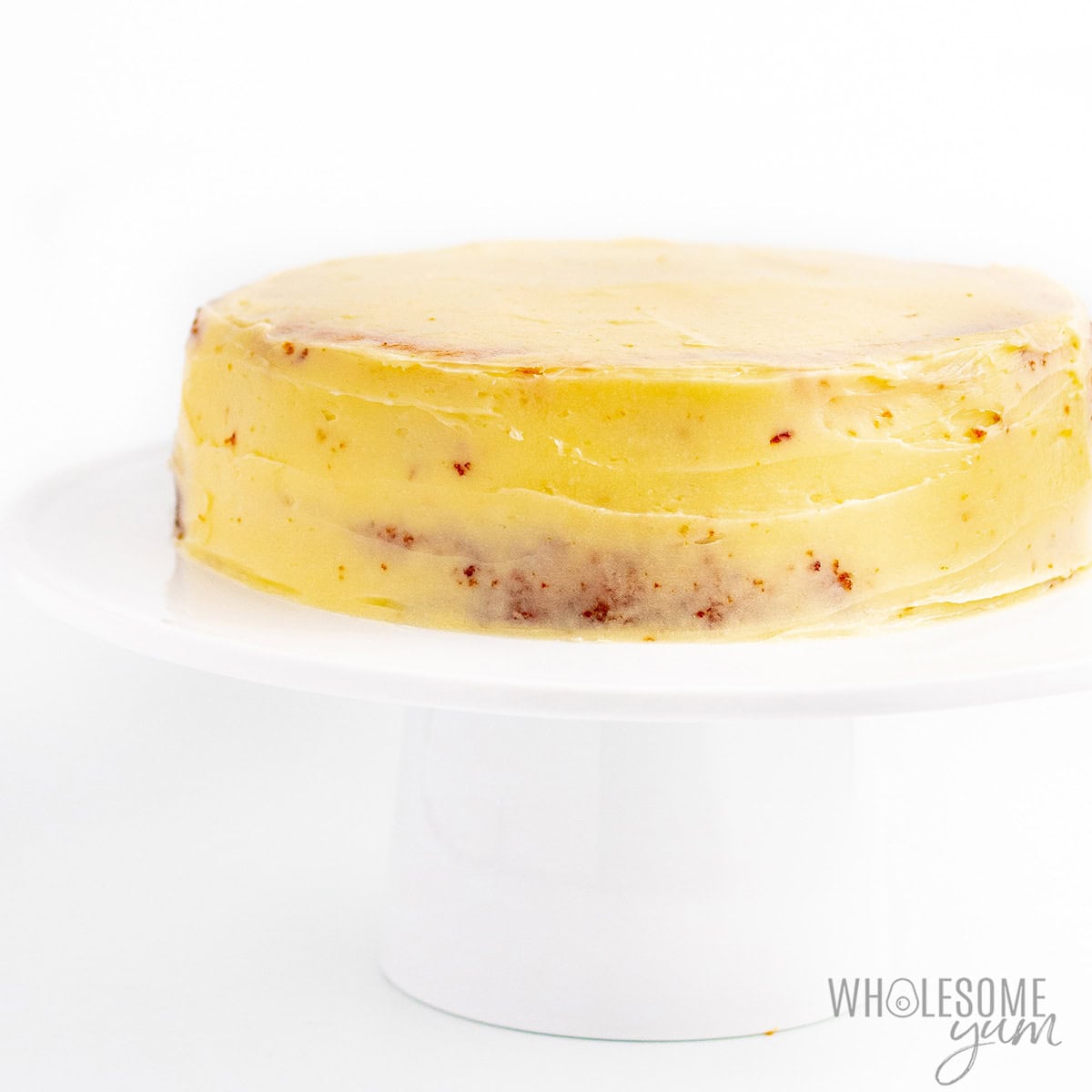
- Frost the cake. Place one layer on a wire rack or cake stand, and frost the top. Add the second cake on top and frost both the side of the cake and the top of the cake. I like to keep the frosting light, so the coconut flavor shines.
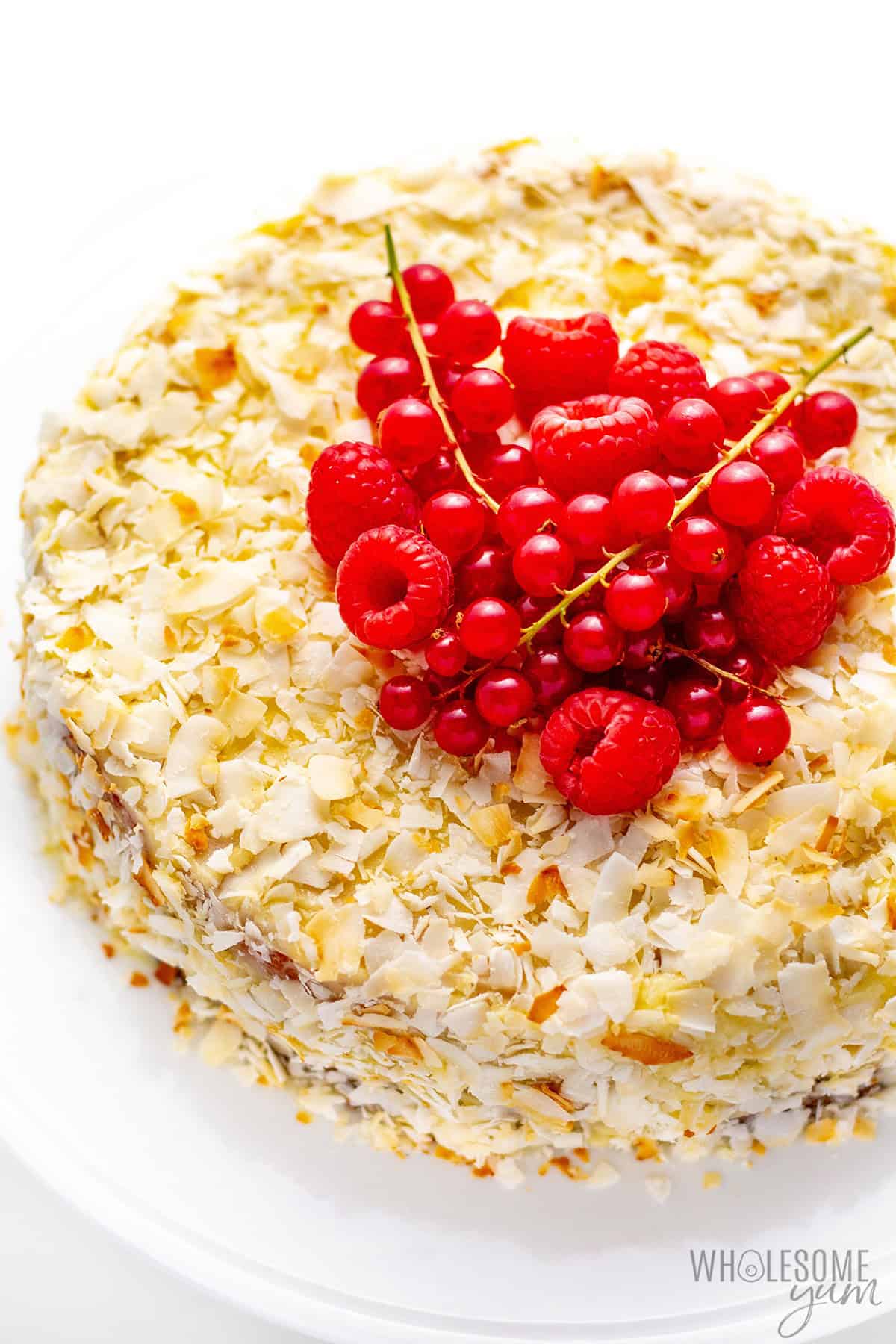
- Optional: Finish with toasted coconut. Toast the coconut flakes in a skillet until golden. Press them onto the outside of the cake. I added some currants and raspberries on my coconut cake for a pretty garnish!

My Tips For The Best Texture
- Use room-temperature ingredients. They blend more smoothly, and prevent your creamed butter from solidifying.
- Shortcuts to warm your ingredients quickly: For the butter, fill a stainless steel bowl with boiling water and let it sit to warm up. Empty, dry, and place upside down over your stick of butter on a plate, which will soften it fast. For the eggs, I just place them in a bowl of warm water.
- Measure the coconut flour carefully. It soaks up a lot of moisture, so even a little extra can make the cake dense. I spoon it into the cup and level it off instead of scooping straight from the bag.
- I recommend using springform pans for this coconut cake recipe. They make releasing the layers so much easier, and keep the edges clean. These are the ones I use.
- Let the cake cool completely before frosting. Not only does this set the texture, the frosting will melt if you apply it when it’s still warm.
- I recommend a thin layer of frosting. This cake is already very rich, so a little goes a long way.
Coconut Flour Cake (Super Moist)
 By
My easy coconut cake recipe is super moist, naturally sweetened, and packed with coconut flavor. Perfect for any special occasion!


Instructions
[ See step photos See my tips ]Tap on the times in the instructions to start a kitchen timer.
-
Preheat the oven to 350 degrees F (176 degrees C). Line the bottom of two 9-inch springform pans with parchment paper.
-
In a large bowl, use a hand mixer at medium speed to beat together the butter and Besti sweetener for 3 minutes, until light in color and fluffy.
-
Beat in the eggs, one at a time. Beat in the coconut milk, sour cream, and vanilla extract.
-
Beat in the coconut flour, baking powder, and salt, until the batter is smooth.
-
Divide the dough among the two lined cake pans and smooth the tops with a spatula. Bake for about 20 minutes, swapping the pan oven positions halfway through if needed, until an inserted toothpick comes out clean. Let coconut flour cake layers cool completely in the pans before removing.
-
Make the keto buttercream frosting according to the instructions here. Before you begin, adjust the amount on the recipe card to 18 servings. This will make the 3 1/2 cups needed to frost the cake.
-
Place one layer of cake onto a cake stand. Frost the top with 3/4 cup frosting. Place the second layer of cake on top and frost it with another 3/4 cup frosting. Finally, frost the sides with the remaining frosting.
-
Optional Step: Add the coconut flakes to a large skillet over medium heat and toast for about 2 minutes, until golden. Add the toasted coconut to the top and sides of the frosted cake.
Did you make it? Leave a review or tag me @wholesomeyum on Instagram!
Maya’s Recipe Notes
Serving size: 1 slice, or 1/12 of entire cake
- Tips: Check out my recipe tips above to help you get the best texture in your coconut cake.
- Storage & meal prep: You can keep the entire cake in the fridge using a cake holder, or individual slices in an airtight container. It’s best within 2-3 days, but will last up to 5 days.
- Freeze: Freeze uncovered until solid, then wrap tightly in plastic wrap. Thaw in the refrigerator. I usually uncover it so that the wrap doesn’t stick to the frosting as it thaws.
I provide nutrition facts as a courtesy. Have questions about calculations or why you got a different result? Please see my nutrition policy.
Add Your Notes Your Notes
Try More Of My Recipes



© Copyright Maya Krampf for Wholesome Yum. Please DO NOT SCREENSHOT OR COPY/PASTE recipes to social media or websites. We’d LOVE for you to share a link with photo instead.
Coconut Cake
More Easy Layered Cake Recipes
If you love layered cakes, try one of my other lighter ones next:













53 Comments
Taylor
0This cake was AMAZING! So moist and delicious, with the best coconut flavor. Loved that creamy buttercream on top with the coconut flakes. I’ve been having a piece in the morning with my coffee and it is just perfect!
Robin
0I love coconut and this is my new favorite cake!