
 Shop
Shop My
My Custom




FREE 5-Ingredient Recipe EBook
GET IT NOWMy Sockeye Salmon Recipe Has The Best Glaze

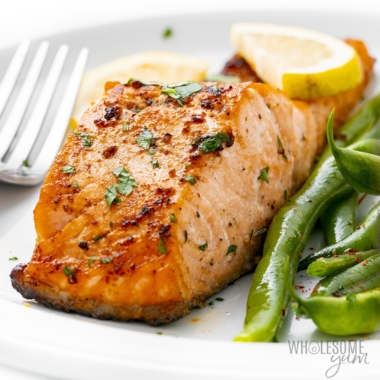
For years now, one of my friends has been making an amazing gochujang salmon that she’s practically famous for in our group. Sockeye salmon isn’t usually the kind she makes, and to be honest, I don’t remember exactly what she puts in hers other than coconut aminos and gochujang. But after finding myself with a sockeye fillet and her convincing me to get a jar of gochujang paste, I thought this type of bold flavor would be perfect for it, along with honey, garlic, and lemon. Here’s why:
- Flaky salmon with a sticky, spicy-sweet glaze – Truth be told, I don’t even usually like sockeye that much! It’s meater than other salmon varieties I love more, dries out more easily, and has a stronger flavor. But I eat it sometimes for extra omega-3s, and the sweet, slightly spicy glaze on this one made me enjoy it. Plus, it leaves the fish incredibly moist and flaky!
- Something new and different – I have over a dozen fish recipes with variations of olive oil and lemon as the main flavor, and that’s what most sockeye salmon recipes use. You can certainly season this like I do regular baked salmon, but here I used a totally different glaze. Make this one when you’re bored with the same flavor all the time!
- Weeknight friendly – You can have this seafood dinner on the table in well under half an hour, and it’s so easy. Just heat the sauce for a few minutes, wrap up, and bake!
- Easy cleanup – My foil wrap method leaves your pan practically spotless.
So, here it is: my sockeye salmon recipe, inspired by my friend’s crowd favorite. Make it with me!

Ingredients & Substitutions
Here I explain the best ingredients for baked sockeye salmon, what each one does in my recipe, and substitution options. For measurements, see the recipe card.
- Sockeye Salmon Fillets – I recommend fillets close to an inch thick, as they don’t dry out as easily. I used two whole ones, but you can also make my sockeye salmon recipe using individually portioned fillets (5-6 ounces each) — wrap them the same way and follow the timing of my foil baked salmon. You can also use this same glaze on other varieties of salmon, like Atlantic or Coho.
- Gochujang Paste – This is a Korean spicy red paste made from chili peppers, but the one I get is pretty mild. Many brands have corn syrup and processed ingredients, so I like this organic brand that’s also gluten-free. (I also use it to make gochujang cauliflower.) It’s not super spicy, so the amount you need can vary depending on your heat tolerance and the brand you use — feel free to add more to your taste. Note, gochujang paste is not the same as gochujang sauce, which is even milder and thinner.
- Coconut Aminos – A.K.A. my go-to soy sauce substitute. It’s gluten-free, cleaner, and I love the mild sweetness it adds. You can use low-sodium soy sauce, though.
- Honey – I use my natural Wholesome Yum Zero Sugar Honey for all the sweetness without the sugar. Regular honey is fine.
- Garlic – I always go with fresh, but 2 teaspoons of the jarred kind will work.
- Lemon Zest – Adds a bright, zesty kick. I don’t recommend using lemon juice here, because it will thin out the glaze.
- Olive Oil – To lock in moisture. Avocado oil or melted butter also works well.
- Sea Salt & Black Pepper – I don’t use a lot of salt here (half the amount I’d normally use), because the coconut aminos and gochujang in the glaze are already salty.
- Green Onions (optional) – I like to sprinkle them on top for a pop of color and flavor. Feel free to leave them out, or use fresh herbs, like chives or parsley.

How To Cook Sockeye Salmon
I have step-by-step photos here to help you visualize the recipe. For full instructions with amounts and temperatures, see the recipe card.
- Make the sauce. In a small saucepan (I use this one which is perfect for small amounts of sauce like this), stir together the coconut aminos, honey, gochujang, and garlic. Bring to a boil, then simmer until the sauce thickens and coats the back of a spoon. Remove from heat, add the lemon zest, and let it cool for a bit.
- Season the fish. Pat the salmon dry and place each fillet on a large piece of aluminum foil on a baking sheet. Brush the fish with olive oil, and season both sides with salt and pepper. Leave it skin-side down.


- Add the sauce and wrap. Once the sauce is no longer hot (warm is good), pour it over the salmon and brush to coat the top. Fold the foil over and seal it into a packet. (I had two fillets, so two packets.)
- Bake. Pop it in the oven and bake until it flakes easily with a fork. (See my tips below for best results.) Unwrap the foil, tent loosely, and rest for a few minutes before serving.
- Garnish. I like to serve this sockeye salmon recipe with lemon slices or wedges, and a sprinkle of green onions.



My Recipe Tips
- The time it takes for the sauce to thicken can vary. It depends on the size and material of your saucepan. I used this one, and it took about 5 minutes. Watch for the sauce to be thick, or it won’t stick to the fish well — and keep in mind it thins out a bit during baking.
- Be careful not to simmer the sauce too long, or it’ll be too thick to spread when it cools. If this happens, or if it cools too much and gets too sticky, you can place it back over low heat and add an extra splash of coconut aminos.
- Don’t push the foil flush on top of the sauce. Try to leave some space, or the sauce will stick to the foil.
- Don’t want the foil touching your food? You can line parchment paper between the foil and the fish, or even use it alone. See my salmon en papillote for a visual of how I fold it.
- Prefer a caramelized, golden exterior? Instead of sealing the sockeye salmon in foil, leave it uncovered and broil for 6-10 minutes on the 2nd from the highest rack. I slightly prefer the sealed option because it’s more moist, but the outside is amazing on the broiled version (and you end up with a more glazed finish).
- For moist, flaky fish, use a meat thermometer. I just stick this probe thermometer through the foil in the thickest part of the fish, but you can use an instant-read thermometer, too. If you use the latter, use the same hole each time so you don’t let too much steam out. I recommend 135 degrees F for a moist, flaky texture in this sockeye salmon recipe, but you can go up to 145 if you prefer it more firm.
Sockeye Salmon Recipe
My easy sockeye salmon recipe has an irresistible sweet, savory, and sticky glaze! Make it for a weeknight dinner in just 20 minutes.
 Remove Ads

Instructions
Tap on the times in the instructions to start a kitchen timer.
-
In a small saucepan, stir together the coconut aminos, honey, gochujang, and minced garlic. Bring to a boil, stirring occasionally, then simmer for about 5 minutes, until the volume reduces by half and the mixture thickens enough to coat the back of a spoon.
-
Remove from heat and stir in the lemon zest. Set aside to cool for 10 minutes.
-
Meanwhile, preheat the oven to 400 degrees F (204 degrees C).
-
Pat the salmon dry with paper towels. Place each fillet onto a large piece of foil, large enough to wrap around the salmon, on a baking sheet. (If you prefer not to have foil touching your food, you can line the foil with parchment paper between the fish and the foil.)
-
Brush both sides of the fish with olive oil, and sprinkle both sides with salt and pepper. End with the fish skin side down.
-
After the sauce has cooled from hot to warm, pour it over the salmon and spread with a basting brush (on top only, don’t flip). Fold the foil over and seal to form a large packet.
-
Bake sockeye salmon in the oven for 8-12 minutes, until the internal temperature reaches 130-135 degrees F (54-57 degrees C) for medium doneness. (Mine usually takes 10 minutes. Thick fillets can take a few minutes longer.)
-
Remove the fish from the oven. Unwrap the foil, then tent loosely and let it rest for 5-10 minutes before serving.
LAST STEP: Leave a rating to help other readers, or tag me @wholesomeyum on Instagram. I’d love to hear from you!
Maya’s Recipe Notes
Serving size: 5-6 ounces of sockeye salmon (weight before cooking)
- Tips: Check out my recipe tips above to help you to help you get the right sauce texture (and keep it on your fish), get perfectly moist and flaky salmon, and a variation for a crispier golden outside.
- Storage: Keep leftovers in an airtight container in the fridge for up to 3-4 days. They’re great flaked over salads!
- Reheat: Warm leftovers up in the oven or a skillet over low heat. You can add a splash of coconut aminos if it looks a little dry.
- Freeze: Let it cool, wrap it up tight, and freeze for up to 3 months. Thaw in the fridge overnight before reheating.
- Note on nutrition info: The nutrition info is calculated using my natural sugar-free honey — sugar content will be higher if you use regular. The optional green onion garnish is not included, but doesn’t make a huge difference.
I provide nutrition facts as a courtesy. Have questions about calculations or why you got a different result? Please see my nutrition policy.
Add Your Notes Your Notes
Try More Of My Recipes


© Copyright Maya Krampf for Wholesome Yum. Please DO NOT SCREENSHOT OR COPY/PASTE recipes to social media or websites. We’d LOVE for you to share a link with photo instead.
Sockeye Salmon Recipe

Serving Ideas
Sockeye salmon cooks quickly, so I recommend pairing it with a side dish that’s just as fast. Here are my favorite options with it:
- Vegetables – This sockeye salmon recipe has an Asian vibe, so I really like it with shiitake mushrooms or bok choy, but more often I serve it with simple sauteed asparagus or sauteed green beans.
- Rice Bowls – Rice is perfect for soaking up extra sauce! You can use white or brown rice, but I just tossed some frozen cauliflower rice in a skillet for these pictures. Feel free to load up your bowl with cucumbers and/or avocados, similar to my Korean beef bowl.
- Salads – My go-tos with this dish are Asian salad or cabbage salad.












4 Comments
Dottie Bacon
0OMGosh! We had this for dinner tonight, and it was the best salmon we ever had. We left the skin on, and broiled it to caramelize the sauce. We had some extra sauce left, so we used it for dipping. The gochujang sauce gave it a delightful kick! We will be making this a lot this summer….fall, winter, and spring! 😉 As always, thank you Maya for your (better than) restaurant quality recipes!
Wholesome Yum D
0Dottie, that sounds absolutely amazing! I love the idea of broiling it to caramelize the sauce and using the extra for dipping. I’m so happy it was such a hit and honored it’s going on your year-round menu!
Lisa H
0I knew we would love this recipe the moment I saw it because we love Gochujang. We most often use it with ground beef and make bowls – this is the first time we have used it with salmon, and it was great! I also really loved the cook method. Coming out of the oven, it was still bubbling. It was like it was a steaming method. We served it with snap peas cooked with sesame oil, soy sauce and garlic, and we also made a parsnip puree we put some five spice powder in. It was an experiment, and I liked it, but 20 year old was not so much of a fan lol.
Wholesome Yum D
0Yay, Lisa! I’m so glad you tried it with salmon this time. And that bubbling-out-of-the-oven part is my favorite! Your sides sound amazing (even if your 20-year-old wasn’t sold on the parsnip puree 😂).