
 Shop
 My
 Custom




FREE 5-Ingredient Recipe EBook
GET IT NOWI Tried Honeynut Squash And Loved It Even More With Browned Butter, Sage, And Hazelnuts
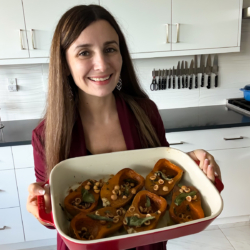
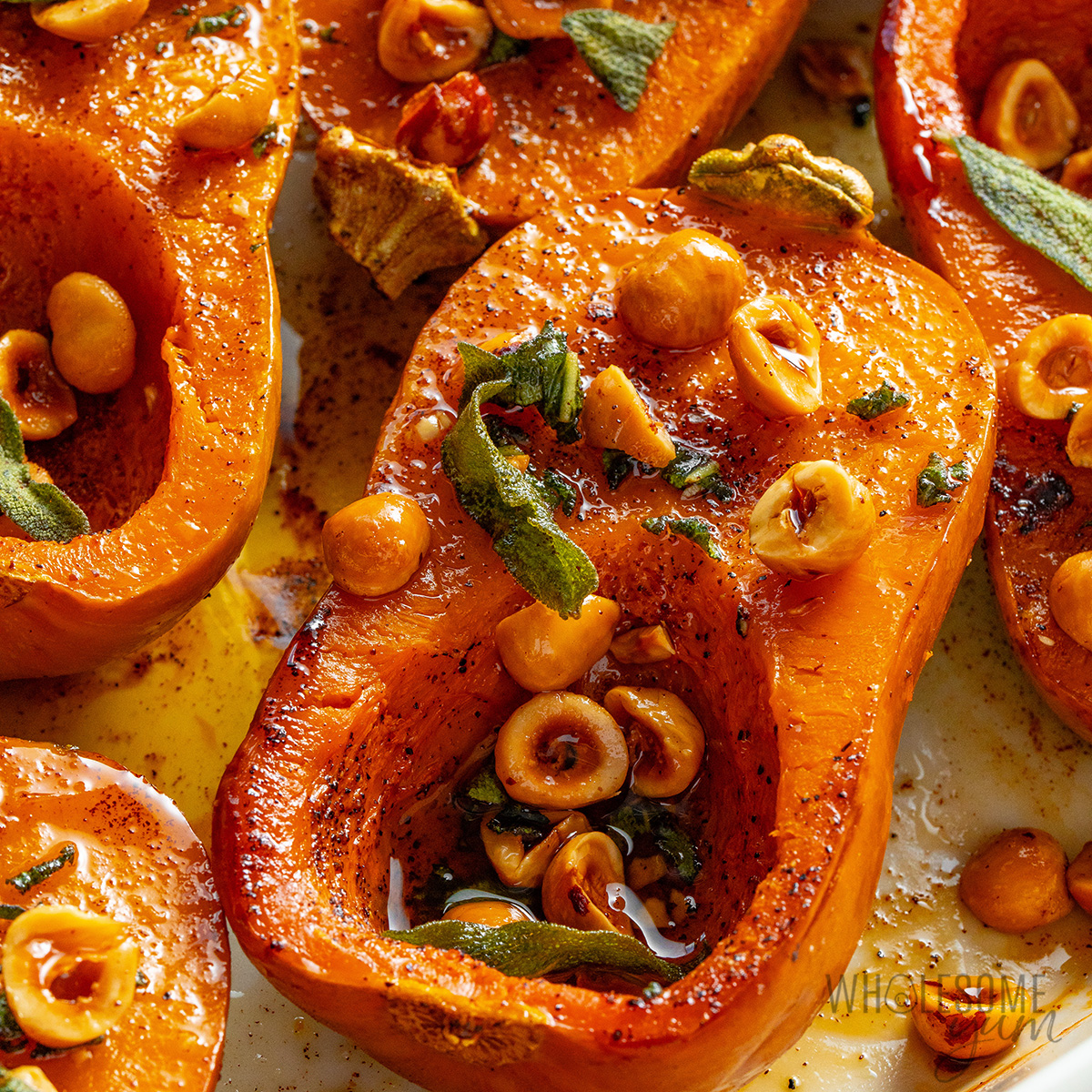
This honeynut squash recipe turned out to be a happy accident. Last year, I made a recipe with these flavors using carnival squash, but it was so late in the season that I didn’t have time to publish it. I planned to make it again this year… and then, surprise, I couldn’t find it anywhere!
What I did find instead is honeynut squash. Here’s why I fell in love with this naturally sweet mini squash even more and why it turned out to work perfectly for this recipe:
- Sweeter, creamier little squash – Roasted honeynut squash is a lot like roasted butternut squash and roasted acorn squash, but sweeter and creamier. The cut sides get beautifully caramelized, the center becomes fork tender, and unlike those larger squash, the skin is soft enough to eat!
- Dressed up with browned butter, sage, and hazelnuts – The honeynut squash recipes I found either roasted them plain or added sweet ingredients, like maple syrup or brown sugar. This squash is already so sweet on its own, so in my recipe I leaned nutty and savory instead, with browned butter, sage, and hazelnut topping.
- Super easy prep, with no peeling or chopping into cubes – I simply cut these small squashes in half, scoop out the seeds, and let the oven do the rest.
- Pretty enough for the holiday table – The green sage and buttery hazelnuts pop against the bright orange honeynut squash, so this dish is totally holiday-worthy. And unlike larger squash, each half makes its own convenient little serving.
Whether you’re looking for an interesting side for the holidays or just a cozy fall side dish, this honeynut squash recipe is perfect. Make it with me!

Ingredients & Substitutions
Here I explain the best ingredients for my honeynut squash recipe, what each one does, and substitution options. For measurements, see the recipe card.
Honeynut Squash:
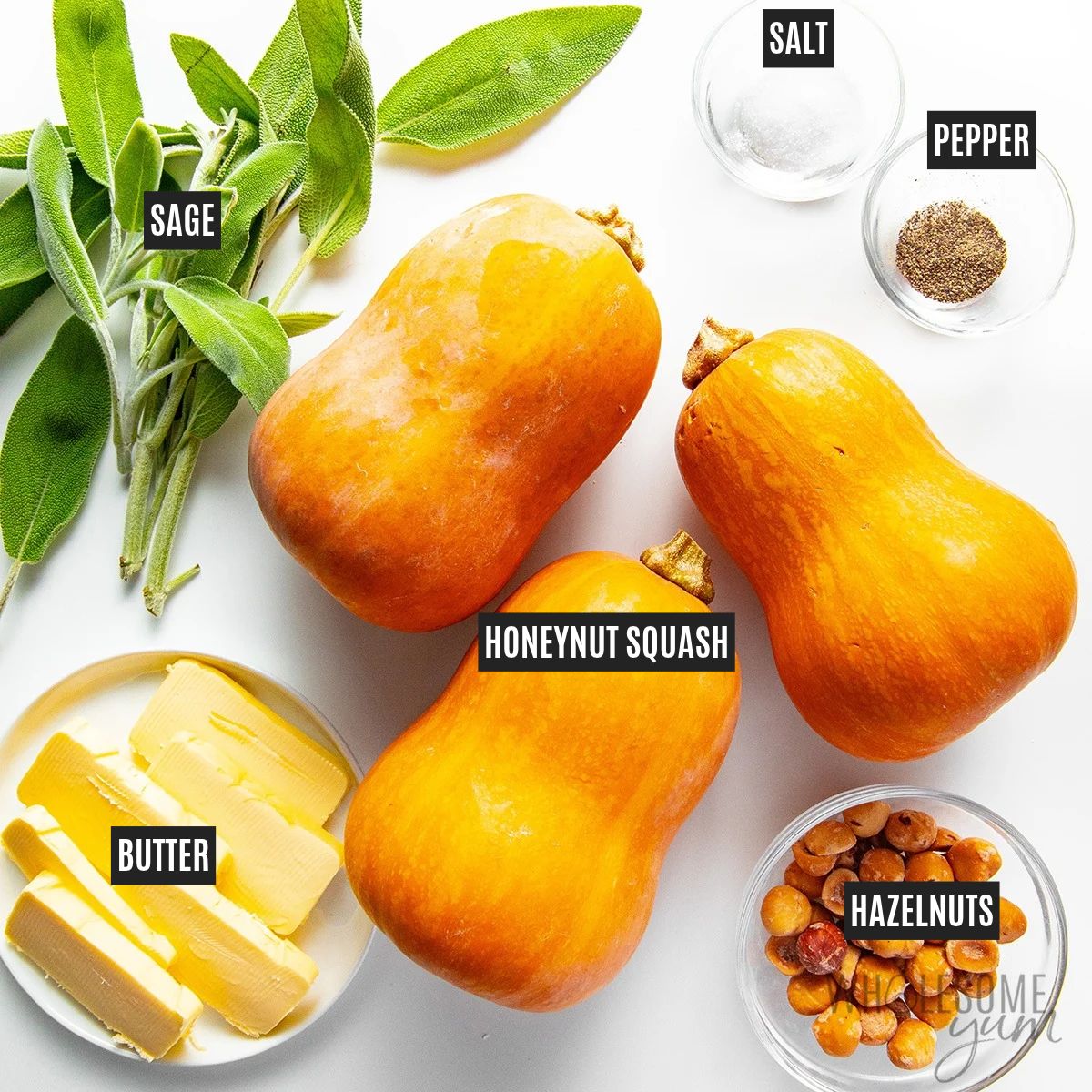
Honeynut squash is a personal-sized winter squash that came from a cross between butternut squash and buttercup squash, intentionally bred to be small. It looks like a mini butternut squash, about the size of your hand. Compared to other varieties, honey nut has deeper orange flesh and is naturally sweeter.
I found it when I couldn’t get carnival squash for this recipe, and ended up liking it even more because it gets extra creamy inside, roasts quickly (and caramelizes beautifully when it does!), and the thin skin becomes tender enough to eat.
Look for firm squash that feels heavy for its size, with no soft spots. The ones I tested were 4-5 inches long and about 1 pound each. I’ve seen them at grocery stores and farmers markets since September and they should stay in season through December.
If you can’t find honeynut squash, you can still use the browned butter, sage, and hazelnut combination in this recipe with other winter squash. My first choices would be delicata squash because its skin is also edible, or honeypatch squash, which is also mini and tastes much like honeynut but with slightly thicker skin. You can also use butternut squash, acorn squash, or kabocha squash. For these larger squash types, the roasting time will take about 10-15 extra minutes.
Other Ingredients:
- Unsalted Butter – The butter gets browned first, which gives this honeynut squash recipe a warm, toasty flavor. I recommend unsalted so you have control over the seasoning. If you only have salted, just reduce the added salt to taste.
- Fresh Sage – I use half the leaves whole for a crispy garnish and chop the rest into the buttery hazelnut topping. Fresh is important here, because dried sage won’t fry up to that crispy finish. If you don’t have sage, you can use other savory herbs (like thyme leaves or even chopped rosemary) in place of the chopped sage, but they won’t crisp up the same way.
- Hazelnuts – Their nutty flavor is especially good with browned butter and sweet squash. Chop them coarsely or use halves, so you get more bites with some crunch. You can also use pecans, walnuts, or pistachios for a different flavor, or pumpkin seeds (pepitas) for a nut-free option.
- Sea Salt & Black Pepper – These balance the sweetness. The amount of salt might look generous, but it has to season all the squash underneath. (The first time, the amount I’d planned looked like a lot, and then I had to add more for serving!) If you’re unsure and like things less salty, start with 1/2 teaspoon and add more at the table if you need it.
How To Cook Honeynut Squash
I have step-by-step photos here to help you visualize the recipe. For full instructions with amounts and temperatures, see the recipe card.
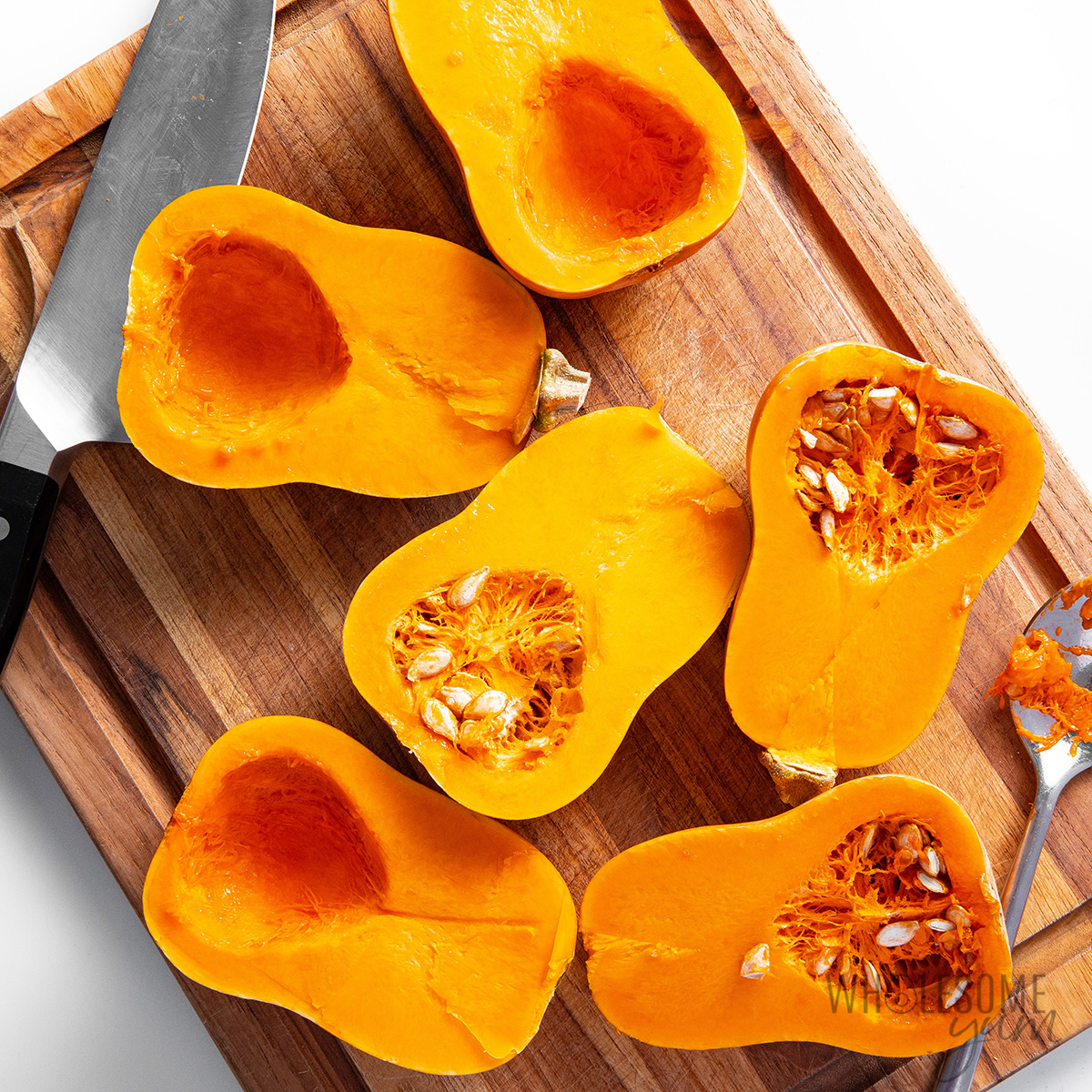
- Prepare the squash. Slice the honeynut squash lengthwise and scoop out the seeds with a spoon. Leave the skin on. I find it helpful to score along the line where I plan to cut, then stand up the squash and cut downward through the dashed line. Repeat on the outer side. I can never cut through the stem, but once I’ve cut the rest, I can usually crack the squash open and the stem stays attached to one half, like my picture below.
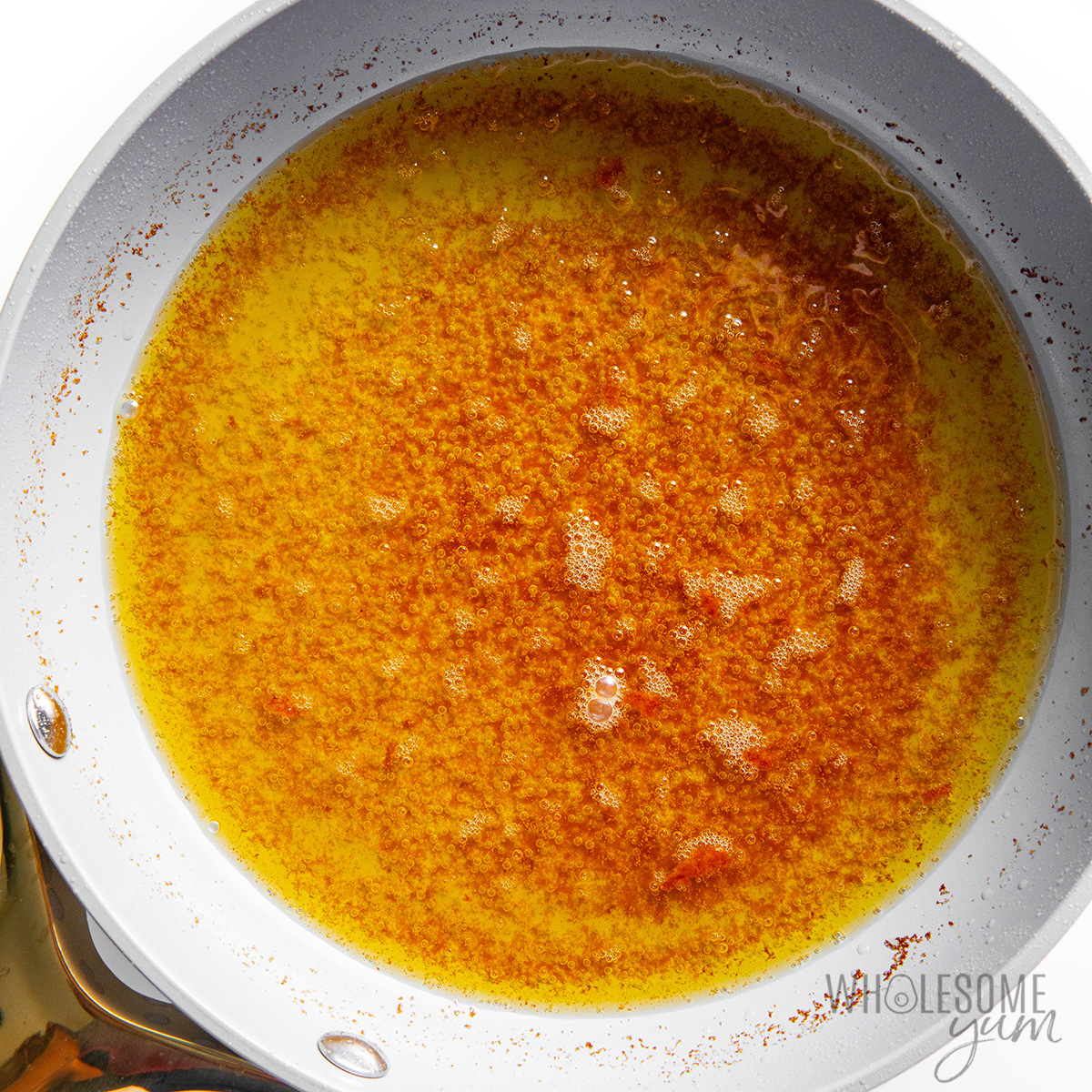
- Brown the butter. In a small skillet, melt the butter over medium heat until it foams, turns golden at the bottom, and smells nutty. Remove it from the heat so it doesn’t keep darkening. My picture below has only a little foam, because it stops foaming pretty fast once you remove the pan from heat. You’ll see more foam than that during heating!
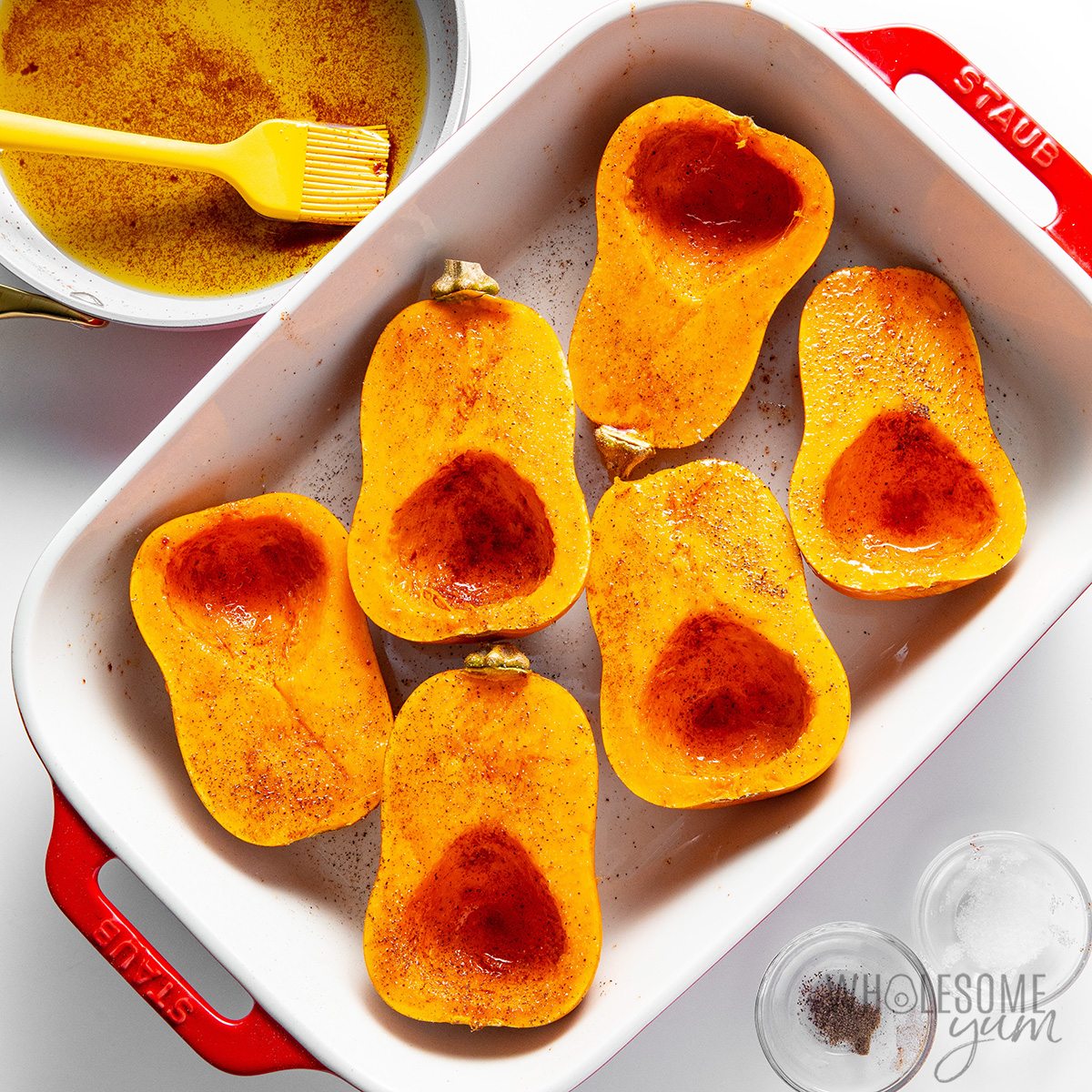
- Brush, season, and roast. Brush some of the browned butter over the cut sides, season with salt and pepper, and arrange the halves cut side down in a single layer. I use this baking dish. Roast honeynut squash in the oven, until the flesh is very tender and the cut surfaces are caramelized. The skins usually start to pucker slightly. Turn the halves cut side up.
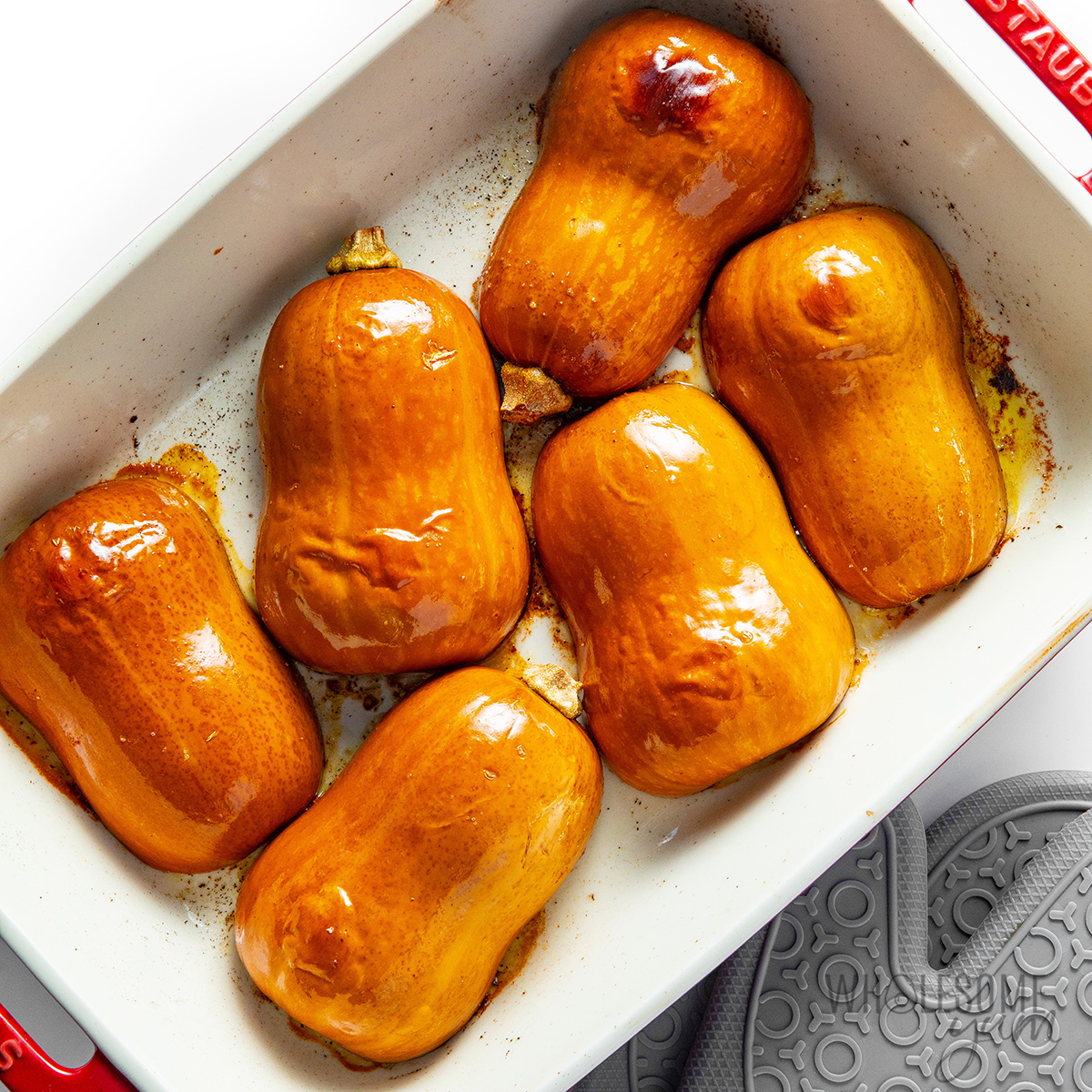
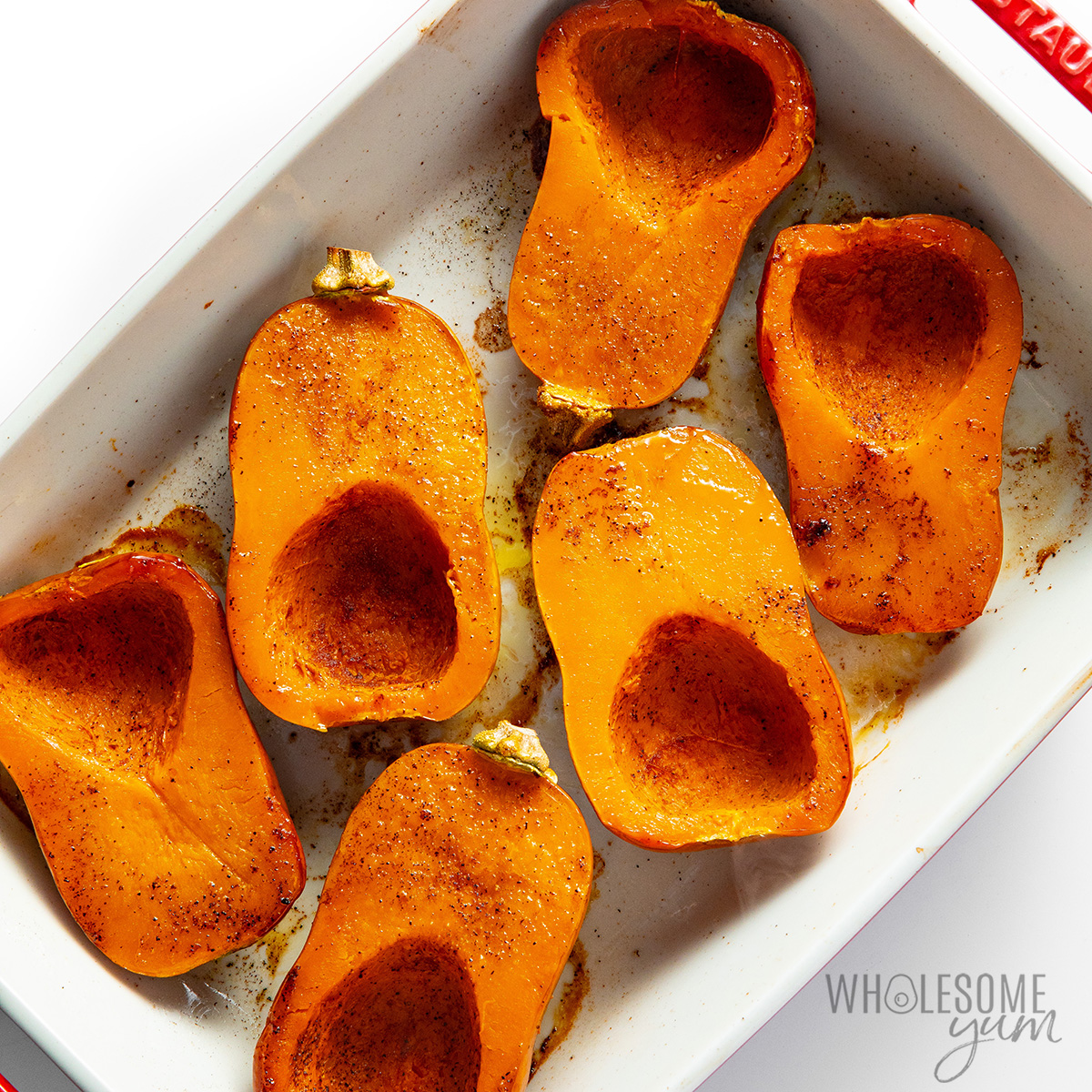
- Crisp the sage. Toward the end of the squash roasting time, warm the reserved browned butter over medium-low heat. Briefly fry the whole sage leaves until they darken a little, then transfer them to a paper towel lined plate to drain and crisp up.
- Toast the hazelnuts. Stir them into the butter until they start to darken. Remove the skillet from the heat and stir in the chopped sage. It’ll start to foam and sizzle, which is normal!
- Bring it all together. Spoon or pour the warm sage-hazelnut butter over the roasted honeynut squash halves. I usually pour and then spread the hazelnuts evenly. Finish with the crispy sage leaves.
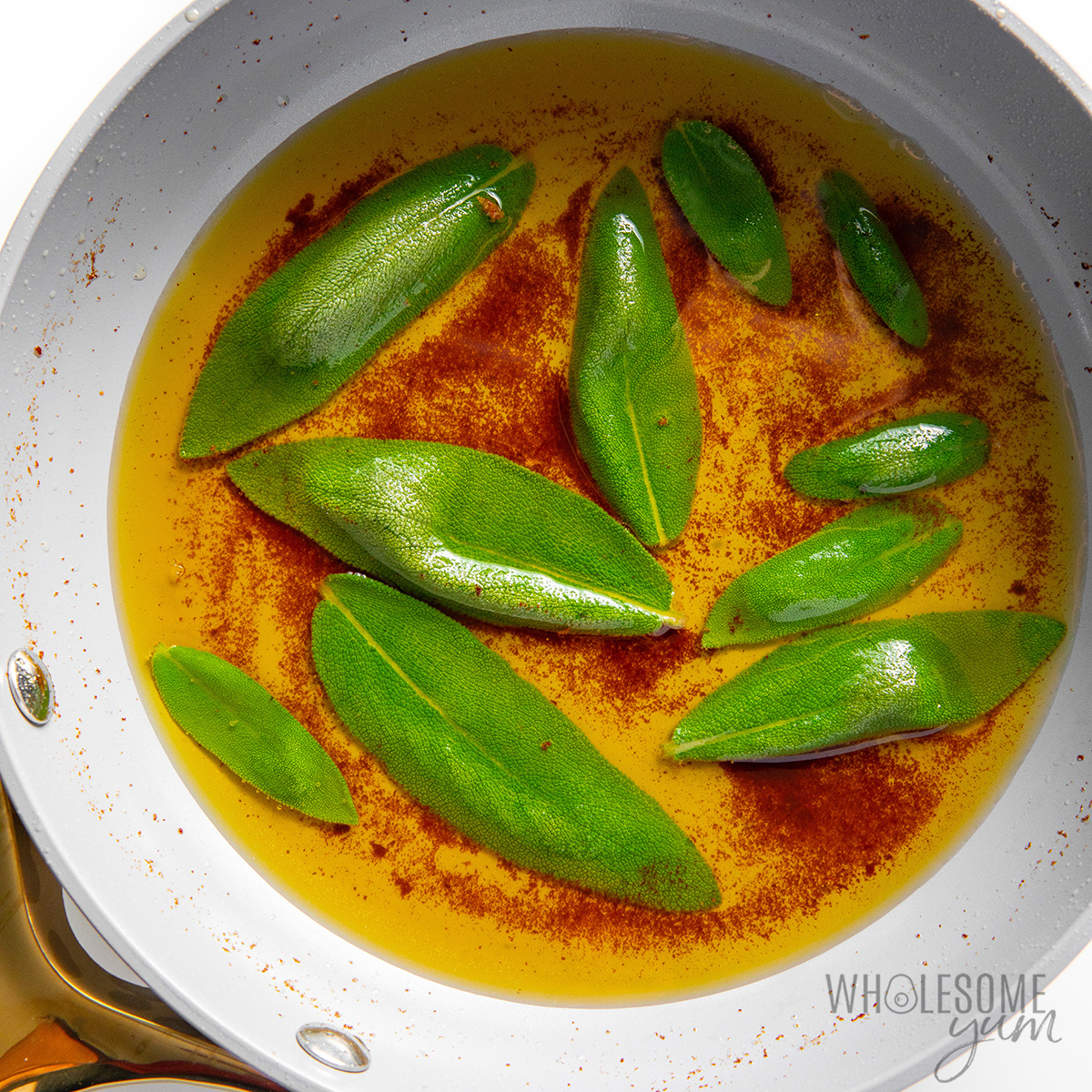
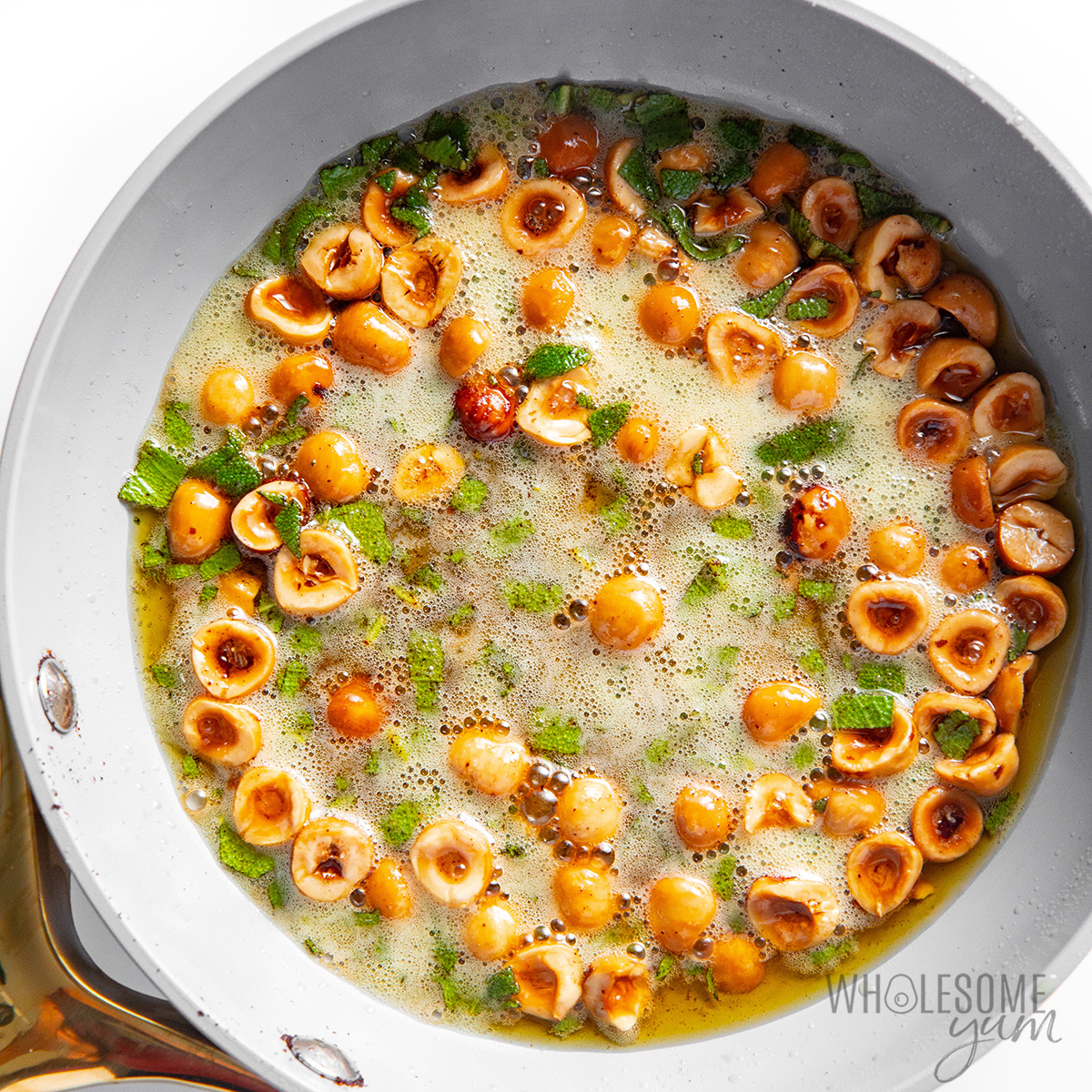

Maya’s Recipe Tips
- Browned butter can burn fast, so watch closely. I use and recommend a light-colored ceramic skillet like this (pictured above), because it’s easier to see when the milk solids turn golden. A few dark specks are normal, but if the butter turns black or smells burned, I’d rather start over than let that bitter flavor ruin the squash.
- You can save just slightly burned brown butter using a fine mesh sieve. I wouldn’t recommend this if it’s extreme, but I had success with this method when mine went just a few seconds too long. Pour from the pan into the sieve over a small bowl or cup, then pour back into the pan. You can repeat if needed.
- I find this small glass measuring cup with spout really helpful for the browned butter. After browning it, I pour 3 tablespoons (slightly under the 1/4 cup mark) into the cup, and use that for brushing the squash, to ensure I have enough for both the squash and the topping. Then at the end, I pour the remaining browned butter, chopped sage, and hazelnuts into the cup again, so I can have more control to pour the topping over the roasted honeynut squash.
- Honeynut squash roasting time will vary a lot depending on size. I start checking at 20 minutes, even though it usually takes a bit longer than that. Roast until the flesh is very tender when pierced with a fork or paring knife, and the cut surfaces are caramelized. Make sure to poke the squash in the neck, which is thicker than the center area where you scooped out the seeds.
- Do not flip during roasting. That pan contact is what gets you the beautiful, sweet caramelization.
- If your hazelnuts are raw, you may want to toast them in the butter for an extra minute or two before adding the sage. Be careful not to burn them.
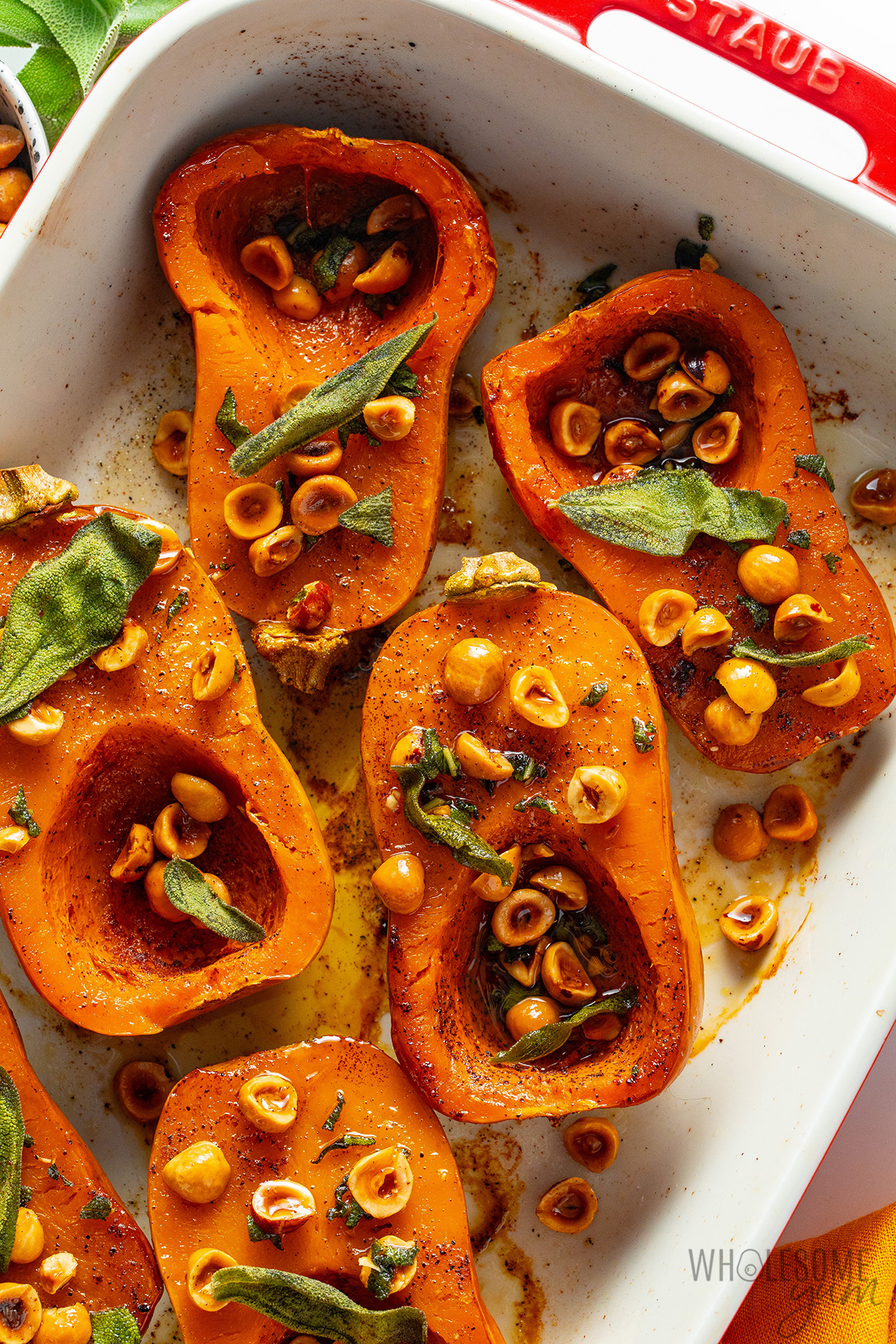
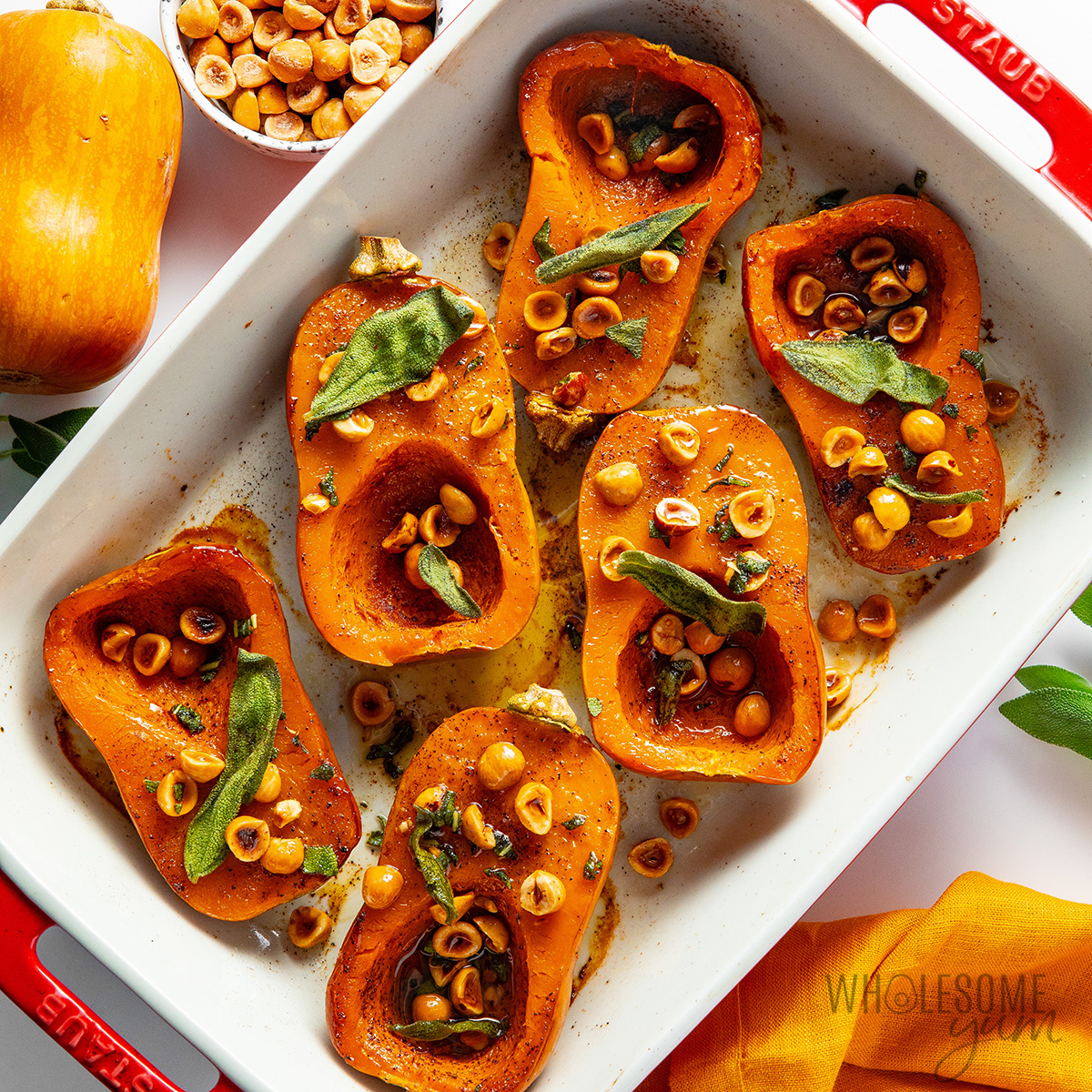
- Keep the squash halves close together. I usually make and serve them in this baking dish, which is the perfect size for 6 halves to fit tightly, as shown in the pictures. If you use a larger pan or transfer them to a platter, letting the edges touch helps keep the toppings on top instead of scattering below.
- Don’t have a large enough baking dish? You can also use a baking sheet. The baking dish is still my favorite, but with the sheet pan option, I slightly prefer a bare pan or lining it with foil over parchment paper. I get a little less browning with parchment. Just make sure the pan is greased well, so the squash doesn’t stick!
- Finish the toppings near serving time. The sage leaves are crispest soon after frying, and the warm butter is easiest to spoon over the squash before it starts to firm up.
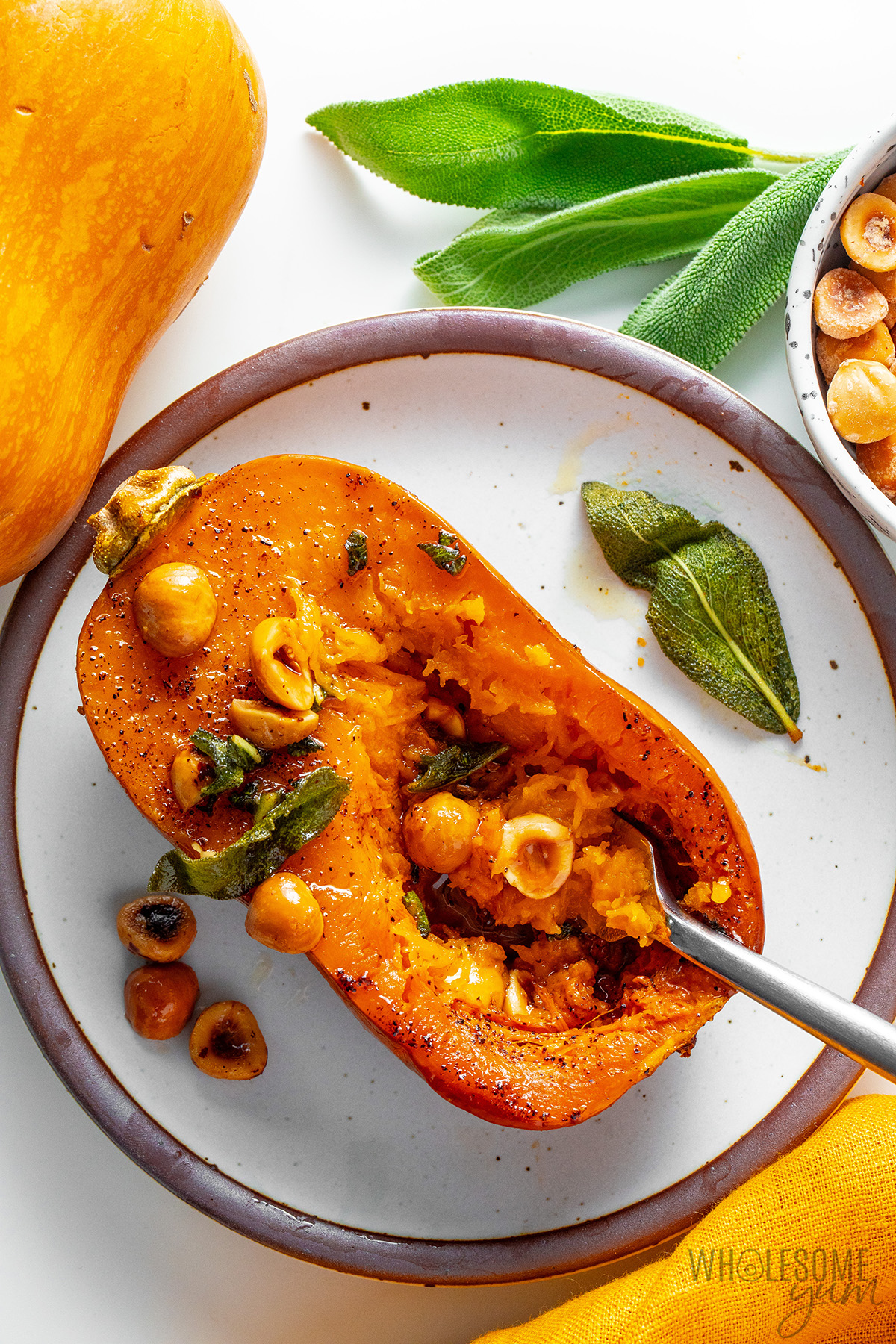
- You can eat the skin, or not. One of the unique things about honeynut squash is that the skin softens when you roast it, so you can actually eat it. I tried it and found it similar to delicata squash skin — definitely not as tough as butternut or other larger types. If it’s not your thing, though, you can definitely eat around it!
Roasted Honeynut Squash (Browned Butter & Sage)
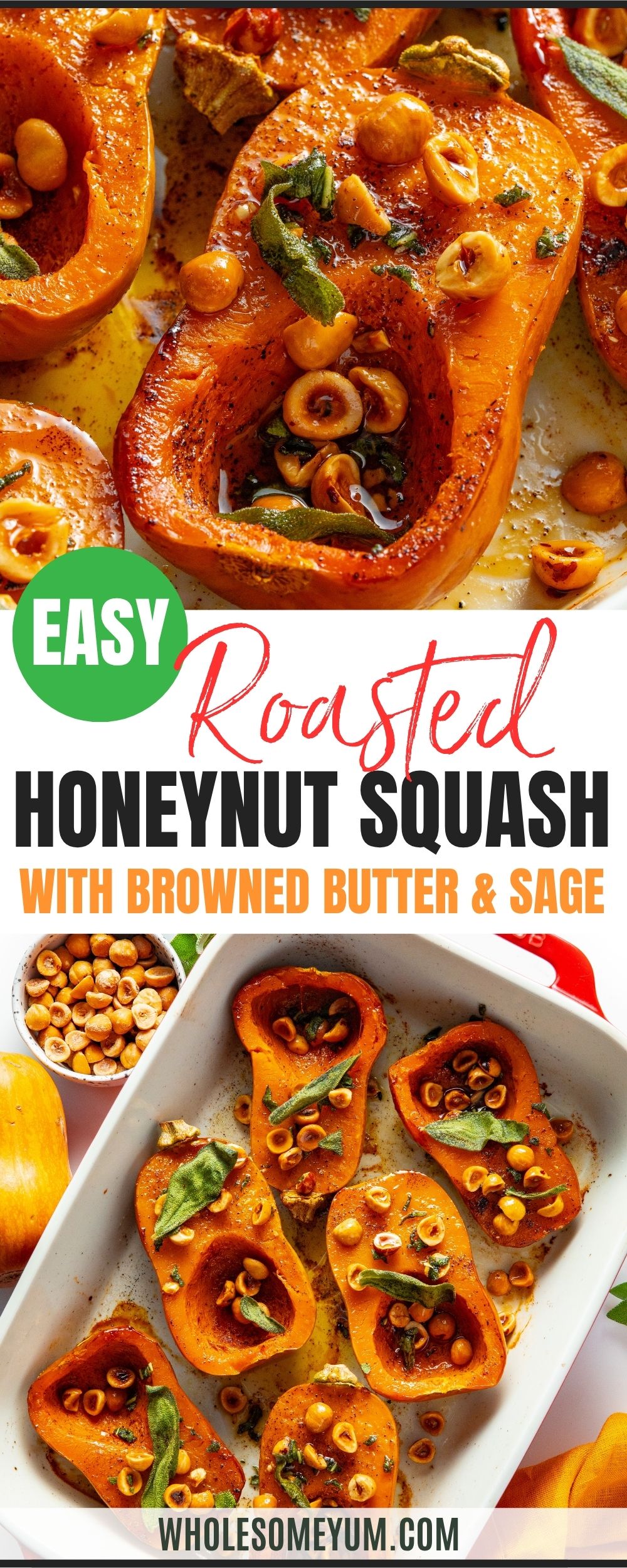
My honeynut squash recipe is tender and caramelized, with browned butter, crispy sage, and crunchy hazelnuts. An easy fall side, no peeling!


Instructions
[ See step photos See my tips ]Tap on the times in the instructions to start a kitchen timer.
-
Preheat the oven to 425 degrees F (218 degrees C). Line a large baking sheet with parchment paper, or get a large baking dish (you don't have to line it).
-
Cut the honeynut squash in half lengthwise and scoop out the seeds.
-
In a small skillet over medium heat, melt the butter. Cook for 5-6 minutes, until it foams, the milk solids start to turn golden brown, and it smells nutty. Remove from heat.
-
Brush about 1/3 to half of the browned butter mixture over the cut surfaces of the squash. (Reserve the remaining browned butter in the skillet for later.) Season the squash with salt and pepper.
-
Arrange the squash cut side down in a single layer on the baking sheet or in the baking dish. Roast honeynut squash in the oven for 25 to 35 minutes, until tender and caramelized. Start checking at 20 minutes; no flipping is needed.
-
Near the end of roasting, place the skillet with browned butter over medium-low heat, until warm. Add the whole sage leaves. Fry for 5 seconds per side, until they darken a little and absorb oil. Transfer to a paper towel lined plate to drain and crisp up.
-
Add the hazelnuts to the pan. Cook, stirring often, for 3-4 minutes, until the nuts start to darken.
-
Remove the pan from heat. Stir in the chopped sage — it will sizzle, which is normal.
-
Arrange the roasted squash halves cut side up on a serving platter, or leave in the baking dish for serving if you prefer. Pour the sage browned butter and hazelnuts evenly over the top. Finish with the crispy whole sage leaves.
LAST STEP: Leave a rating to help other readers, or tag me @wholesomeyum on Instagram. I’d love to hear from you!
Maya’s Recipe Notes
Serving size: 1 honeynut squash half, or 1/6 of the entire recipe
- Tips: Check out my recipe tips to help you brown the butter without burning it, judge when the squash is tender, and keep the toppings crisp.
- Storage: Keep leftovers in an airtight container in the refrigerator for up to 3-5 days.
- Meal prep: For a head start, you can roast the squash in advance and prepare the browned butter, hazelnuts, and crispy sage closer to serving time.
- Reheat: Warm the squash in a baking dish in the oven, or you can pop the halves in the microwave. You may want freshly crisped sage and hazelnuts, as they will soften when storing.
- Freeze: I don’t recommend freezing the toppings (sage and hazelnuts will lose their crunch), but you can freeze plain roasted honeynut squash for up to 3 months. Don’t freeze it raw — I tried this with halves, but the texture after thawing was super mushy and refused to brown.
I provide nutrition facts as a courtesy. Have questions about calculations or why you got a different result? Please see my nutrition policy.
Add Your Notes Your Notes
© Copyright Maya Krampf for Wholesome Yum. Please DO NOT SCREENSHOT OR COPY/PASTE recipes to social media or websites. We’d LOVE for you to share a link with photo instead.
Honeynut Squash Recipe
What To Serve With Roasted Honeynut Squash
The browned butter makes this honeynut squash recipe rich and cozy, so I like to keep the main course simple. Here are a few pairings that work especially well:
- Chicken – A simple roast chicken (or half chicken for two) was my favorite easy pairing when I was recipe testing these little squashes. You can also pick specific cuts, like oven baked chicken thighs, chicken leg quarters, or even healthy chicken breast.
- Pork – Pair it with my baked pork tenderloin for a dinner that’s nice enough for company but easy enough for a weeknight.
- Holiday dinners – These individual halves look right at home on a Thanksgiving or Christmas table, alongside a juicy slow cooker turkey breast, herby sirloin tip roast, or garlic butter salmon steak. Everyone will ask you about them!









Popular Recipes Right Now
Baked Chicken Legs
Taco Salad
Halibut Recipe
Sirloin Steak
Fresh Salsa
Sauteed Eggplant