
 Shop
 My
 Custom






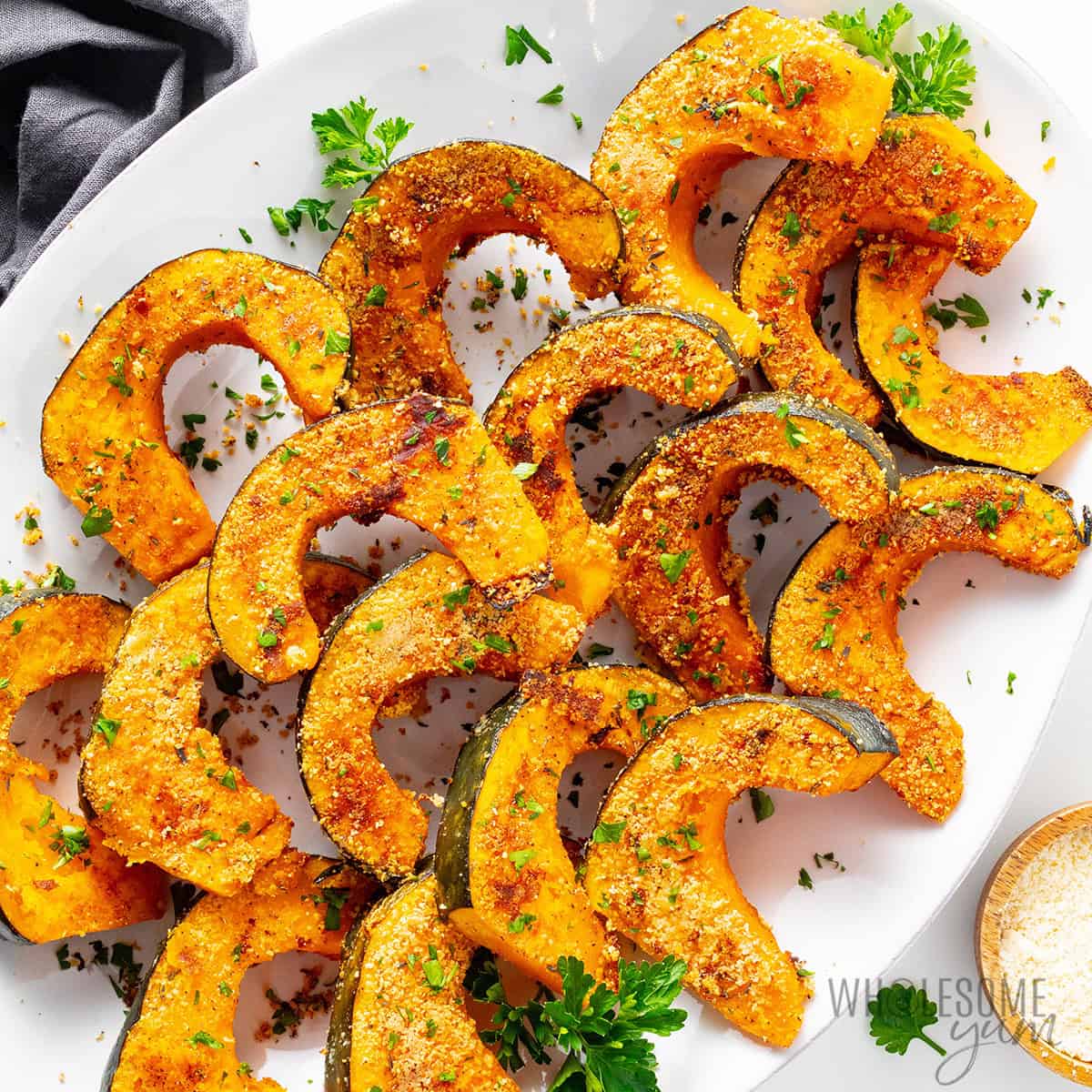
Bought A Buttercup Squash? Here’s How I Roast It

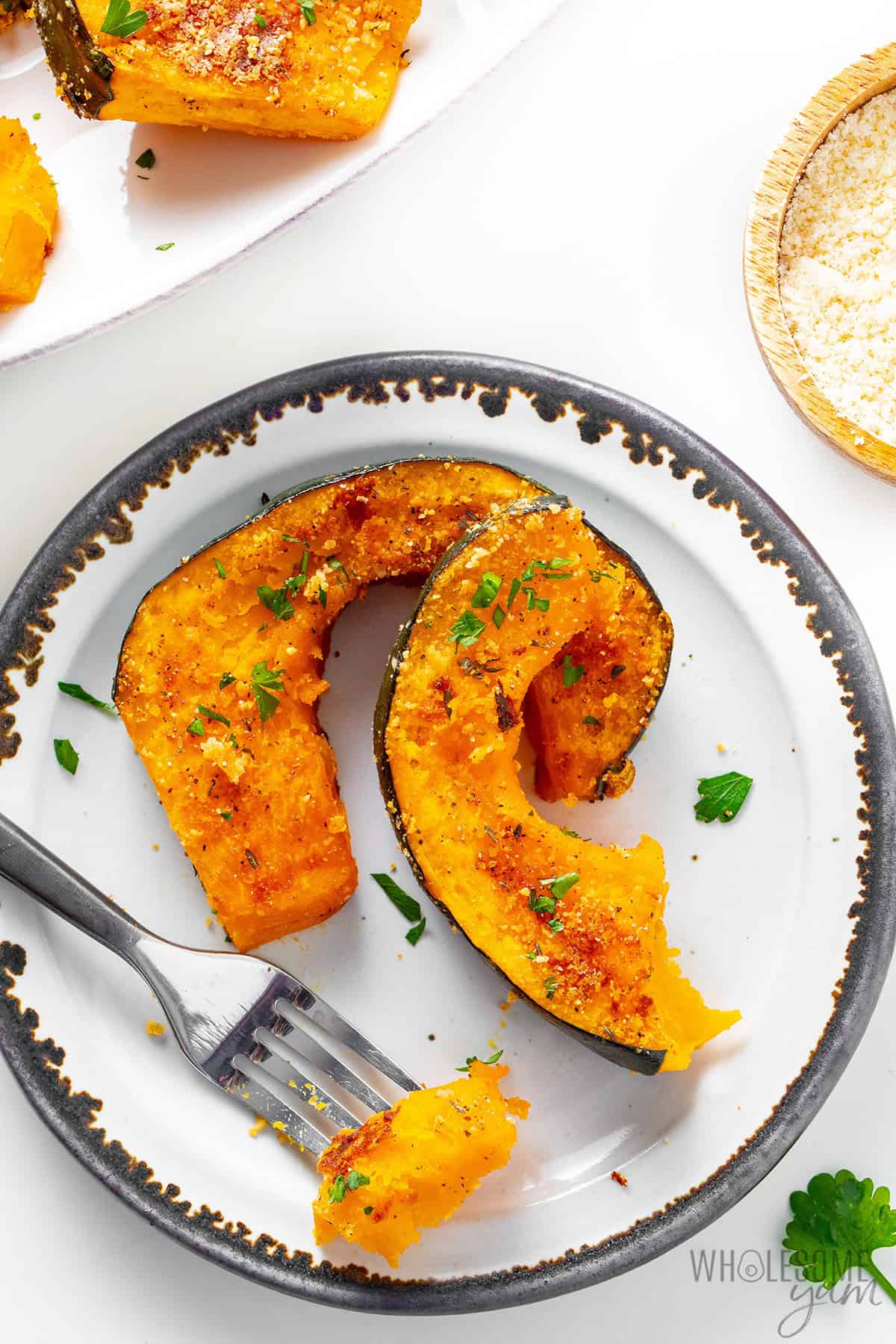
This buttercup squash recipe came out of a fun little game I play every fall: What new type of winter squash can I find at the store (or farmers market)? And when I first tried it back in 2023, this one turned out to be such a good find. Here’s why I’ve picked up a buttercup squash every year since and always make this recipe with it:
- Sweet squash, savory Parmesan coating – The sweet, nutty flavor of this variety is a lot like butternut squash and acorn squash. Unlike most buttercup squash recipes I’ve seen that lean into the sweetness, I went the opposite direction here with an herby garlic Parmesan coating that even gets a little crispy.
- Help with the hardest part – Buttercup squash can be tough to cut, so I walk you through it with step-by-step photos and a quick softening tip. You’ll know exactly how to turn that sturdy little squash into wedges ready for roasting.
- Quick and easy – My recipe is just 5 ingredients, plus salt and pepper, and about 30 minutes from start to finish. And since the coating uses pantry seasonings, there’s no fresh garlic or herbs to chop.
If you’ve found yourself the proud owner of a buttercup squash this fall, you’re going to love this method for cooking it. Make it with me!

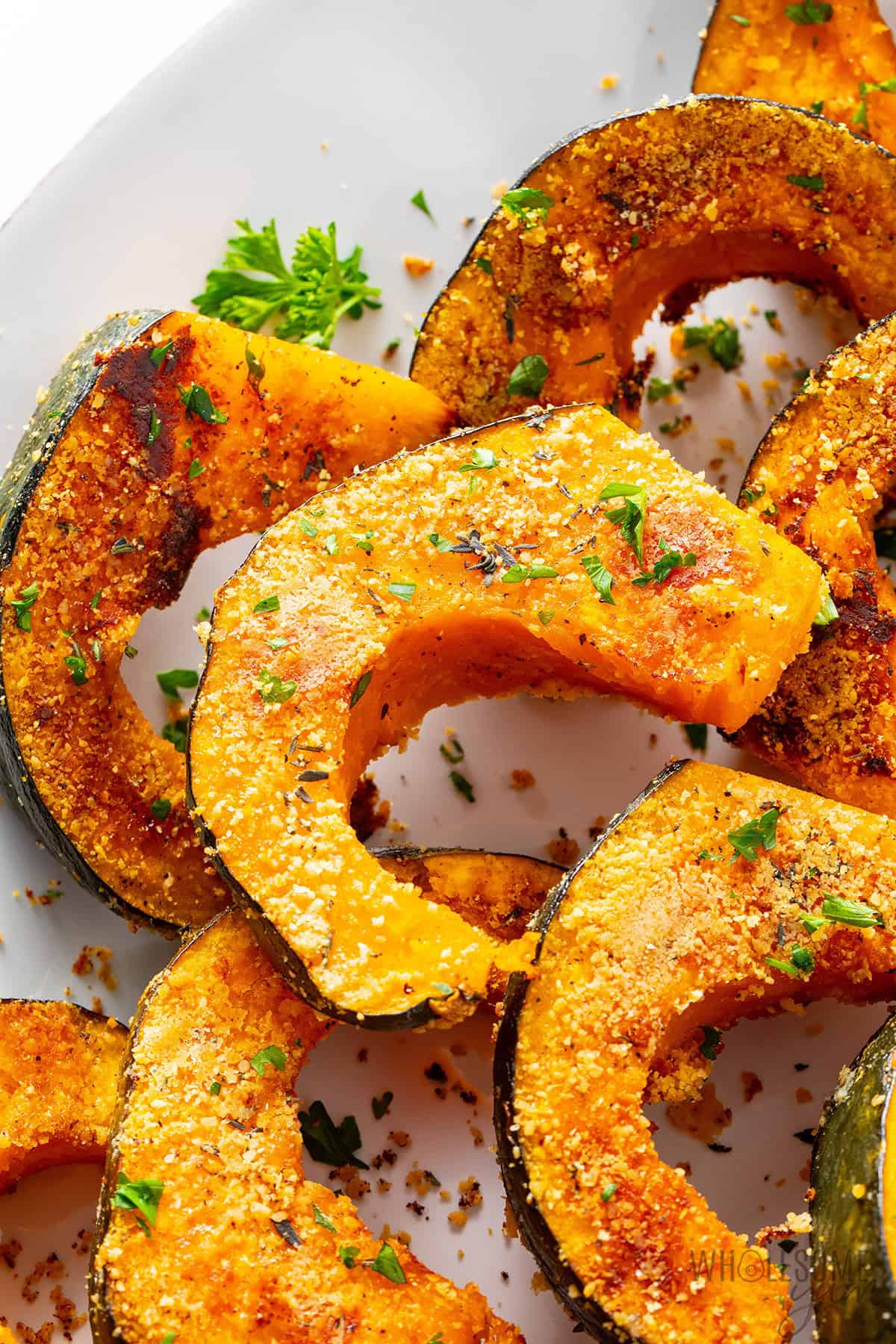
“I tried this recipe and the output came out great! Truly rich, sweet, and nutty flavor. Smooth and tender texture too. I used some of my preferred ingredients […] the same as the ones you suggested for a mild kick. The result came out really awesome! I’ll definitely make this again.”
-Louise
Ingredients & Substitutions
Here I explain the best ingredients for my oven roasted buttercup squash recipe, what each one does, and substitution options. For measurements, see the recipe card.
Basic Ingredients:
For a plain roast, these are all you need:
- Buttercup Squash – This winter squash looks a lot like a kabocha squash in size and color, but often has a little ridge at one end, similar to a turban squash. Sometimes it doesn’t have this ridge.
- What to look for: Peak season starts in late summer or early fall and goes through the winter. I look for a firm buttercup squash that feels heavy for its size.
- Buttercup vs. butternut squash: Some of you have asked me about this. They actually look totally different! Buttercup squash is round and dark green, while butternut is tan with a long neck. Both have sweet, nutty, orange flesh, but buttercup is a little drier and denser.
- Other squash options: Kabocha is a good substitute for this method. For a similar side, try my roasted acorn squash, roasted butternut squash, or roasted delicata squash. Follow those recipes for their own cutting and cooking instructions.
- Olive Oil – Adds flavor, helps the seasonings stick, and promotes browning and caramelization. Avocado oil is good too.
- Sea Salt & Black Pepper – Season both sides so every bite has some flavor.
Garlic Parmesan Coating:
You can roast buttercup squash plain with the ingredients above, but I like to add a Parmesan coating for crispy, savory edges that balance the sweet flesh. It also helps lock in moisture, so the outside doesn’t dry out. You’ll need:
- Grated Parmesan Cheese – Adds a browned, crispy coating that’s so good! I recommend finely grated Parmesan rather than large shreds, so it coats the wedges more evenly. Pecorino Romano works, too, but tastes sharper and saltier.
- Garlic Powder – Because… who doesn’t like garlic? I prefer garlic powder here because it spreads evenly over the squash and unlike fresh minced garlic, it won’t burn easily.
- Dried Thyme Leaves – For an earthy flavor that works well with the cheese. You can substitute 1 1/2 tablespoons of fresh thyme leaves, or use 1/2 tablespoon of Italian seasoning instead.
See my flavor variations below for more seasoning ideas!

FREE 5-Ingredient Recipe EBook
GET IT NOW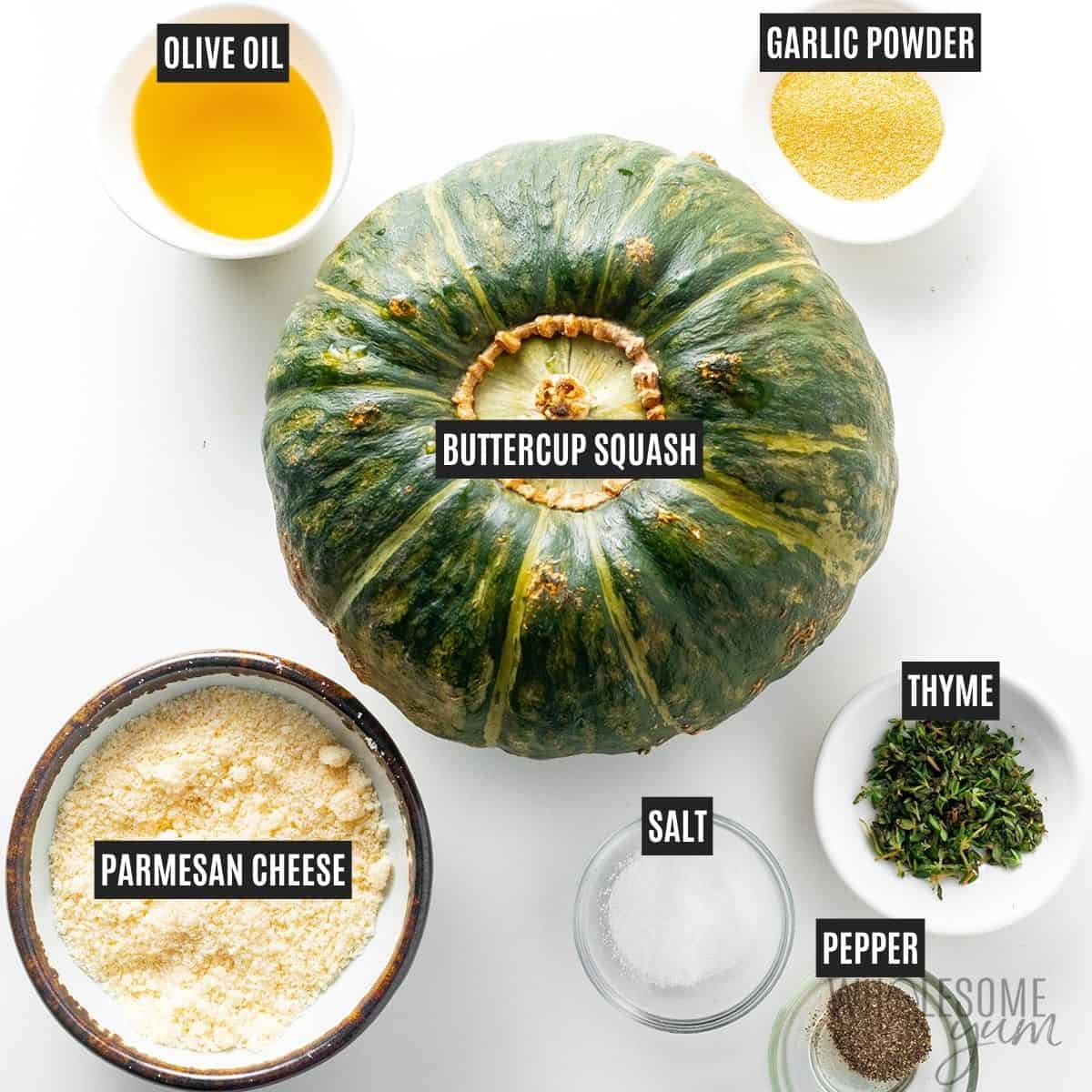
How To Cut Buttercup Squash
A flat base and a sharp knife make this hard squash easier to handle. Here’s how I cut mine into wedges. You can even do this in advance and store them in the fridge!
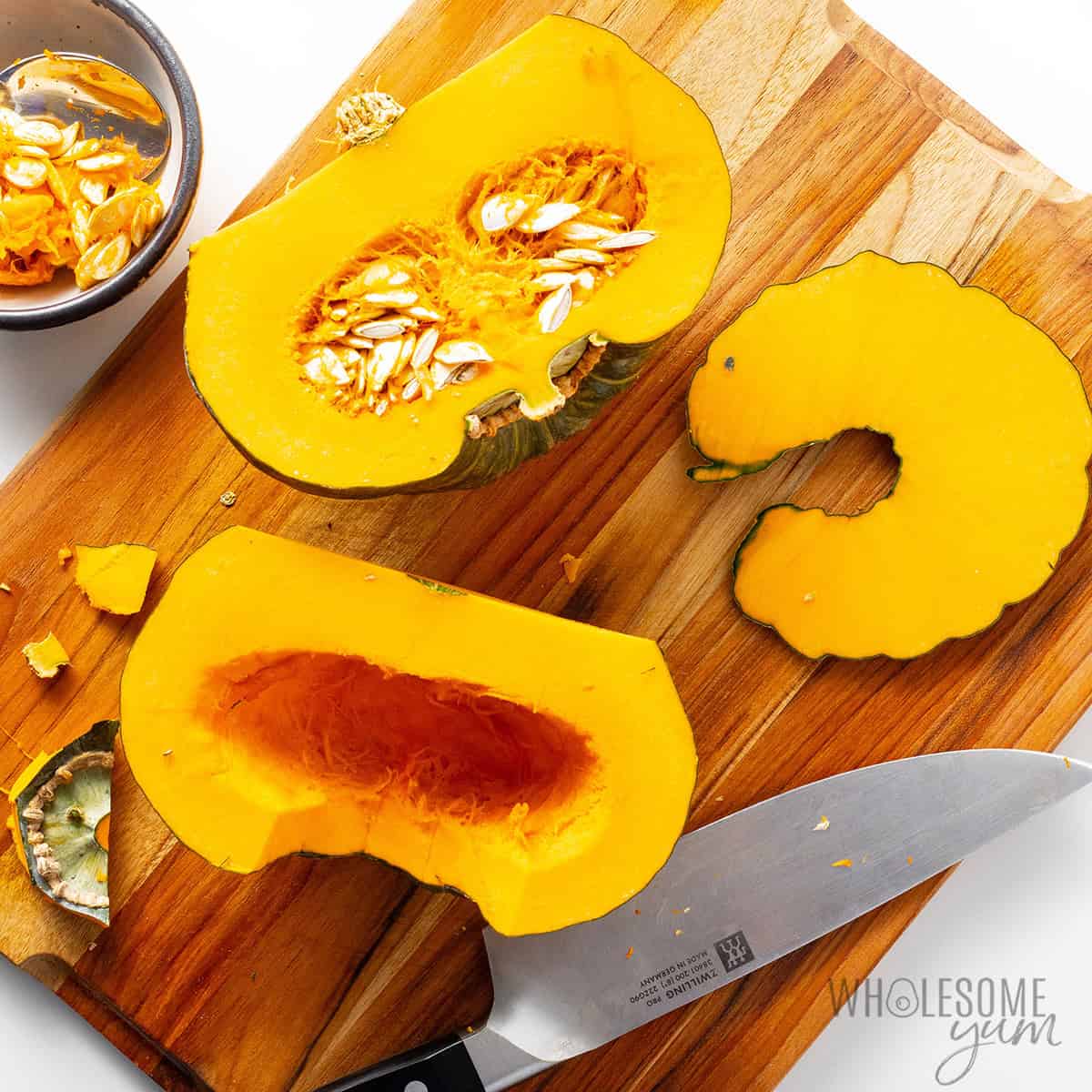
- Trim the ends. Use a sharp carving knife on a sturdy cutting board to cut off the top and bottom. If the squash shape makes this difficult, you can cut them off after slicing in half instead. (You can see in my picture below, I wasn’t able to cut off the stem without removing a bunch of the flesh.)
- Halve and scoop. Set the squash on a flat cut end, or its most stable side if you haven’t trimmed the ends yet, then slice down from stem to tip. Scoop out the seeds with a spoon. Trim away any remaining stem or woody cap.
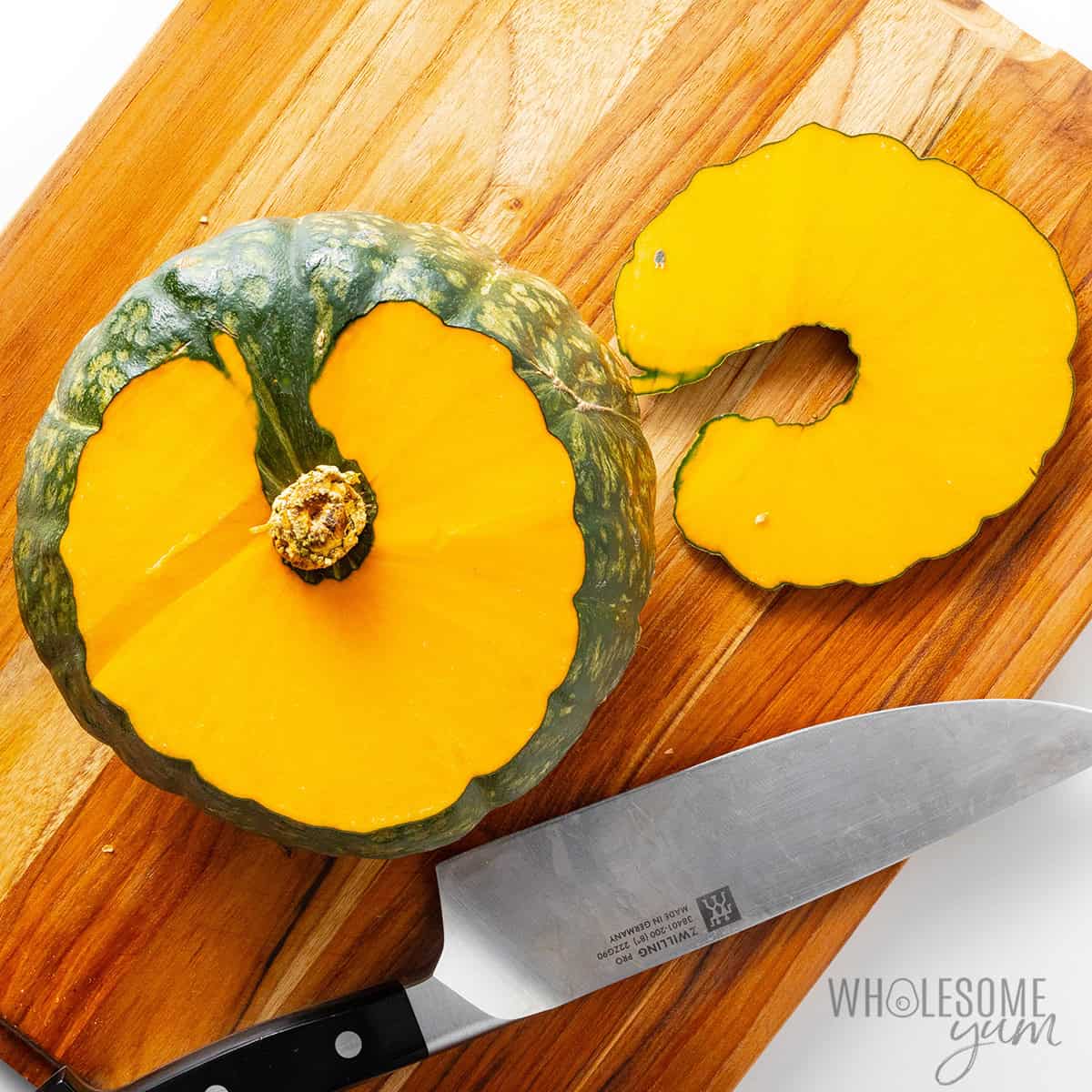
- Slice into wedges. Stand each half on a flat cut end and slice downward into 1-inch-thick wedges. I keep the rind on for roasting. It’s edible, but can stay chewy, so you can leave it on your plate and eat the tender flesh.
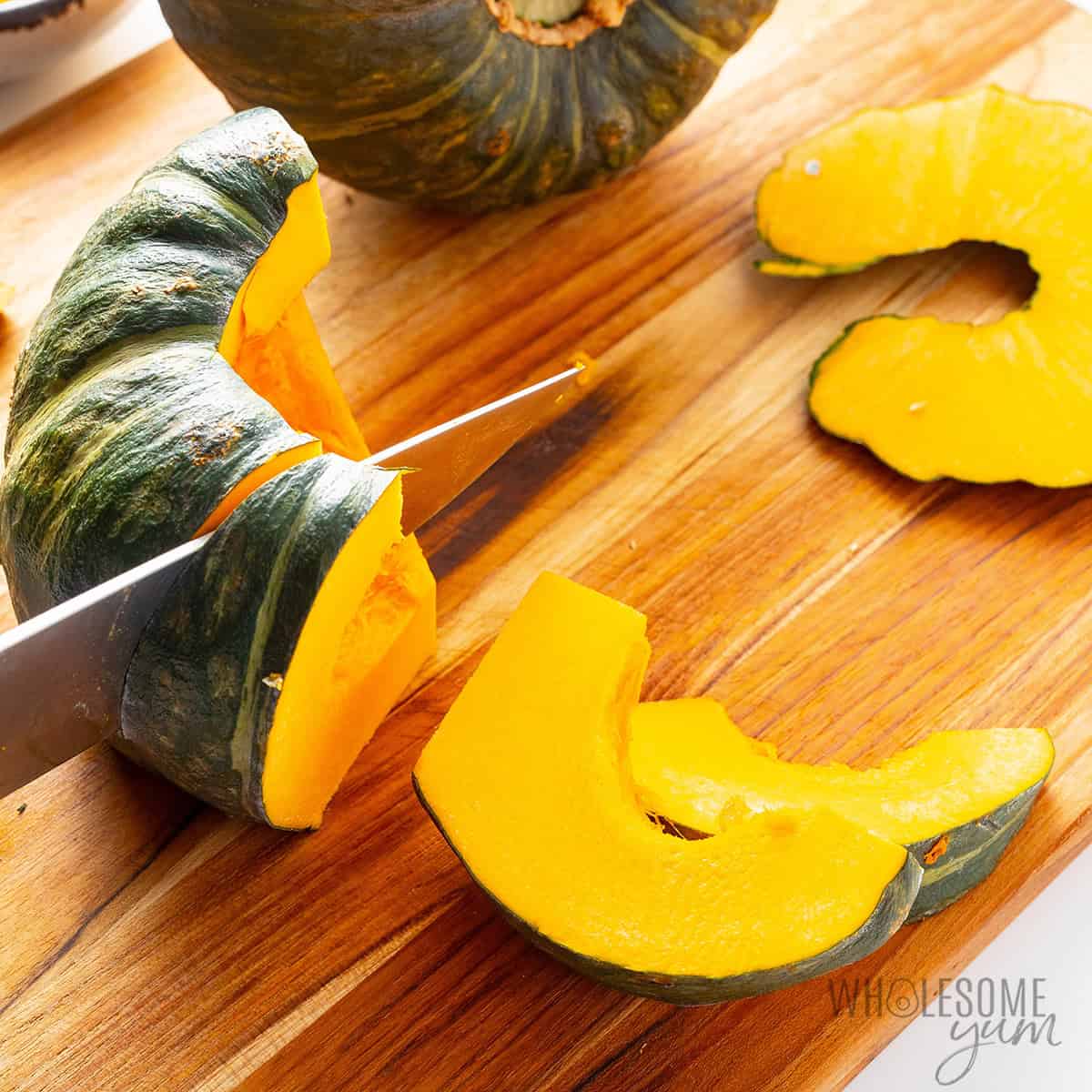


TIP: If your buttercup squash is too hard to cut, you can soften the skin in the microwave.
Pierce the whole squash in several places with a knife, place it on a microwave-safe plate, and microwave for 3-4 minutes to soften the rind. Let it cool until comfortable to handle before cutting. This is just to make slicing easier, so stop before the flesh cooks through.
How To Cook Buttercup Squash
I have step-by-step photos here to help you visualize the recipe. For full instructions with amounts and temperatures, see the recipe card.
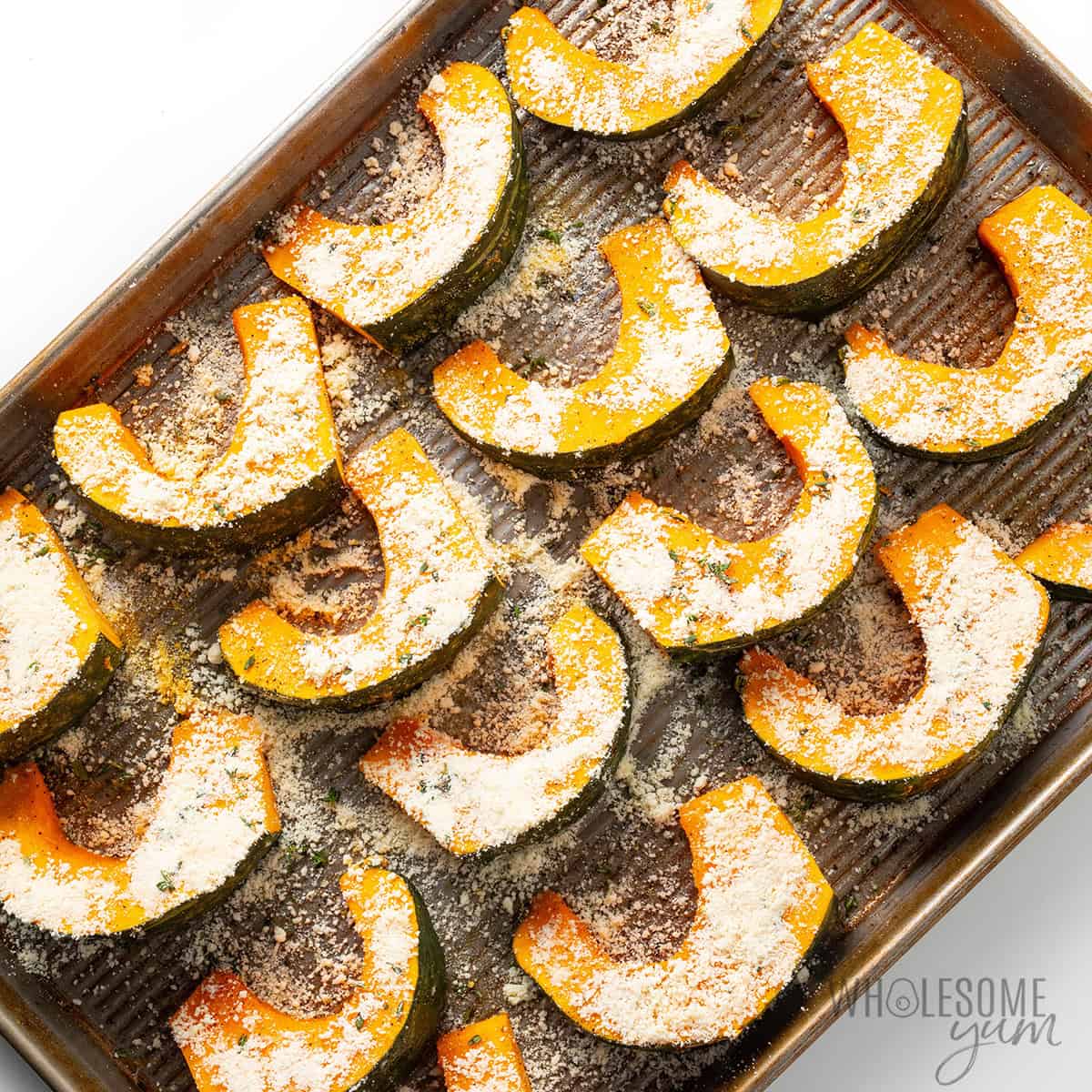
- Season the squash. While you preheat the oven, arrange the buttercup squash wedges on a large baking sheet in a single layer, with a cut side touching the pan and space between the pieces. Drizzle both sides with olive oil, then sprinkle with garlic powder, thyme, salt, pepper, and Parmesan, if using. (You can also toss the wedges in a large bowl, but they’re so big that you’d need a really huge one!)
- Roast until tender. Bake, flipping the wedges halfway through, until the edges are browned and a fork slides easily into the thickest part of the flesh. I check the center as well as the edges, because browned cheese alone doesn’t mean the squash is cooked through.

Maya’s Recipe Tips
- Adjust for your squash’s size. My recipe uses a 3-4-pound whole buttercup squash. If yours is much larger or smaller, scale the oil and seasonings accordingly. I still recommend keeping the wedges about 1 inch thick — their thickness matters more for cooking time than the weight of the whole squash!
- Use foil or an oiled bare pan for more browning. Parchment is the easiest option for preventing sticking, but I prefer foil or a bare sheet pan for better browned edges. Brush either surface with extra oil before adding the squash.
- Don’t crowd the pan or overlap the pieces. This traps steam and works against the browned coating. My favorite extra-large baking sheet fits all the buttercup squash pieces in one go (and browns them beautifully), but you can also use two smaller pans.
- Wedge thickness, the squash’s moisture, and your oven can affect the roasting time. I recommend cutting the wedges to the same thickness (about 1 inch), so they’re done at the same time. Otherwise, if some are tender while others are not, you can pull them in batches as needed. Leaving them longer than needed can cause thinner pieces to dry out.
- Use a thin spatula to flip. Slide it underneath each wedge to lift the browned coating along with the squash. Grabbing and pulling with tongs can leave some of that crispy Parmesan goodness behind.
- Shield the cheese if it gets too dark. If the Parmesan is browning quickly while the centers are still firm, loosely tent the squash with foil and continue cooking. I don’t usually need to do this, but if I do, I usually uncover for a couple minutes at the end to restore crispness.
- Save the buttercup squash seeds for a snack. I just rinse away the pulp, dry the seeds well, and toss with a little olive oil and salt. Spread in a single layer and roast at 300 degrees F for 20-25 minutes, stirring halfway through, until lightly browned.

Buttercup Squash Recipe (Garlic & Parmesan)
 By
My sweet, creamy buttercup squash recipe has a savory garlic Parmesan coating. Just 5 ingredients + 30 minutes, with easy cutting tips!


Instructions
[ See step photos See my tips ]Tap on the times in the instructions to start a kitchen timer.
-
Preheat the oven to 425 degrees F (218 degrees C). Prepare a large baking sheet by lining it with foil or parchment paper, or you can leave it bare if it’s a good non-stick surface. (If using a bare pan or lining with foil, brush lightly with oil. This is not necessary with parchment paper.)
-
Cut off the top and bottom of the squash ends. (If this is difficult to do depending on its shape, you can do this after slicing it in half in the next step.)
-
Cut the buttercup squash in half from stem to tip, and scoop out the seeds. If there is more stem or the little woody cap left on the ends that you were unable to cut off when it was whole, cut these out now. Place one half with a flat side down (stem side up or down), then slice downward in a circle, to make 1-inch-thick wedges (a little similar to how melon slices would look). Repeat with the remaining squash half.
-
Arrange the squash slices in a single layer on a large baking sheet, without touching each other. (You can line the pan with foil or parchment paper if you like, but parchment paper will reduce browning. If using foil or a bare sheet pan, brush it with some extra oil before adding the squash.)
-
Drizzle the squash with olive oil on both sides. Sprinkle both sides with garlic powder (if using), dried thyme (if using), salt, and pepper. If desired, sprinkle with parmesan cheese.
-
Roast buttercup squash in the oven for 25-30 minutes, flipping halfway through, until the squash is tender and the edges are browned.
Did you make it? Leave a review or tag me @wholesomeyum on Instagram!
Maya’s Recipe Notes
Serving size: 1 cup
- Tips: Check out my recipe tips to help you get browned edges and tender centers without burning the cheese, plus what to do with the seeds.
- Variations: Try my maple-pecan, spicy, or fresh herb options below.
- Storage: Keep leftovers in an airtight container in the fridge for up to 3-4 days. Or toss them into my Panera Autumn squash soup!
- Meal prep: Cut the wedges ahead and refrigerate in an airtight container. Oil and season when you’re ready to roast.
- Reheat: I prefer the oven at 350 degrees F for 10-15 minutes, until warm. The microwave works, too, but softens the browned coating.
- Freeze: Freeze cooked squash in airtight containers or freezer bags for up to 6-8 months. Thaw in the fridge before reheating.
I provide nutrition facts as a courtesy. Have questions about calculations or why you got a different result? Please see my nutrition policy.
Add Your Notes Your Notes
Try More Of My Recipes



© Copyright Maya Krampf for Wholesome Yum. Please DO NOT SCREENSHOT OR COPY/PASTE recipes to social media or websites. We’d LOVE for you to share a link with photo instead.
Buttercup Squash Recipe
Flavor Variations
I like the garlic-Parmesan version when I want a savory side, but the same wedges can go sweeter or spicier. If you’re looking for more buttercup squash recipes to make with your market haul, here are some other ways I’ve enjoyed:
- Maple Pecan – Omit the Parmesan, garlic powder, and thyme. During the last 5 minutes of roasting, drizzle the squash with 2 tablespoons of maple syrup and sprinkle with 1/4 cup of chopped pecans. (I use my Wholesome Yum Zero Sugar Maple Syrup here!) Adding them near the end helps keep the syrup and nuts from burning.
- Spicy – Add 1/2 teaspoon smoked paprika, 1/4 teaspoon cayenne pepper, and a pinch of chili powder to the original seasonings. This has been a reader fave!
- Herby – Replace the Parmesan, garlic powder, and dried thyme with 1 teaspoon each of chopped fresh rosemary, fresh thyme, and fresh sage. I love this version for Thanksgiving!
What To Serve With Buttercup Squash
I like this squash as the hearty side dish on the plate, with a simple protein and something fresh alongside it. Here are a few ways to turn it into dinner:
- Chicken & Turkey – My garlic butter chicken or paprika chicken picks up the savory seasoning in the buttercup squash. For a holiday meal, serve it with roasted turkey, or for a smaller gathering, air fryer turkey breast.
- Beef & Pork – The squash’s sweet, nutty flavor goes well with a rich, savory main, like my sirloin steak, air fryer pork chops, or slow cooker pork tenderloin. The air fryer and slow cooker options also leave your oven free for the squash.
- Fish & Seafood – Try my baked salmon, lemon butter baked cod, or baked shrimp for a lighter main. I especially like a little lemon with seafood to balance the sweet squash and salty Parmesan.
- Salads – You can choose a simple green salad with creamy balsamic dressing, or for more fall flavor, try my pear salad or persimmon salad.












8 Comments
Alex
0This is a knockout recipe. Used tin foil to line pan and maybe a bit more than 1/3 cup fresh grated parm. Also read a comment that they added smoked paprika so I gave mine a good sprinkle right before it went into the oven (to complement the trout I was serving it with). My wife always says I pick the best recipes and this was the best! Will definitely be growing buttercup squash in the garden next year to make this a regular dish!
Wholesome Yum D
0I’m so glad this was a hit, Alex! Love that you added smoked paprika, bet that paired beautifully with the trout. And I’m honored your wife thinks you pick the best recipes… sounds like you’ve got great taste! Growing buttercup squash just for this is the ultimate compliment!
naomi
0Loved this recipe, will make it a frequent to my meals.
Louise
0I tried this recipe and the output came out great! Truly rich, sweet, and nutty flavor. Smooth and tender texture too. I used some of my preferred ingredients the same as the ones you suggested for some variation of taste. I added some fresh rosemary, smoked paprika, and a dash of chili powder for a mild kick. The result came out really awesome! I’ll definitely make this again 🙂
Janna
0This was a good recipe to try! Loved the creamy and nutty sweet flavor of the buttercup squash! It’s going to be the perfect addition to our fall menu.
Jane
0I made this for dinner and it was so delicious! I can’t believe butter squash is such a versatile ingredient. Thanks for this recipe!
Sage Scott
0This is such a yummy butternut squash soup! We added a touch of plant-based cream and sprinkled dairy-free parmesan over the top just before eating, and it was the perfect meal on a cold rainy day!
Lesley
0We really enjoyed these. The seasoning was just perfect and complimented the squash wonderfully.