
 Shop
 My
 Custom




This Is The Vegetable Stir Fry Recipe I’ve Made For 2 Decades

These stir fry vegetables have been a long time coming, because stir frying was one of the first cooking methods I learned on my own. Even when we were living on frozen pizza back in college, a big pan of simple stir fry veggies would fill in to get us eating some actual produce. Eventually I settled on this (much better) version. I still make it today, these days with Asian-inspired meals instead of pizza. 😆 Here’s what it has going for it:
- Variety of vegetables and totally customizable – My vegetable stir fry recipe has a mix of flavors and textures, without overwhelming your grocery list. And like my sauteed veggies, you can customize it with what you have on hand or enjoy.
- Simple, flavorful sauce with clean ingredients – The sauce is super basic (just 4 ingredients!) and somehow it still hits all the right notes of savory, umami, and a hint of sweet. I’ve seen some vegetable stir fry recipes with a long ingredient list and processed mystery sauces added, but I’ve kept mine as simple as possible.
- Super fast side dish – You can have it on the table in just 20 minutes, or 10 if you chop the veggies in advance.
- All my best tips – After 2 decades of experimenting, I’ve got everything you need to know to get the perfect crisp-tender texture and the sauce just right.
If you need a simple, healthy side dish for your next weeknight dinner, these stir fry vegetables are just the thing. Make them with me!

Ingredients & Substitutions
Here I explain the best ingredients for stir fried vegetables, what each one does in my recipe, and substitution options. For measurements, see the recipe card.
Stir Fry Veggies:
My rule of thumb is a variety of aromatics, harder veggies, and soft ones, along with a stir fry sauce. My go-to mix is onions, mushrooms, bell peppers, broccoli, and snow peas, a combo I often see at restaurants.
Feel free to experiment with different colors of onions, other types of chili peppers (such as poblanos), cauliflower, sugar snap peas, or varieties of mushrooms (I used cremini, but shiitake mushrooms are awesome in a veggie stir fry). Sometimes I wilt in leafy veggies at the very end, like spinach or bok choy. I’ve got more ideas in the variations section!
You’ll also need oil for stir frying vegetables. I prefer olive oil or avocado oil. If you want to add toasted sesame oil for flavor, I recommend doing that after removing from heat, as it’s not heat-safe.

FREE 5-Ingredient Recipe EBook
GET IT NOW
Stir Fry Sauce:
I think simple sauces are best for stir fry veggies, because they let the produce shine. Here’s what you’ll need for the super simple one I made here. (I’ve got other sauce options in my variations below.)
- Coconut Aminos – This is my go-to soy sauce substitute, and I like that it adds subtle sweetness. You can use low-sodium soy sauce or tamari, but they are missing the sweet taste.
- Broth – You can use chicken broth (what I usually use), bone broth for extra richness, or vegetable broth if you need these vegetarian.
- Unsalted Butter – I use this for sauteing the garlic towards the end. Feel free to just use more olive oil instead.
- Garlic – Some vegetable stir fry recipes add this first, but I prefer to add it close to the end to allow high heat for the veggies without burning the garlic.
- Sea Salt & Black Pepper
How To Stir Fry Vegetables
I have step-by-step photos here to help you visualize the recipe. For full instructions with amounts and temperatures, see the recipe card.
- Heat the pan. To ensure your oil is hot enough, add a drop of water to your wok. If it sizzles, it’s ready!
- Cook the longer cooking veggies. Add the mushrooms and onions, and stir fry until both are soft.
- Stir fry the remaining stir fry vegetables: broccoli, snow peas, and bell peppers. Season with salt and pepper, and stir fry until the veggies are crisp-tender.


- Sauté the garlic. Create a well in the center, melt the butter, and add the minced garlic. Sauté until fragrant, then mix into the vegetables.
- Make the sauce. Add the broth and coconut aminos. Stir fry briefly. Adjust salt and pepper to your taste if needed. Serve over rice or cauliflower rice.



My Recipe Tips
- Cut the aromatics for maximum surface area. This means thinly sliced or diced onions, and sliced mushrooms. More surface area helps them cook faster and ensures that the inside cooks through at the high temperature required for a vegetable stir fry.
- Veggie cook time is determined by size, density, and moisture. Dense veggies (especially root vegetables, like onions) or larger pieces (of any vegetable) will take the longest.
- If you like the flavor, you can caramelize the onions before adding the other ingredients. I usually don’t, but it’s delicious if you have time!
- Cut the stir fry vegetables into uniform pieces. Making them the same size means that they will take approximately the same amount of time to cook.
- Add the veggies in the right order. Vegetables that need to sweat and soften (like mushrooms and onions) go in first, followed by harder veggies like carrots or broccoli. Add softer ones like peppers or zucchini next, and finally finish with leafy greens that just need a minute or two to wilt.
- You can also take a shortcut for the order. If you like to keep it simple like I do, cut any harder veggies into smaller pieces to cook at a similar rate with softer ones. Then you can add them at the same time after cooking the onions and mushrooms. (For example, broccoli and cauliflower have less moisture than zucchini, so if you’re cooking them together, make sure your florets are small.)
- Use a pan that retains heat well. A wok made from this material is the most popular option for it’s heat retention properties, but you can also use one like this for easy cleanup — and still excellent heat retention.
- Preheat your pan. It’s important that it’s hot enough before you add the vegetables. I add a drop of water to text — if it sizzles away, it’s good to go.
- Use medium-high heat. This helps the moisture evaporate. If the heat is too low, the stir fry vegetables will steam instead.
- Don’t cover or crowd the pan. If you do, the result will be watery.
- Watch for doneness. Hard veggies are done when they are tender, and may have some browning. Green veggies will turn a brighter green color when they are crisp-tender.

Stir Fry Vegetables (Quick & Easy Recipe)
 By
My easy vegetable stir fry recipe with simple sauce cooks in just 10 minutes. It's the complete guide to stir fry veggies of all kinds!


Instructions
[ See step photos See my tips ]Tap on the times in the instructions to start a kitchen timer.
-
Heat oil in a large, heavy-bottom wok over medium-high heat, until very hot. To test this, add a drop of water – it’s ready when the water sizzles away immediately.
-
Add the mushrooms and onions. Stir fry for 4-6 minutes, until mushrooms and onions are soft.
-
Add the broccoli, snow peas, and bell peppers. Season lightly with salt and pepper. Stir fry for 5-7 minutes, until vegetables are crisp-tender.
-
Push the vegetables to the sides, making a well in the center. Add the butter to the well and let it melt. Add the minced garlic. Saute without moving for about a minute, until fragrant, then stir into the rest of the vegetables.
-
Add the bone broth and coconut aminos. Stir fry for 1-2 minutes, until sauce is glossy. Adjust salt and pepper to taste, if desired. Serve over rice or cauliflower rice.
Did you make it? Leave a review or tag me @wholesomeyum on Instagram!
Maya’s Recipe Notes
Serving size: 2/3 cup stir fried vegetables
- Tips: Check out my recipe tips above to help you cook your stir fry vegetables perfectly, in the right order and with the right texture.
- Variations: Don’t miss my recipe variations to help you add other types of vegetables at the right time, get more sauce options, ideas for proteins to add, and instructions for stir frying vegetables from frozen.
- Storage: While homemade vegetable stir fry is best right out of the skillet, you can store it in an airtight container in the fridge for up to 3-5 days. The leftovers are perfect for my egg muffin cups or an omelette!
- Reheat: For best results, stir fry vegetables again to reheat. The microwave is okay, but they will be pretty limp.
- Freeze: I don’t recommend freezing these veggies after cooking, as they’ll be mushy after thawing. If you want to freeze vegetables to stir fry later, it’s best to flash blanch them in boiling water for just a minute (not long enough to fully cook). Then, plunge in ice water to stop cooking, pat dry, and freeze in a single layer on a parchment lined baking sheet. Once solid, transfer to a freezer bag. When ready to cook, stir fry vegetables from frozen, like I explained above.
📖 Want more recipes like this? Find this one and many more in my Healthy Ebook Bundle!
I provide nutrition facts as a courtesy. Have questions about calculations or why you got a different result? Please see my nutrition policy.
Add Your Notes Your Notes
Try More Of My Recipes
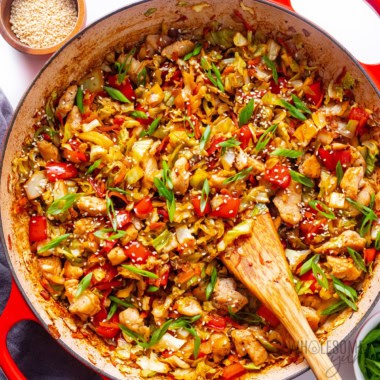
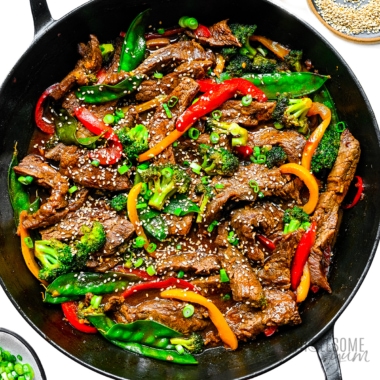

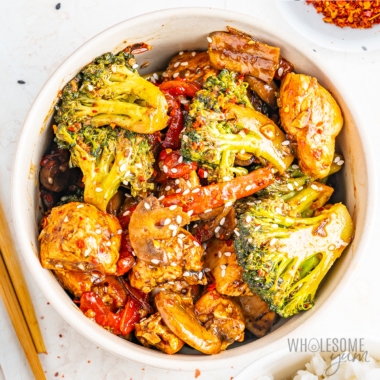
© Copyright Maya Krampf for Wholesome Yum. Please DO NOT SCREENSHOT OR COPY/PASTE recipes to social media or websites. We’d LOVE for you to share a link with photo instead.
Stir Fry Vegetables
Recipe Variations
- Change up the veggies – You can use almost any vegetables for stir fry! I recommend adding hard vegetables (like carrots, cauliflower, or water chestnuts) together with the onions. Other soft vegetables (like cabbage, asparagus, zucchini, or more interesting ones like Chinese eggplant) are best added together with the other soft veggies.
- Add ginger or fresh herbs – Feel free to saute a tablespoon of fresh grated ginger together with the garlic, or toss in any herbs you like in the last couple of minutes.
- Add heat – My husband always adds crushed red pepper flakes! A drizzle of sriracha works well, too.
- Sauce variations – If you prefer a thicker sauce, whisk 2 teaspoons of arrowroot powder (my favorite thickener) or cornstarch into the broth and coconut aminos before adding to the pan. You can also use other sauces in this veggie stir fry, such as the ones from my chicken stir fry or chicken broccoli stir fry, or even teriyaki sauce. Sometimes I drizzle peanut sauce on top after cooking.
- Add protein – Check out my recipes for chicken stir fry, beef stir fry, and shrimp stir fry to find your fave! You can also add leftover chicken breast or shredded chicken, sliced top sirloin, or baked shrimp into the stir fry vegetables at the end if you have them on hand.
- Stir fry frozen vegetables – To stir fry frozen veggies, the method is the same as fresh but the key is to cook straight from frozen — do not thaw them first! They do take a little longer and won’t be as crisp as fresh ones, but are still flavorful.

Serving Ideas
This vegetable stir fry goes with almost any Asian-style meal. Try it with:
- Asian chicken dishes – These stir fried veggies are perfect with my almond chicken or Thai basil chicken. You might prefer my Szechuan chicken if you want a kick, or teriyaki chicken or pineapple chicken for some sweetness.
- Meals in a bowl – I particularly like adding the vegetables to bowl meals, like my Korean beef bowl, egg roll in a bowl, or salmon bowl. You can use plain rice, cauliflower rice (pictured above), fried rice, or cauliflower fried rice (my fave) as the base.
- Honey garlic anything – They’re perfect with my sweet and savory honey garlic pork chops or honey garlic chicken.













34 Comments
Chris Collins
0I love a stir fry for a quick and easy weeknight dinner. This looks absolutely delish!!
rika
0I love easy recipes like this! I really enjoyed this vegetable dish!
Gavin Sutherland
0GREAT article. Really helped me perfect my stir fry veg game. The family was getting sick of over cooked or undercooked veg in the same bowl!!
Luci
0I’ve always loved vegetable stir fry! It’s a delicious meal and perfect for those who need more veggies! I love making stir fry during the week when I want a quick and healthy dinner!