
 Shop
Shop My
My Custom




FREE 5-Ingredient Recipe EBook
GET IT NOWMy Vegetable Casserole Recipe Has a Secret Creamy Veggie Sauce

Say hello to my favorite secret-ingredient vegetable casserole. I borrowed the same veggie-thickening trick I love in my creamy chicken soup, just taken in a richer, scoopable direction. While testing this veggie casserole recipe, I actually had to stop my daughter from eating the sauce straight out of the blender, which told me everything I needed to know. Here’s why it’s a keeper:
- Mixed veggies in creamy, cheesy sauce that clings to every bite – I blend part of the vegetables right into the silky smooth sauce (that’s the secret!), but you can’t taste them in there at all. This dish is ultra creamy, cheesy, and full of flavor.
- Lighter than most – Many vegetable casserole recipe I’ve seen are surprisingly heavy, with ingredients like breadcrumbs, rice, or flour. Mine is only 125 calories per cup and thickened naturally without any starch.
- Easy for weeknights – This dish is ready in under 30 minutes, which makes it easy to fit into a busy night. I usually chop the veggies ahead to make it even faster.
- Super family friendly – One of the reasons I made this veggie casserole was to have a healthy side dish my 8-year-old will actually eat, and it worked. This one’s for you if you have picky eaters!
If you’re craving something cozy, creamy, and easy, make this vegetable casserole with me!

Ingredients & Substitutions
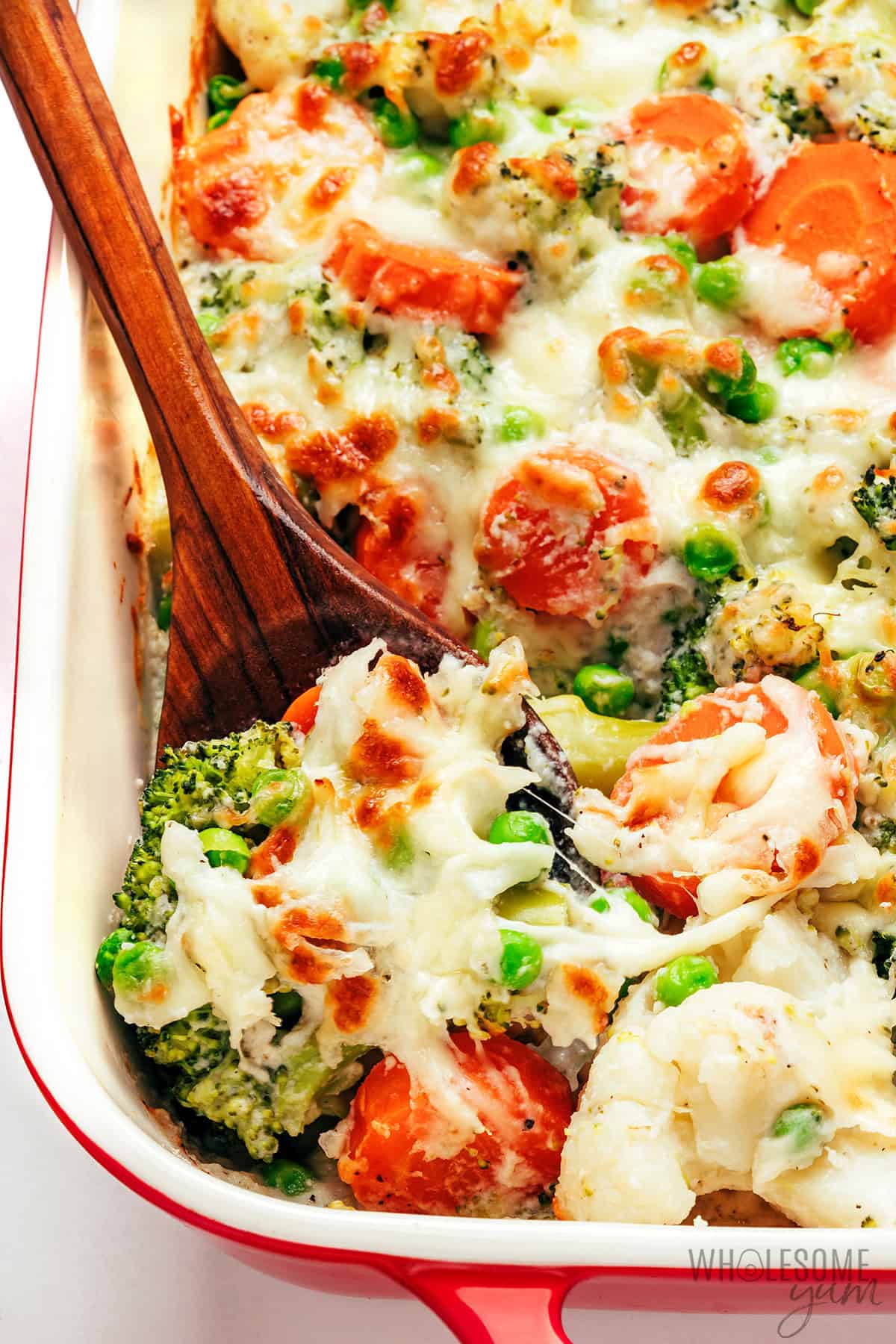
Here I explain the best ingredients for my vegetable casserole recipe, what each one does, and substitution options. For measurements, see the recipe card.
- Mixed Vegetables – Including broccoli, cauliflower, carrots, and peas for a mix of tender bites, color, and natural sweetness. I used fresh vegetables, but frozen ones work beautifully in this veggie casserole, too. You can also swap in or add other vegetables (see my tips for instructions), but I recommend keeping the cauliflower because it thickens the sauce.
- Garlic – I prefer fresh garlic cloves, but 2 teaspoons of jarred garlic or 1/2 teaspoon garlic powder works in a pinch.
- Broth – You can make your own chicken broth, or use store-bought. I recommend reduced-sodium like this for the right amount of salt. If you need a vegetarian option, vegetable broth is an easy swap and still keeps the sauce flavorful.
- Cream Cheese – Along with the blended cauliflower, this makes the sauce rich, thick, and extra creamy. You can also swap in sour cream or Greek yogurt.
- Mozzarella Cheese – For that melty, bubbly finish. Cheddar, Monterey Jack, or any good melting cheese works here.
- Seasonings – I keep it simple with Italian seasoning, sea salt, and black pepper. If you don’t have the seasoning mix, you can swap in individual dried herbs, like basil or oregano. If you need to use fresh herbs, triple the amount because they’re less intense than dried.
How To Make Vegetable Casserole
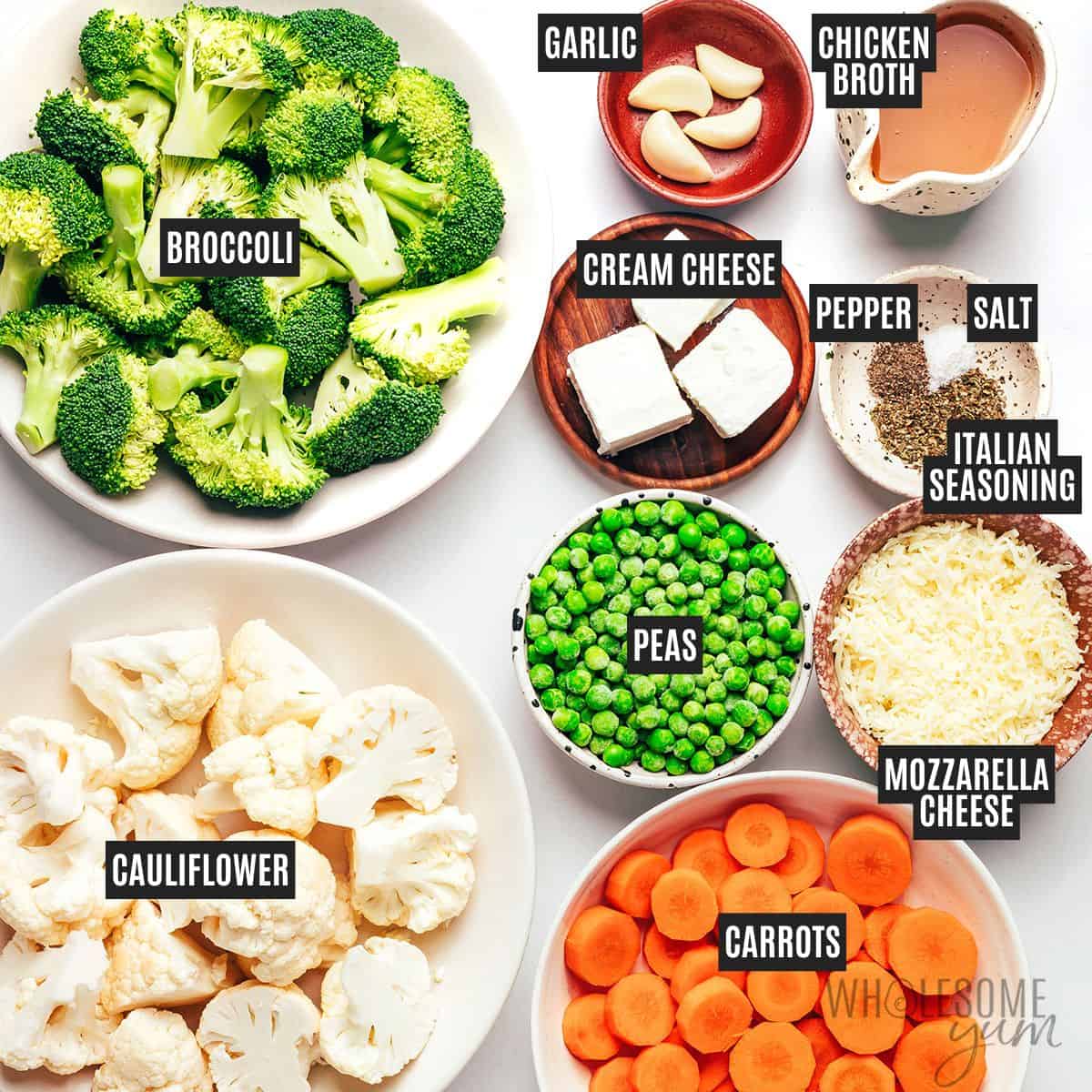
I have step-by-step photos here to help you visualize the recipe. For full instructions with amounts and temperatures, see the recipe card.
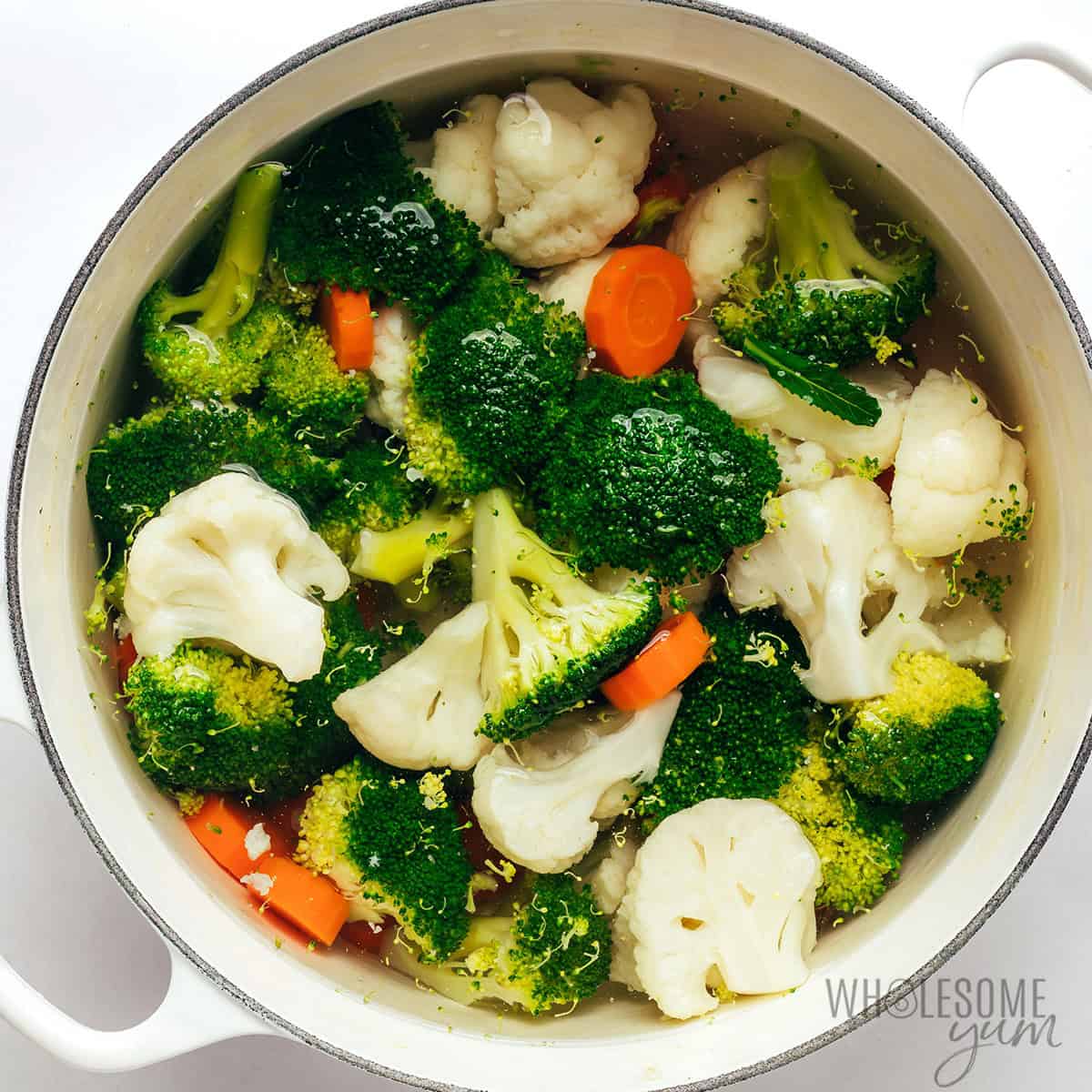
- Parboil the vegetables. Bring a pot of well-salted water to a boil. Cook the carrots for a few minutes, then add the broccoli and cauliflower and finish cooking. You want the vegetables tender, but not super soft. Drain and pat dry, so excess moisture doesn’t water down the dish.
- Blend the creamy sauce. Transfer half of the cauliflower to a blender. Add the broth, cream cheese, and seasonings. Blend until smooth. (In my picture below, I blended the florets with the broth and cream first, then added the seasonings, but you can do it all together.)
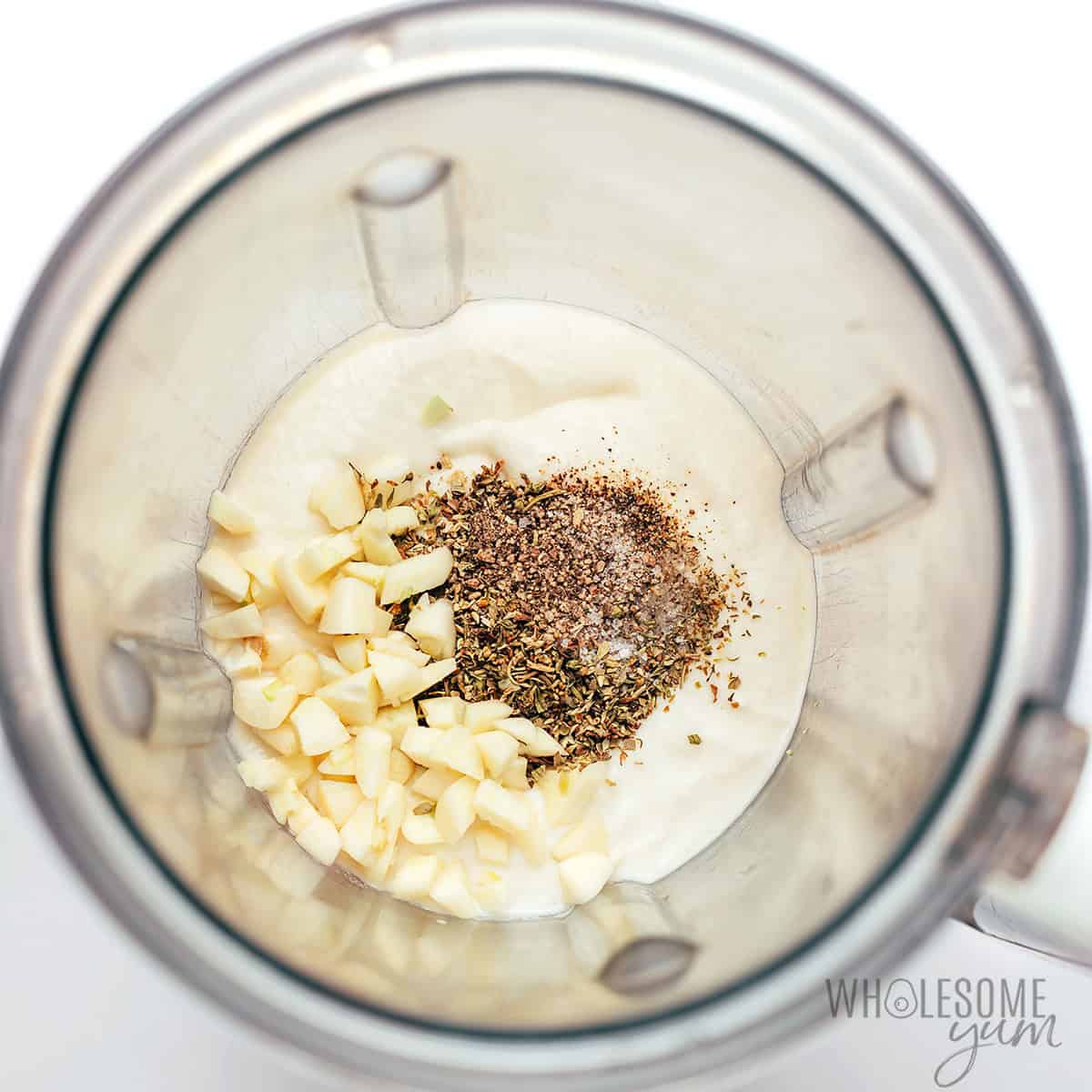
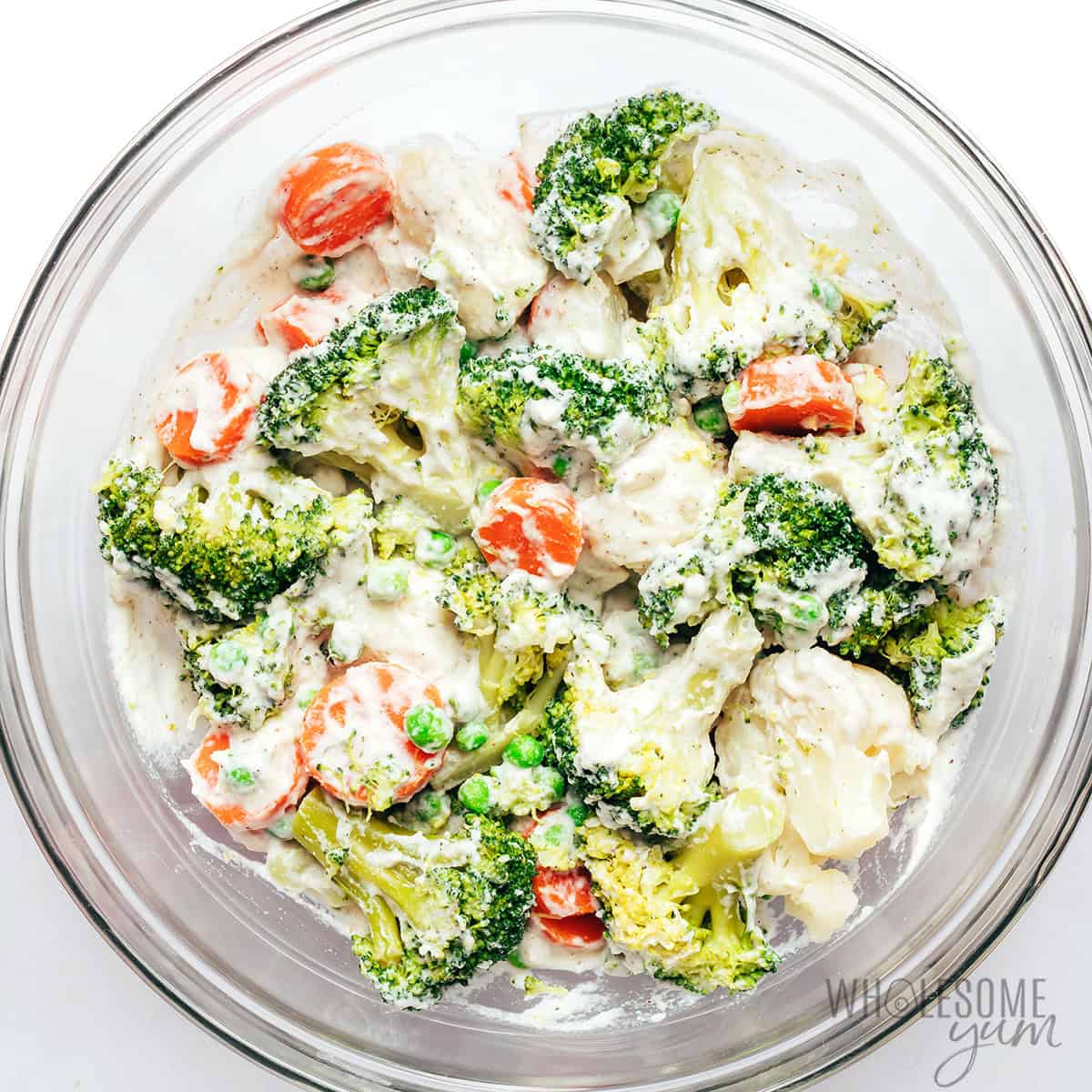
- Mix it up. Gently toss the sauce with the remaining vegetables and peas.
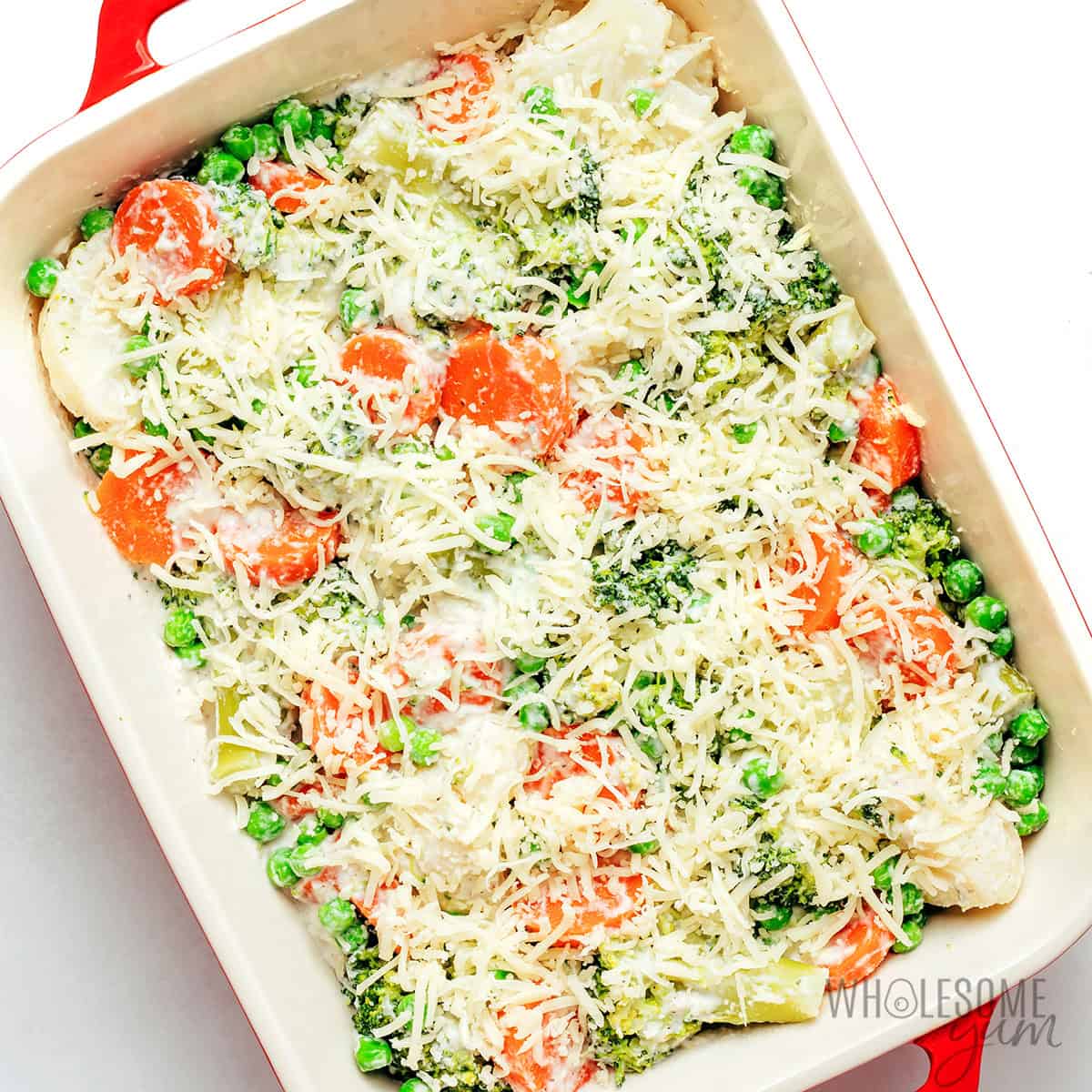
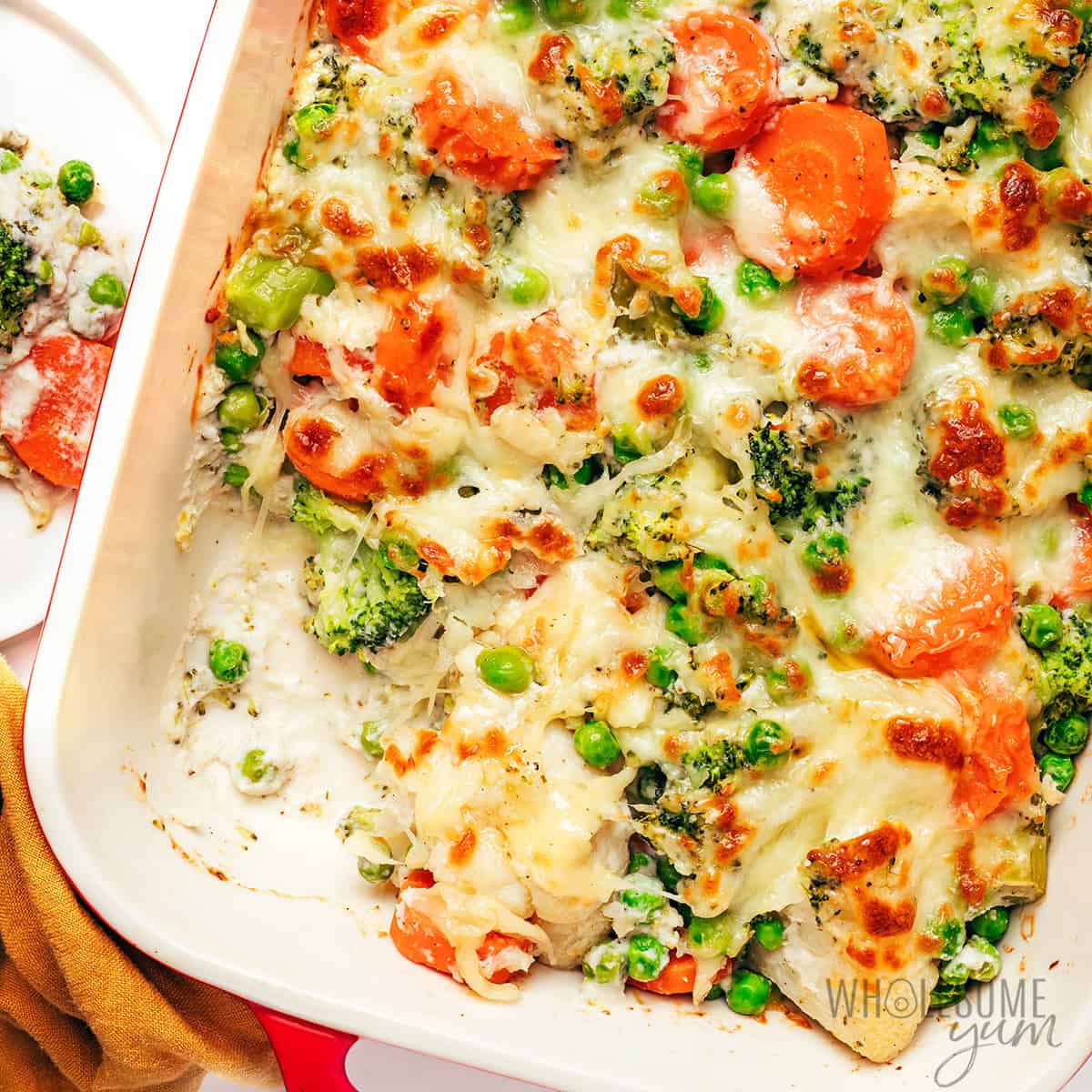
- Bake until bubbly. Transfer everything to a medium casserole dish like this, sprinkle the mozzarella cheese on top, and pop in the oven. I usually broil the vegetable casserole at the end to get a golden top.

My Recipe Tips
- Cut the broccoli and cauliflower florets larger, and the carrots 1/4 inch thick. This ratio helps them cook at the right rate for this recipe. Plus, large cauliflower florets are easier to transfer to the blender for the sauce.
- Be careful not to under or overcook the veggies upfront. If you don’t cook long enough, they’ll release liquid in the oven and make the sauce watery. But if you cook them too long, they’ll turn out mushy by the time the oven step is done.
- Dry the vegetables very well after boiling. If there’s water left on them, it can water down the sauce.
- Softened cream cheese is a must. If it’s cold from the fridge, it’ll blend into little chunks instead of a smooth sauce. When I forget to soften it in advance, I just pop it in the microwave to soften.
- Adjust the salt depending on your broth and how much you salted the water for the veggies. I taste the sauce as I go, and also taste the vegetables at this time to see if the sauce will need extra salt.
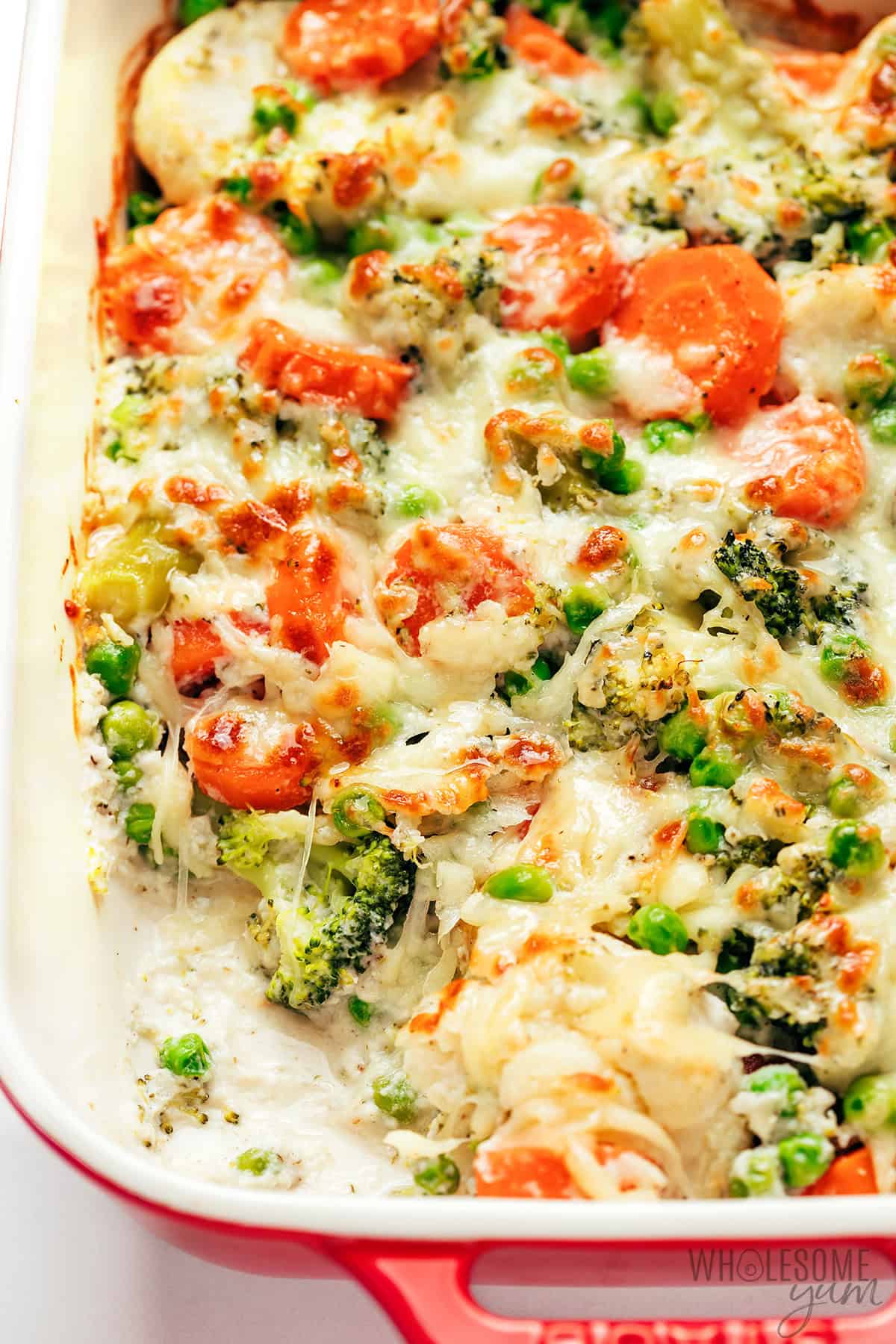
- Use the right size baking dish. I recommend this medium baking dish, pictured above. A larger casserole dish will still work, but makes the vegetable casserole more spread out, so the sauce tends to settle at the bottom.
- Watch closely while broiling. The cheese can go from golden to burnt quickly.
- How to swap in other vegetables: This vegetable casserole recipe can work with most veggies, if prepared the right way. Some good options include bell peppers, eggplant, zucchini, green beans, sugar snap peas, canned corn, or any kind of root vegetables (beets, sweet potatoes, radishes, turnips, onions, etc). You’ll need to precook them until tender, and if they release or hold a lot of water (such as zucchini or spinach), it’s best to either roast or saute them instead of parboiling.
- Make it a full meal with protein: Stir in 1-2 cups of pre-cooked chicken before baking, or for a vegetarian meal, add chickpeas and use vegetable broth. You may want a little extra cream cheese and broth to stretch the sauce if you’re making additions.
Vegetable Casserole (Creamy, Easy Recipe)
My vegetable casserole recipe has popular mixed veggies in a light, creamy sauce topped with melty cheese. Quick & easy for busy weeknights!
 Remove Ads

Instructions
Tap on the times in the instructions to start a kitchen timer.
-
Preheat the oven to 375 degrees F.
-
Fill a large Dutch oven or pot with water. Add about 1 tablespoon of salt per quart of water. Bring to a boil over high heat.
-
Add the carrots. Cook for 3 minutes. Add the broccoli and cauliflower. Cook for 2-3 minutes, until the broccoli and cauliflower are tender. Drain and pat dry.
-
Transfer half of the cauliflower florets to a blender. Add the chicken broth, cream cheese, Italian seasoning, garlic, salt, and pepper. Blend until smooth and thick.
-
Place the remaining vegetables in a large bowl and add the peas. Pour the sauce from the blender over everything and mix gently to coat.
-
Transfer the veggies to a medium casserole dish. Sprinkle shredded cheese on top.
-
Bake the vegetable casserole for about 10 minutes, until hot. Broil for 1-3 minutes, until the cheese is golden brown.
LAST STEP: Leave a rating to help other readers, or tag me @wholesomeyum on Instagram. I’d love to hear from you!
Maya’s Recipe Notes
Serving size: 1 cup
- Tips: Check out my recipe tips above to help you get the creamiest sauce, evenly cooked veggies, a perfectly golden top, and variations to use other vegetables or add protein to make it a meal.
- Storage & meal prep: Leftovers are good in the fridge for up to 3-5 days. Check out the meal prep options below for fridge and freezer storage, plus easy reheating tips.
I provide nutrition facts as a courtesy. Have questions about calculations or why you got a different result? Please see my nutrition policy.
Add Your Notes Your Notes
Try More Of My Recipes


© Copyright Maya Krampf for Wholesome Yum. Please DO NOT SCREENSHOT OR COPY/PASTE recipes to social media or websites. We’d LOVE for you to share a link with photo instead.
Vegetable Casserole
Meal Prep Options
- Store in the fridge: You can assemble the casserole without baking it, cover tightly, and refrigerate for 1-2 days.
- Freeze before baking: Assemble the veggie casserole and keep frozen for up to 3 months. Thaw overnight in the fridge before baking.
- Freeze after baking: You can also freeze leftovers after baking, especially if you want individual portions for meal prep. I like storing them in these freezer trays, which makes it faster to freeze and easier to thaw.
- How to reheat: For the best texture, thaw the frozen casserole in the fridge first. If it was already baked previously, cover the whole dish and bake at 350 degrees F or microwave individual portions. If you froze it before baking, you can follow the regular recipe instructions, but it might take a little longer if it’s cold from the fridge.
Serving Ideas
I usually serve this vegetable casserole with something simple that can cook at the same time. Here are a few easy pairings:
- Chicken – I love my creamy garlic parmesan chicken. Pan fried chicken thighs or air fryer chicken legs also work perfectly here, since you can make these while you have the veggie casserole in the oven.
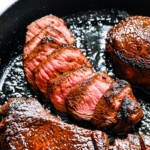
- Steak – Try my simple skirt steak for a weeknight dinner, or steak Diane for a special meal.
- Pork – This cozy dish goes well with tender air fryer pork chops, air fryer pork tenderloin, or stovetop pork steaks.
More Vegetable Casserole Recipes
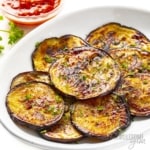
If this mixed vegetable casserole recipe is your kind of comfort food, you’ll probably love my other veggie casseroles:














8 Comments
Kim
2I made this for dinner today. Last night I prepped the vegetables and parboiled them as indicated in the instructions. I made the cream sauce as well and refrigerated it. I made a couple chicken breasts that I cut up and added to the casserole to add some protein. This recipe was delicious. I did add a little bit of Mrs dash garlic and herb seasoning. And I made the chicken in roasted garlic and herb seasoning. This is definitely a keeper.
Wholesome Yum D
0So glad it turned out so well for you, Kim! Prepping everything ahead like that makes dinner feel effortless, and adding the seasoned chicken sounds like the perfect way to bulk it up. Definitely a keeper!
Melissa
0How would this change with frozen veggies?
Maya | Wholesome Yum
0Hi Melissa, You can definitely use frozen veggies! The boiling time might be a little different.
Petula
0Tastes great.
Wholesome Yum D
0Glad you enjoyed it, Petula! Always nice when a simple recipe hits the mark!
Kim Nedz
0Hello Maya, My name is Kim. Can I add a protein to the recipe? Can I make the sauce a day prior to assembling it and baking it?
Maya | Wholesome Yum
0Hi Kim, Yes, you can! I have info on adding protein in my tips above. You can probably make the sauce the day before too, but would need to reheat it to make it runny enough to mix.