
 Shop
 My
 Custom




FREE 5-Ingredient Recipe EBook
GET IT NOWAs one of the most popular dairy-free milk alternatives, almond milk is everywhere these days. Sure, it’s convenient to buy at the store, but learning how to make almond milk at home is a game-changer if you use it frequently. My homemade almond milk recipe has cleaner ingredients, tastes way better, and only takes a few minutes. Plus, you can easily make vanilla or other flavors. Make it with me, and you might never go back to store-bought!
Why You Need My Almond Milk Recipe

- Better flavor than store-bought – I’ve been cooking and baking with almonds for years (I even have my own brand of super fine almond flour), so I know a thing or two about them! 😉 My homemade almond milk has a slightly nutty, mildly sweet flavor that’s far better than anything you’ll find on store shelves.
- Silky smooth consistency – It’s perfect for adding to your coffee, cereal, or just enjoying on its own. I use this instead of dairy milk in many of my baking recipes, too.
- Healthier, with clean ingredients – Unlike store-bought options, there are no gums, sugar, or preservatives. It’s got 2 grams of net carbs, 1 gram of protein, and of course it’s dairy-free. Plus, because I use a higher percentage of almonds than packaged brands do, you get more of the nutrients from the nuts.
- No soaking needed – Many almond milk recipes require soaking almonds first, but mine is much faster. You can whip this up in just 5 minutes!


Ingredients & Substitutions
Here I explain the best ingredients for my almond milk recipe, what each one does, and substitution options. For measurements, see the recipe card.
- Almonds – You’ll need unsalted, raw almonds for the best almond milk. I don’t recommend roasted ones, as they’ll make your milk bitter and less creamy. Some alternatives:
- Almond Butter – This is actually even easier because you don’t have to strain it! Use 1/4 cup of unsalted almond butter instead of 1/2 cup of almonds.
- Other Nuts – Any kind will work, as long they are raw.
- Nut Free – My hemp milk recipe is very similar, using hemp hearts instead.
- Water – I always use cold, filtered water for the best taste.
- Sea Salt – Totally optional, but just a pinch of sea salt really brings out the sweetness of the almonds.
See my Flavor Variations section below on how to make almond milk in other flavors!

How To Make Almond Milk
I have step-by-step photos here to help you visualize the recipe. For full instructions with amounts and temperatures, see the recipe card.
- Grind. Use a spice grinder or small food processor to grind the almonds until powdered.
- Blend. Place the ground almonds into a blender, add the water and salt, and blend at high speed until creamy.


- Strain. Pour the liquid through a sieve lined with cheesecloth or a nut milk bag to remove any nut pieces.
- Blend again. Pour the strained mixture back into the blender and add your favorite add-ins (if any — see my options below). Blend again and enjoy!



My Recipe Tips
- Should you soak the almonds? I grind the almonds instead of soaking them to make this recipe super fast. Some people say homemade almond milk is creamier if you soak them, but I haven’t noticed much difference with my method of grinding them first. If you want to soak, just place the whole nuts in a large bowl, cover in water, and let them soak overnight. Drain and rinse, then toss right into the blender with the water and salt.
- Don’t have a sieve, cheesecloth, or nut milk bag? No problem! Even a dish towel will work in a pinch. Just make sure to give it a good squeeze to get all the milk out.
- Don’t have a food processor? Just use the soaking method above instead, and you’ll only need your blender.
- Want a stronger flavor? Double the almonds. I use a ratio of 1 part almonds to 8 parts water, but you can double the amount of nuts if you want it extra nutty and more creamy.
- For an extra smooth texture, strain the milk twice. This ensures no bits of almond pulp remain, giving you the creamiest almond milk possible.
- What to do with the leftover pulp? Make almond meal with it! Just spread it on a baking sheet and bake at 200 degrees F (or the lowest temp your oven has) for 2-3 hours, stirring a couple times. You can also use the leftover pulp in smoothies or oatmeal for a fiber boost and nutty flavor.
- Shake before using. Since my homemade almond milk doesn’t have any stabilizers, it can separate in the fridge. Just give it a good shake before serving. I like to store it in a glass jar—less fuss and cleanup than using the blender again.
Flavor Variations
One of the benefits of making almond milk yourself is you can customize it however you like! Here is how to make other flavors:
- Vanilla – Vanilla almond milk is my fave! Just add vanilla extract, or if you’re feeling fancy, use real vanilla bean seeds.
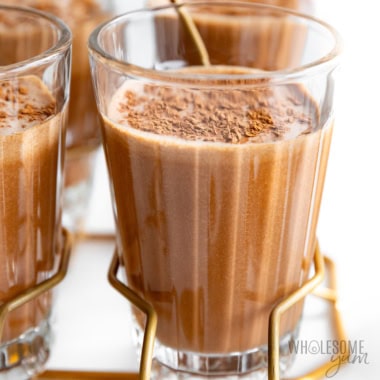
- Chocolate – Blend in some cacao or cocoa powder along with vanilla.
- Hazelnut – Replace some (or all!) of the almonds with hazelnuts.
- Strawberry – I’ve got a strawberry almond milk recipe for that.
- Spiced – Mix in cinnamon or other warm spices like cardamom, cloves, ginger, pepper, nutmeg, coriander, and/or cumin. Tastes like a light eggnog!
A Note On Sweeteners:
Unsweetened almond milk doesn’t need sweetener, but for flavors, I prefer to add powdered Besti sweetener. It’s 100% natural, sugar-free, and dissolves effortlessly in cold liquids, making it an ideal choice for sweetening your nut milk. Some people prefer to add honey or maple syrup, and that works fine if you prefer.
Storage Instructions
- Store: My almond milk recipe lasts about 5 days in the fridge, but I’ve kept mine for up to a week without issues. Just toss it if it smells bad. There are no preservatives, so it can vary! It will settle and thicken over time, so just thin it out with more liquid and blend if needed.
- Freeze: You can use any freezer-safe container, leakproof bags, or even an ice cube tray. I recommend freezing it in portions you’ll use at once, so you only defrost what you need. You can thaw it in the fridge overnight, or heat it in a saucepan on the stove over low heat.

Ways To Use It
One of the reasons I love homemade almond milk so much is that it’s so versatile. Here are some of the ways you can use it:
- Coffee – No, almond milk doesn’t taste as creamy in your coffee as actual cream, but it’s a nice light option for your favorite latte. I like a splash in my bulletproof coffee, and sometimes use it to make sugar-free hot chocolate.
- Baking – This is actually the top way I use it. Try it in my zucchini muffins, low carb yeast bread, and for dunking healthy oatmeal cookies or chocolate chip cookies.
- Soups – Unsweetened almond milk can lighten up creamy soups. Try it instead of cream in my cheeseburger soup or cream of asparagus soup.
- Smoothies – It’s fantastic in smoothies! I’m always using it in my husband’s favorite chocolate peanut butter smoothie, but it’s also perfect for a protein smoothie, pumpkin smoothie, or my healthy detox smoothie.
- Hot or Cold Cereal – Use this milk for chia pudding, oatmeal (or my peanut butter overnight oats), or as a milk substitute for healthy granola.
- Ice Cream – My almond milk ice cream is dairy-free and absolutely delicious. You won’t even miss the regular stuff!
My Tools For Making Almond Milk
- Food Processor – For grinding the nuts. A spice grinder works, too.
- High-Power Blender – Mine is powerful enough to make the almond milk smooth and creamy, and large enough to handle a double batch if you want to make extra.
- Straining Tools – I use a fine mesh sieve lined with a nut milk bag, which I prefer over cheesecloth because they’re easier to clean and reusable.

How To Make Almond Milk (In 5 Minutes!)
 By
Learn how to make almond milk in just 5 minutes — no soaking! You can make my homemade almond milk recipe plain, vanilla, or chocolate.


Ingredients
[ See substitutions ]Tap underlined ingredients to see the ones I use.
Plain Unsweetened Almond Milk:
Vanilla Add-Ins:
Chocolate Add-Ins:
Instructions
[ See step photos See my tips ]Tap on the times in the instructions to start a kitchen timer.
-
Place the almonds in a spice grinder or small food processor and blitz for about 1 minute, until powdered. (You can skip this step if using nut butter.)
-
Combine the ground almonds, water, and salt (if using) in a high-power blender. Blend for about 1 minute, until creamy.
-
Pour the liquid through a sieve lined with cheesecloth or a nut milk bag to remove any remaining nut bits.
-
Return the almond milk to your blender. Add the vanilla or chocolate add-ins at the same time if you want flavored almond milk. Blend until smooth, about 30 seconds.
Did you make it? Leave a review or tag me @wholesomeyum on Instagram!
Maya’s Recipe Notes
Serving size: 1 cup
Adapted from Eat Dairy Free by Alisa Fleming
📖 Want more recipes like this? Find this one and many more in my Keto Ebook Bundle!
I provide nutrition facts as a courtesy. Have questions about calculations or why you got a different result? Please see my nutrition policy.
Add Your Notes Your Notes
Try More Of My Recipes


© Copyright Maya Krampf for Wholesome Yum. Please DO NOT SCREENSHOT OR COPY/PASTE recipes to social media or websites. We’d LOVE for you to share a link with photo instead.
How To Make Almond Milk

Gratitude Moment

I love almond milk, but I love my Wholesome Yum Blanched Almond Flour even more! I got so tired of the inconsistencies with how coarsely ground different brands are and ending up with gritty baked goods, so in 2020, I started my own. The super fine texture was really important to me, so I’m grateful I figured it out. Grab a bag and see for yourself!
Here I am making low carb pancakes with my almond flour and homemade almond milk. It’s one of my favorite ways to use them both together.
What are your favorite ways to use almond milk? Let me know in the comments!











59 Comments
Mike
0Are you sure that the nutritional info is for only 1/4 cup serving?
Maya | Wholesome Yum
0Hi Mike, The nutrition info is for a 1 cup serving, not 1/4 cup.
Jill G
0I want to use this for smoothies. Could I just use 1/4 cup almonds and 1 cup water amen mix togetherness with my smoothie to get the whole almond benefit?
Maya | Wholesome Yum
0Hi Jill, Sure, you can do that!
Sheila J Truman
0Can you just use a food processor if you don’t have a blender? Thank you.
Maya | Wholesome Yum
0Hi Sheila, Yes, you can. It tends to be just a little bit less smooth and creamy, though.
Linda Sutley
0I have been making my own almond milk (just raw almonds and filtered water) for three years. It is a puzzlement to me what to do with the almond meal that remains after you strain the milk. I put a small amount of it in salmon patties in lieu of breadcrumbs or cornmeal, and it works well there. What else is it good for? Any ideas?
Aja
0Yes! I have found several good recipes for the almond pulp! Crackers and bread. I can email them to you if you’d like!
Maya | Wholesome Yum
0That’s awesome, Linda! Salmon patties are a great idea. It would probably work anywhere you might need a replacement for breadcrumbs, like meatballs or meatloaf.
Pat Katz
0And thank you so much for the almond butter idea for almond milk!!!!
Maya | Wholesome Yum
0You’re welcome, Pat! Alisa’s recipe is one of my favorites.