
 Shop
 My
 Custom




- My Easy, Buttery Coconut Flour Pie Crust Works For Sweet Or Savory Pies
- Ingredients & Substitutions
- How To Make A Pie Crust With Coconut Flour
- Maya’s Recipe Tips
- How To Use Coconut Flour Pie Crust For Different Types Of Fillings
- Coconut Flour Pie Crust (Low Carb & GF) Recipe card
- Make Ahead Options
- Pies To Make With Coconut Pie Crust
- Recipe Reviews
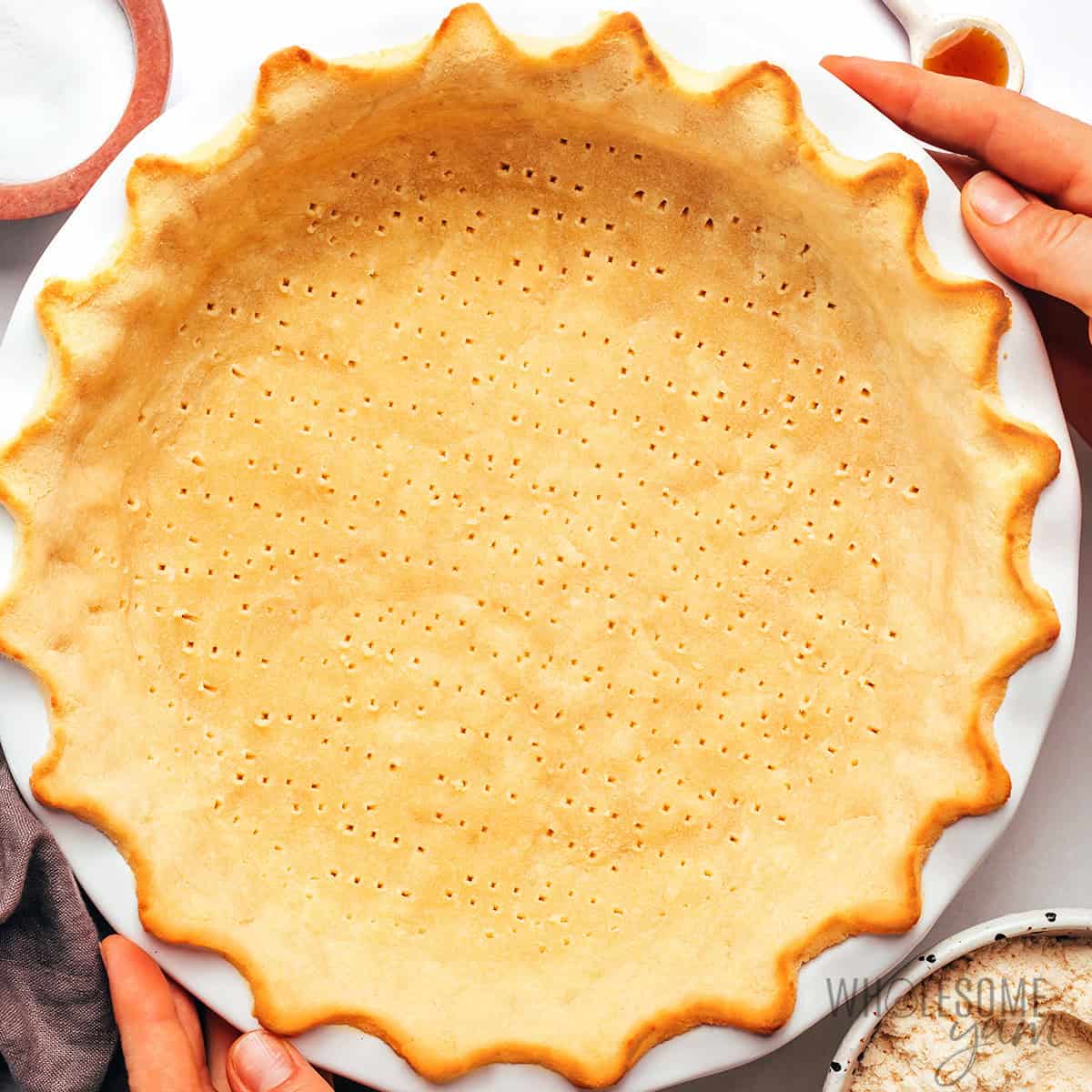
My Easy, Buttery Coconut Flour Pie Crust Works For Sweet Or Savory Pies

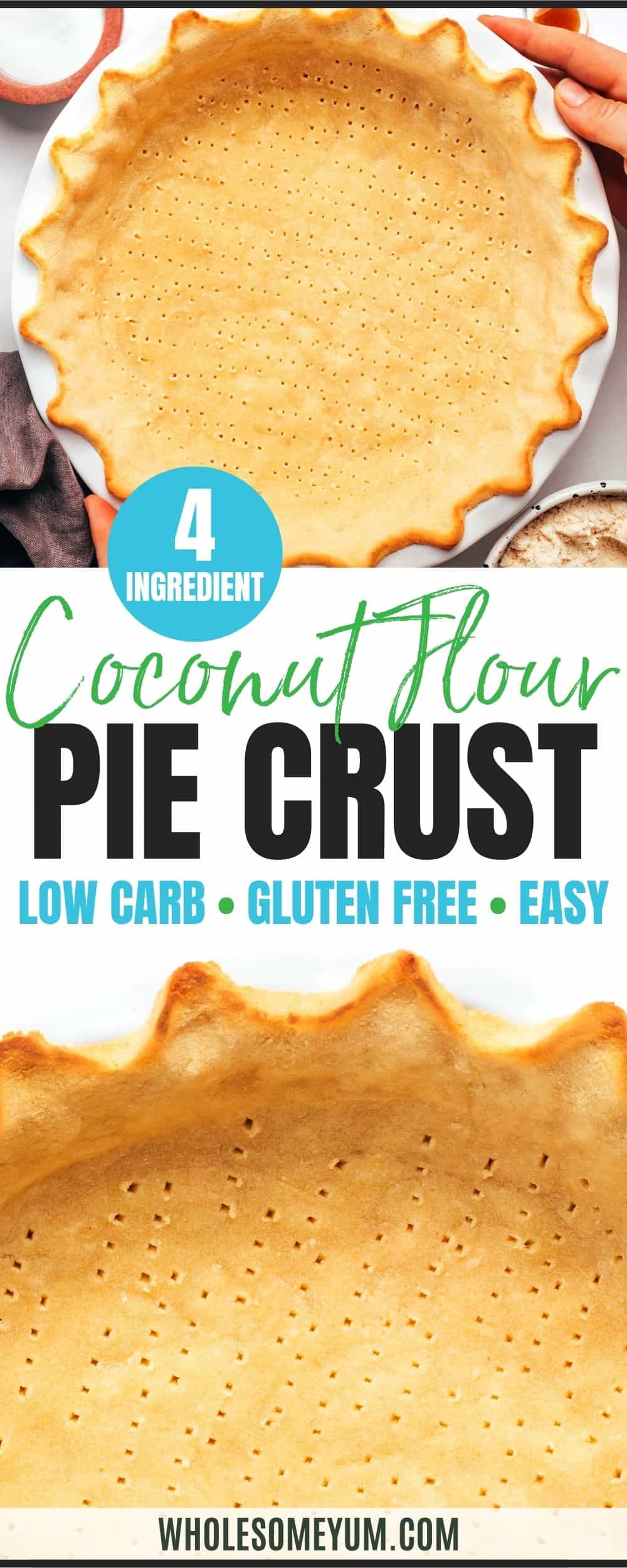
This coconut flour pie crust mainly came about because so many of you asked me if you can use coconut flour for my almond flour pie crust. The answer is no, you can’t, but you can make this pie crust with coconut flour instead!
This one also has a few other advantages over the almond version: It has a finer, more uniform crumb. It tastes lighter and milder. But it’s still buttery. Here’s why I think it’s just as good as my almond fave — and doesn’t have the problems that coconut flour recipes so often have:
- Buttery and tender, not dry – Coconut flour is super absorbent, unlike any other flour, and that’s exactly what makes it dry out baked goods quickly. That’s why I used plenty of butter in this coconut crust to counteract that effect. It has a delicate bite that’s a little crumbly but oh-so-buttery (a lot like coconut flour shortbread!), plus lightly golden edges.
- Just 4 basic ingredients, no rolling required – I press the dough right into the pie plate. It’s less work, and this crust is too fragile to transfer after rolling anyway.
- Just 4 basic ingredients – Plus salt and optional vanilla. If you’re familiar with low carb or gluten-free baking, you probably have these staples on hand. Which brings me to my next point…
- Low carb and gluten free – Yes, my coconut flour pie crust recipe is keto friendly, grain free, and nut free. (Coconuts are drupes, not nuts!)
- Make it sweet or savory – I started with the sweet version first, but have also added a savory option so you can use it for quiche or spinach pie. Don’t worry, the coconut flavor is very subtle, so it’s still versatile!
Whether you’re planning a holiday pie or a savory brunch, my coconut flour pie crust is such an easy one to make. Grab your pie pan and make it with me!

“I made this recipe for my mom’s birthday (chocolate cream pie with whipped cream). Everyone raved over the pie and especially the crust. They were amazed it was gluten free!”
-Theresa
Ingredients & Substitutions
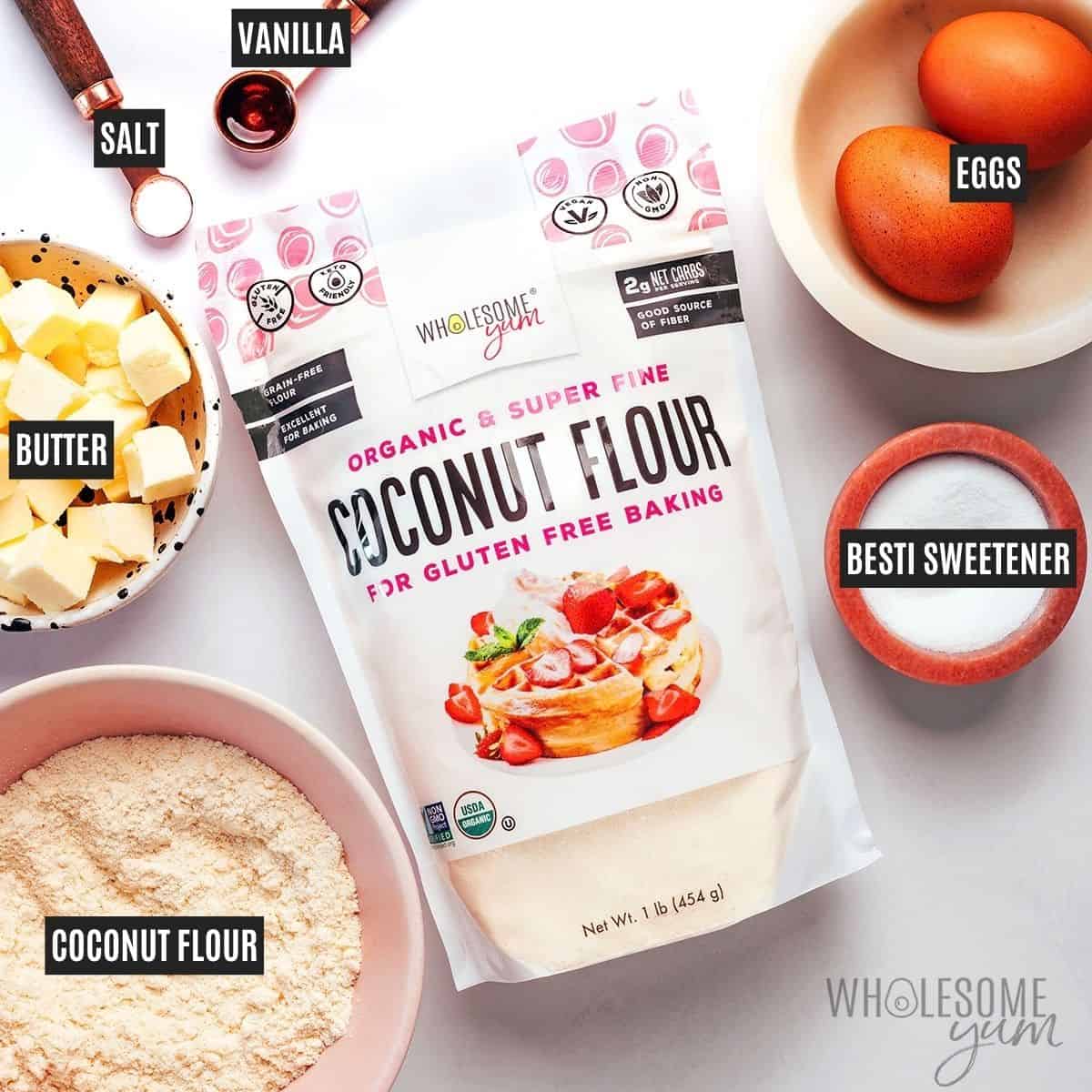
Here I explain the best ingredients for my coconut flour pie crust recipe, what each one does, and substitution options. For measurements, see the recipe card.
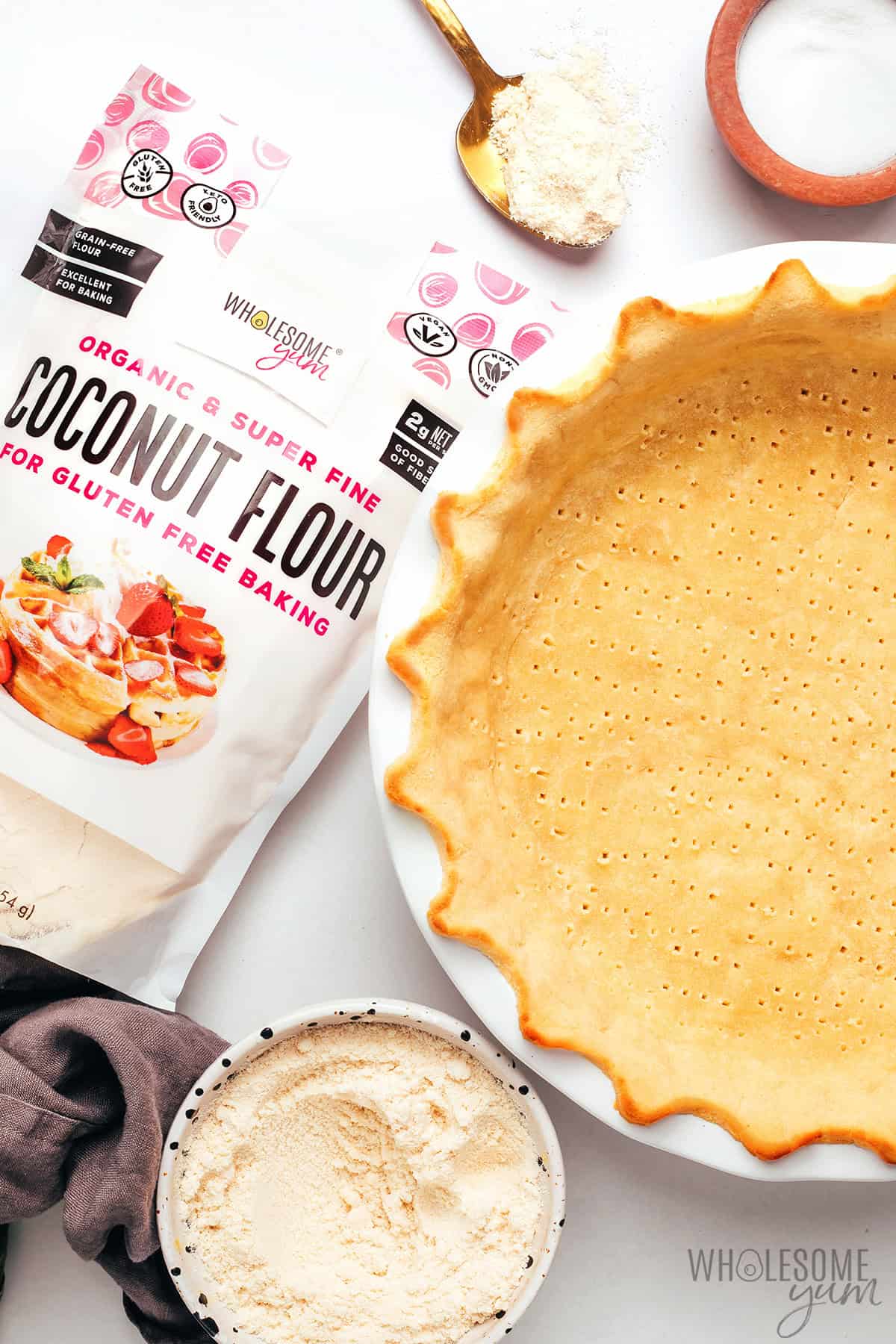
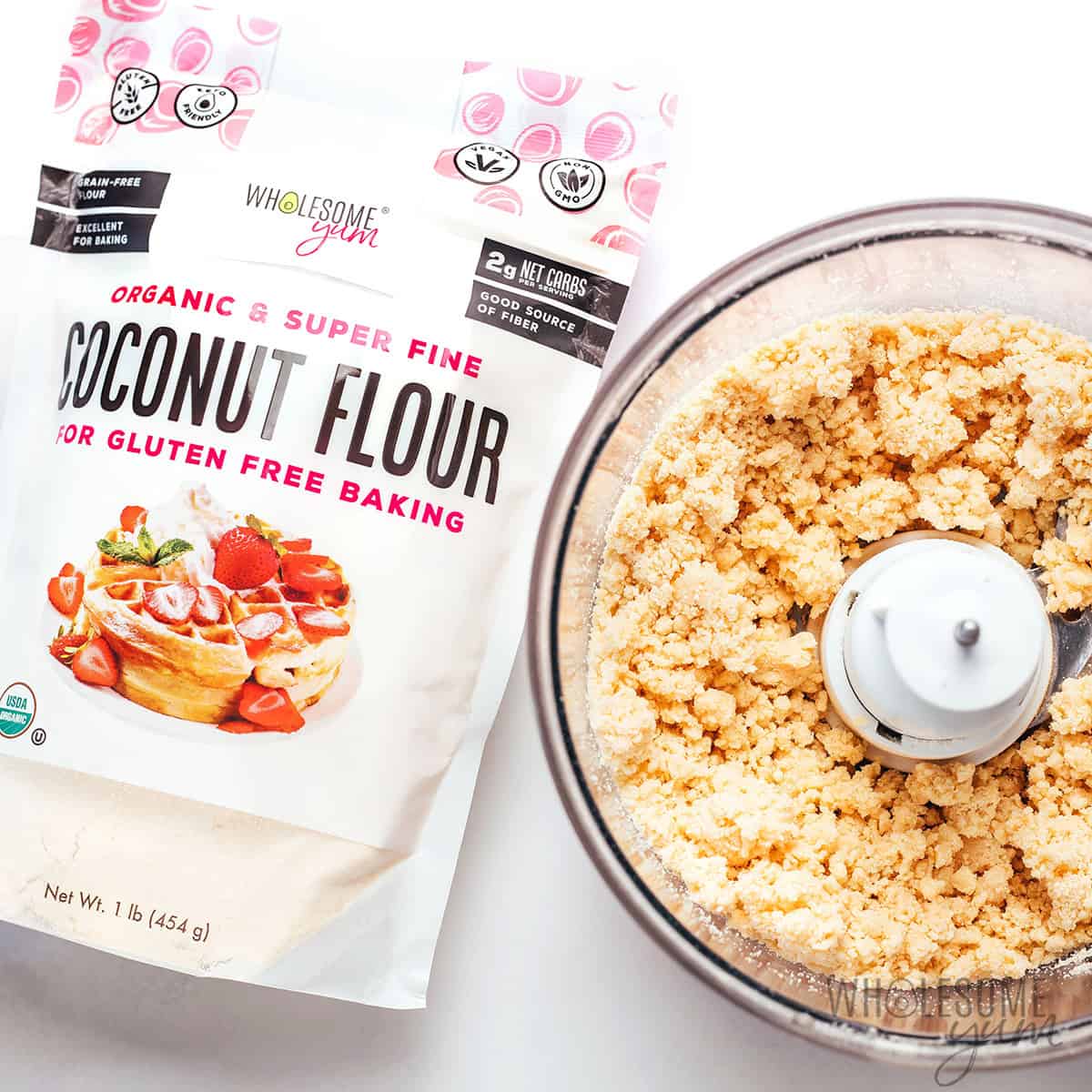
- Wholesome Yum Organic Coconut Flour – Different brands absorb moisture differently, so the ideal amount can vary if you use a different brand. How you measure matters a lot, too. Do not swap this with any other type of flour, because no other kind absorbs moisture like coconut does. If you want to use almond flour, make my almond flour pie crust or gluten-free pie crust instead.
- Unsalted Butter – I use cold butter, cut into pieces, to give the crust a rich, buttery flavor and counteract the drying coconut flour. I like this grass-fed unsalted butter for its creamy flavor, and prefer unsalted so I can control the salt separately. You can substitute this grass-fed ghee if you’re lactose-sensitive, or this butter-flavored coconut oil for a dairy-free option. The texture may be a little different, since both contain less water than regular butter. I still recommend using them chilled and solid, not melted.
- Eggs – To hold the coconut flour dough together, since it has no gluten.
- Besti Monk Fruit Allulose Blend – I’ve made this coconut flour pie crust with all kinds of sweeteners over the years, and this is by far my favorite. It locks in moisture, making the crust more tender and less dry, and has no refined sugar without any aftertaste. For savory pies, omit the sweetener altogether. Otherwise, here are my notes on other sweetener options:
- Wholesome Yum Granulated Allulose – The closest swap for Besti, as it has the same moisture benefits, but it’s less sweet. You may want to increase the amount to get the same sweetness.
- Other sweetener blends – Use my sweetener conversion chart, but most will give you a drier result.
- Liquid sweeteners – I don’t recommend these here because they’ll make the dough too wet.
- Granulated sugar – This works fine from a recipe standpoint if it fits your needs. I prefer to avoid refined sugar.
- Sea Salt – For balance. You’ll need some regardless, but the savory version needs more.
- Vanilla Extract – Optional, but I like the little bit for a dessert pie.
FREE 5-Ingredient Recipe EBook
How To Make A Pie Crust With Coconut Flour
I have step-by-step photos here to help you visualize the recipe. For full instructions with amounts and temperatures, see the recipe card.
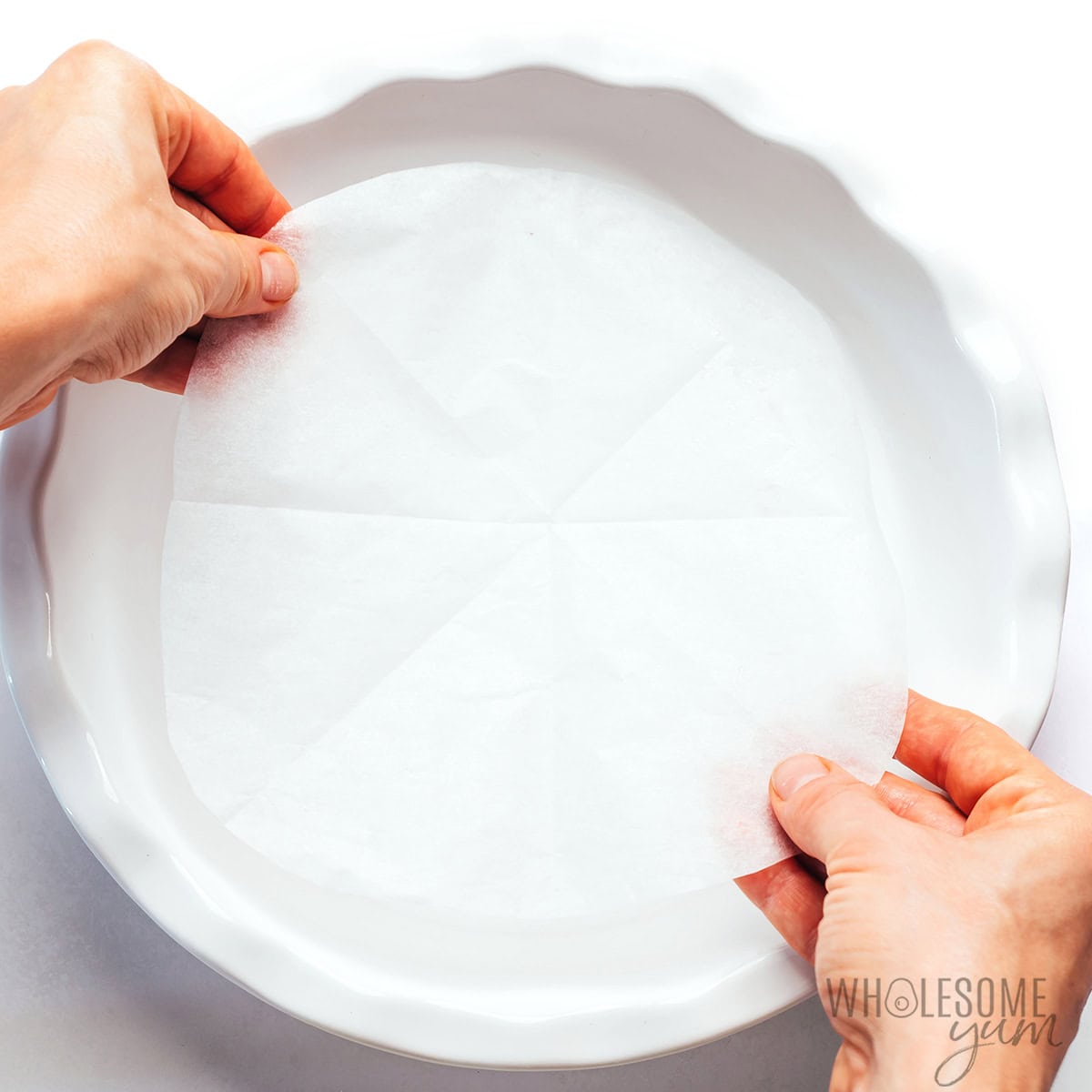
- Prepare the pie pan. Line the bottom of a 9-inch pie pan with parchment paper or grease it very well. You can technically skip the paper, but I prefer to add it for easy release. In my picture below, I used the fold-and-cut method: Fold a square piece of parchment paper in half, then in half again. Flip the pan over and place the corner of the parchment square into the center of the bottom, then cut in a quarter-circle along the edge. Unfold it and you have a perfect circle that will fit into the bottom of your pie pan! For an even easier option, grab these parchment paper rounds that come precut and will lay flat in your pan.
- Pulse the flour and butter. In a large food processor, combine the coconut flour, cold butter, Besti, and sea salt. Pulse until everything is mixed and looks like coarse, buttery crumbs.
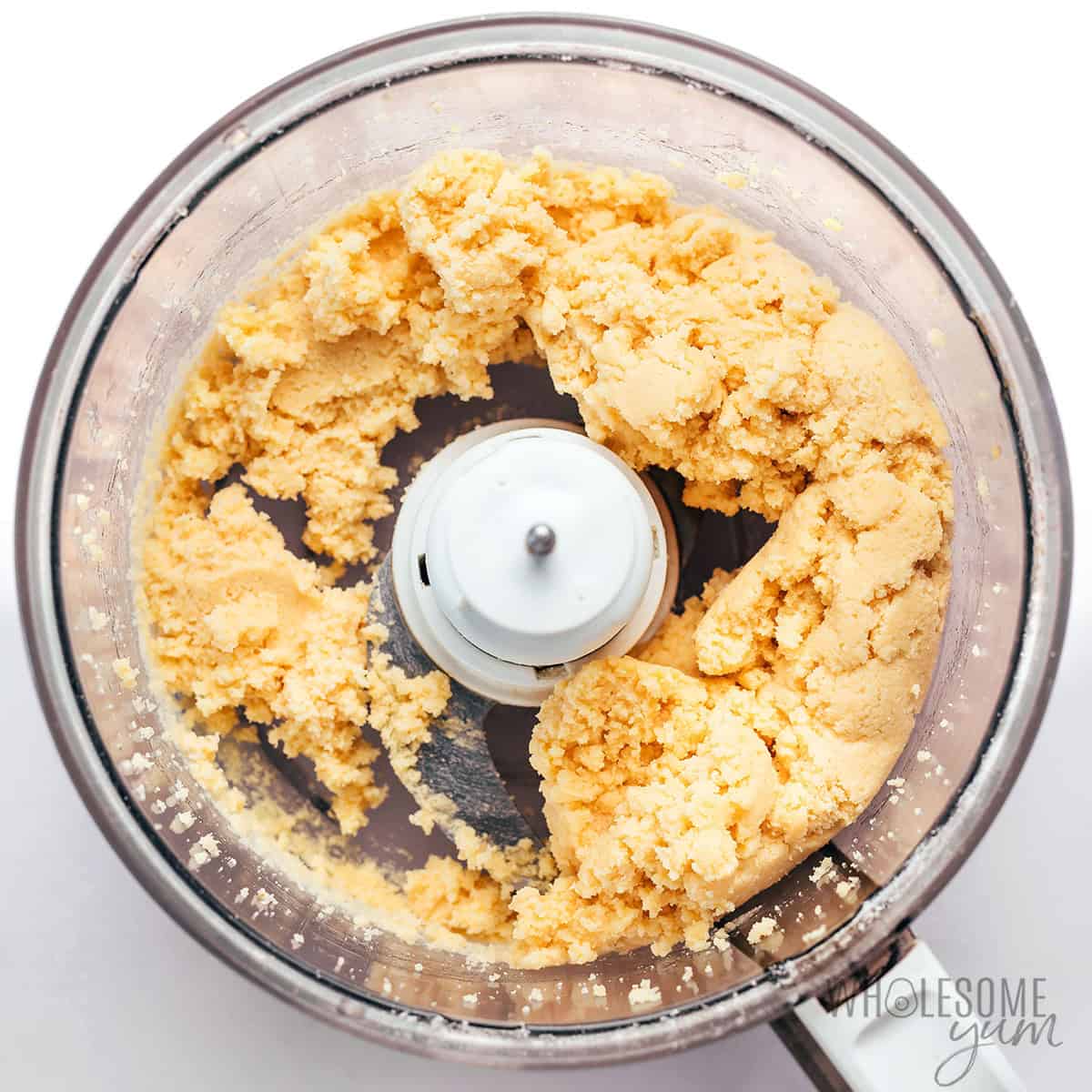
- Finish the dough. Add the eggs and vanilla, if using, and process until the dough comes together. It may look dense or a little crumbly, but should hold together when you press some between your fingers.
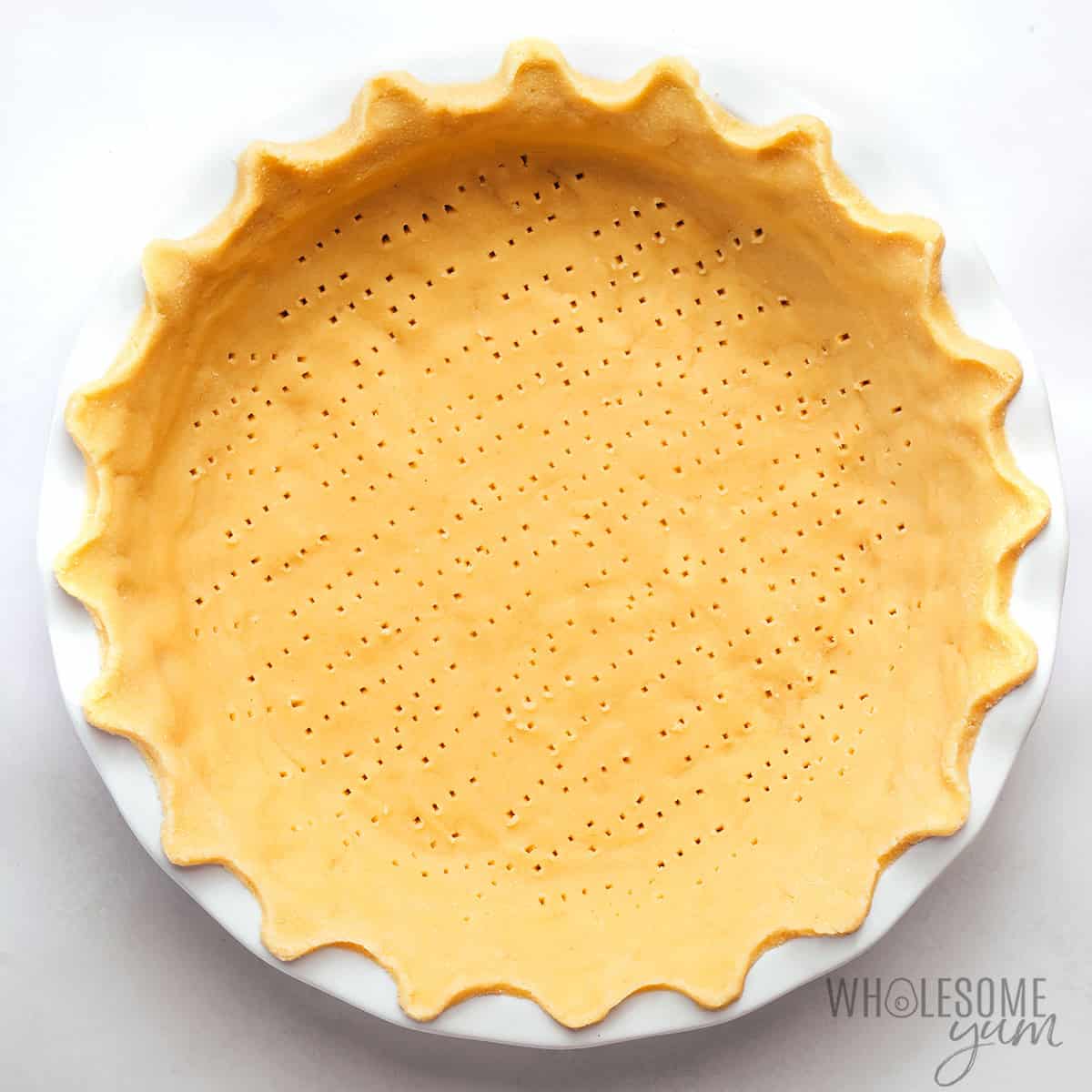
- Press into the pan. Press the coconut flour pie crust dough evenly across the bottom and up the sides. Flute the edges if you like. Prick the bottom with a fork or toothpick, to prevent bubbling as it bakes.
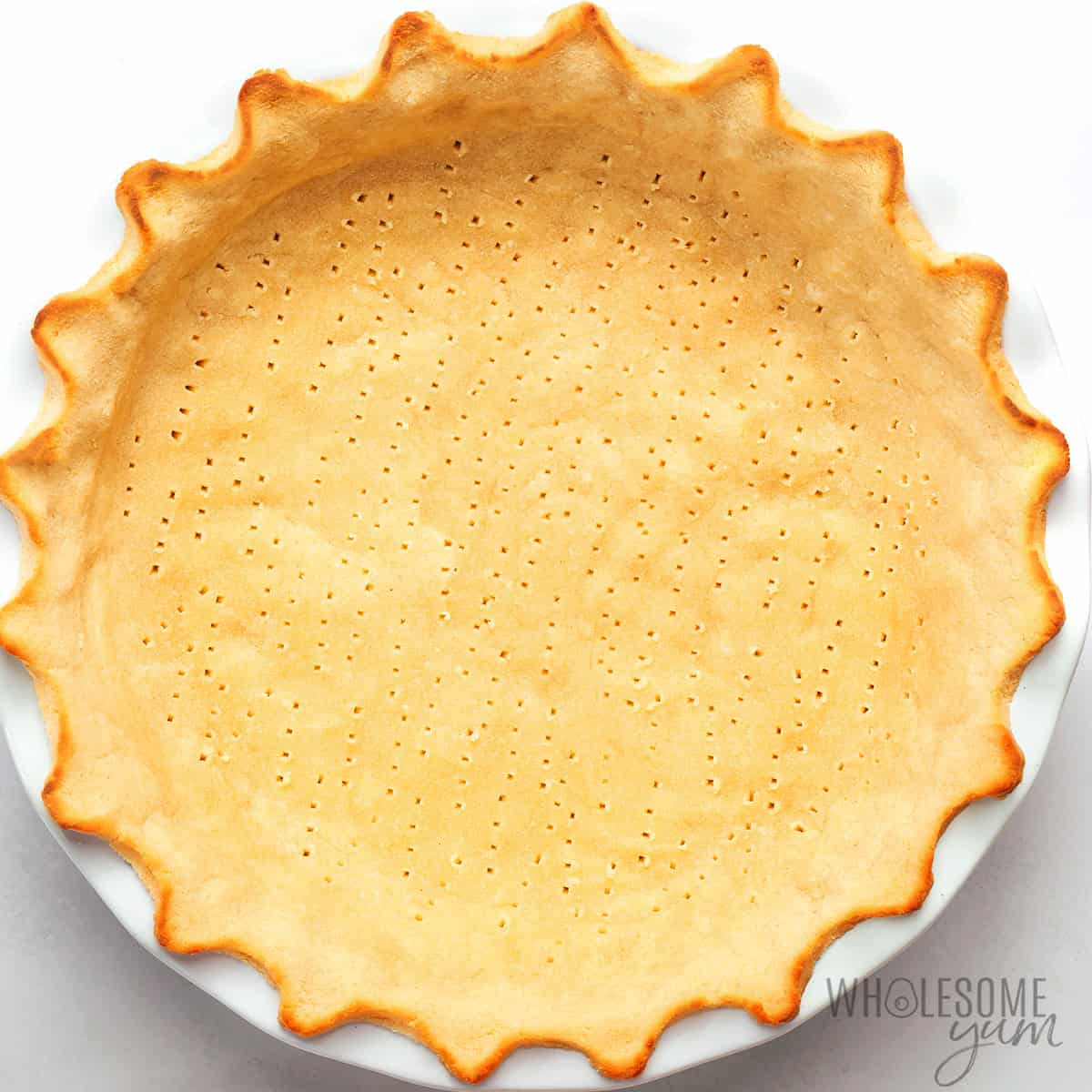
- Pre-bake the crust. Bake until the bottom is firm and the edges are just barely golden. Let it rest before adding filling. Depending on the type of filling you have, see my notes on using the crust below.

Maya’s Recipe Tips
- Measure the coconut flour lightly. I recommend spooning it into the measuring cup and leveling it off, rather than scooping and packing it down. Too much coconut flour is one of the easiest ways to end up with a dry crust.
- Adjust the sweetness to your liking. The 1/4 cup in this recipe is pretty sweet, though not extremely sweet. If you like your crust just barely sweet and let the sweet filling cover the sweetness, I recommend reducing the amount of Besti to 2 tablespoons.
- This is not a stretchy dough, so don’t expect one. This doesn’t have gluten like wheat pastry does, so it behaves differently. If it cracks as you press it up the sides, just patch the cracks with extra dough and smooth them with your fingertips.
- Consider the size and depth of your pie pan. I’ve made this coconut flour pie crust in this glass pie pan as well as this ceramic pie pan. Both work, but the glass one is shallower, so I let the dough go up over the top edge, whereas for the deeper ceramic pan, less goes up over the edge. If your pan is 10 inches in diameter, I recommend scaling the recipe up by about 1/3 — just enter “16” in the number of servings on the recipe card below. (You may have a tiny bit of extra dough this way, but scaling by 1.25X which is more ideal will give you awkward ingredient amounts.)
- Do you have to use a food processor? No, but the cold butter is easiest to distribute with my food processor. A pastry cutter or mixer can work if you’re careful to combine everything thoroughly, but it’s more work to get the cold butter to incorporate.
- Why not just use melted butter? It’s all about texture. Cold butter stays in tiny pieces that melt as the crust bakes, giving it a more tender, delicate crumb. Melted butter blends in evenly, which sounds like a good thing, but it can actually make the crust denser and less pastry-like. I tested both and much prefer this coconut crust using the cold butter option!
- If you’ll be baking the pie after adding filling, make a thicker crust edge. This helps slow down browning on the edges and reduces the chance of burning. I made it relatively thin in my pictures here.
How To Use Coconut Flour Pie Crust For Different Types Of Fillings
I recommend prebaking this coconut flour crust before adding any filling. Baking the empty shell first helps it hold together and prevents it from getting soggy once filled.
- For no-bake pies – Bake the shell according to the recipe card, then let it cool completely before adding chilled fillings. Cooling first allows the crust to set before a wet filling goes in.
- For baked pies – Prebake the crust, let it rest for at least 10 minutes, then add your filling and bake again according to that recipe. To avoid burning the edges in the second bake, I recommend protecting the edges with foil or a reusable pie shield. If it’s a longer bake, I also reduce the initial bake for this coconut crust from 10-12 minutes to about 7-8 minutes, so the edges don’t get a chance to start browning yet.
- For top-crust pies – Sorry, this dough won’t work for a top crust. It’s too fragile and falls apart if you try to transfer it after rolling. For a top crust, use my gluten-free pie crust recipe.
- For cheesecake – Many of you have asked me about using this as a crust for my keto cheesecake, and you can! For a 9-inch springform pan, I recommend using about 3/4 of the dough for a bottom-only crust, since you won’t need to cover the sides. Prebake as directed before adding the cheesecake filling. It works just as well for my high protein cheesecake, too.
- For mini tart shells – For 4-inch removable-bottom tart pans, one batch makes about 4 small crusts. I recommend checking at around 7-8 minutes of baking.
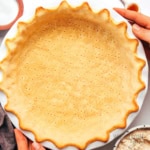
Coconut Flour Pie Crust (Low Carb & GF)
 By
My easy, buttery coconut flour pie crust works for sweet or savory pies. Keto friendly, gluten free, only 4 ingredients, and no rolling!


Instructions
[ See step photos See my tips ]Tap on the times in the instructions to start a kitchen timer.
-
Preheat the oven to 350 degrees F (177 degrees C). Line the bottom of a 9-inch (23 cm) round pie pan with parchment paper, or grease well.
-
Combine the coconut flour, butter, Besti, and sea salt in a food processor. Pulse until well combined.
-
Add the eggs and vanilla extract. Process again until dough forms.
-
Press the coconut flour pie crust dough into the pie pan. Poke holes in the bottom with a fork or toothpick.
-
Bake for 10-12 minutes, until firm and just barely golden on the edges. Rest on the counter for at least 10 minutes before adding filling, then you can bake again as needed for the filling. If the edges start to brown too much before the filling is done, you can cover them with foil. Cool completely before cutting.
Did you make it? Leave a review or tag me @wholesomeyum on Instagram!
Maya’s Recipe Notes
Serving size: 1 slice, or 1/12 of entire recipe
📖 Want more recipes like this? Find this one and many more in my Keto Freezer Meal System!
I provide nutrition facts as a courtesy. Have questions about calculations or why you got a different result? Please see my nutrition policy.
Add Your Notes Your Notes
Try More Of My Recipes


© Copyright Maya Krampf for Wholesome Yum. Please DO NOT SCREENSHOT OR COPY/PASTE recipes to social media or websites. We’d LOVE for you to share a link with photo instead.
Coconut Flour Pie Crust Recipe
Make Ahead Options
This is one of those pie components I prefer to make ahead whenever I can. There are a few ways to do it:
- Make the dough ahead – Wrap the unbaked coconut flour dough tightly in plastic wrap and refrigerate it for up to 3-5 days. I let it soften on the counter for about 30 minutes, so it doesn’t crack when pressing into the pan. I’ve also pressed the crust into the pan in advance, but it does dry out over time even if you cover it, so I only recommend keeping it this way up to 1 day ahead.
- Bake the crust ahead – This is my preferred option. You can keep the baked, unfilled coconut flour pie crust covered on the counter for up to 1 day or in the refrigerator for a few days. I recommend waiting to add a creamy or wet filling until you need it.
- Freeze the dough – Similar to the make ahead option above, wrap it in plastic wrap, then pop into a freezer bag for up to 3 months. Let it thaw in the fridge overnight.
- Freeze the baked shell – Let it cool, then wrap it well and freeze it for up to 3 months. Thaw it before adding the filling. Filled pies can sometimes be frozen, too, but that depends more on the filling than the crust.
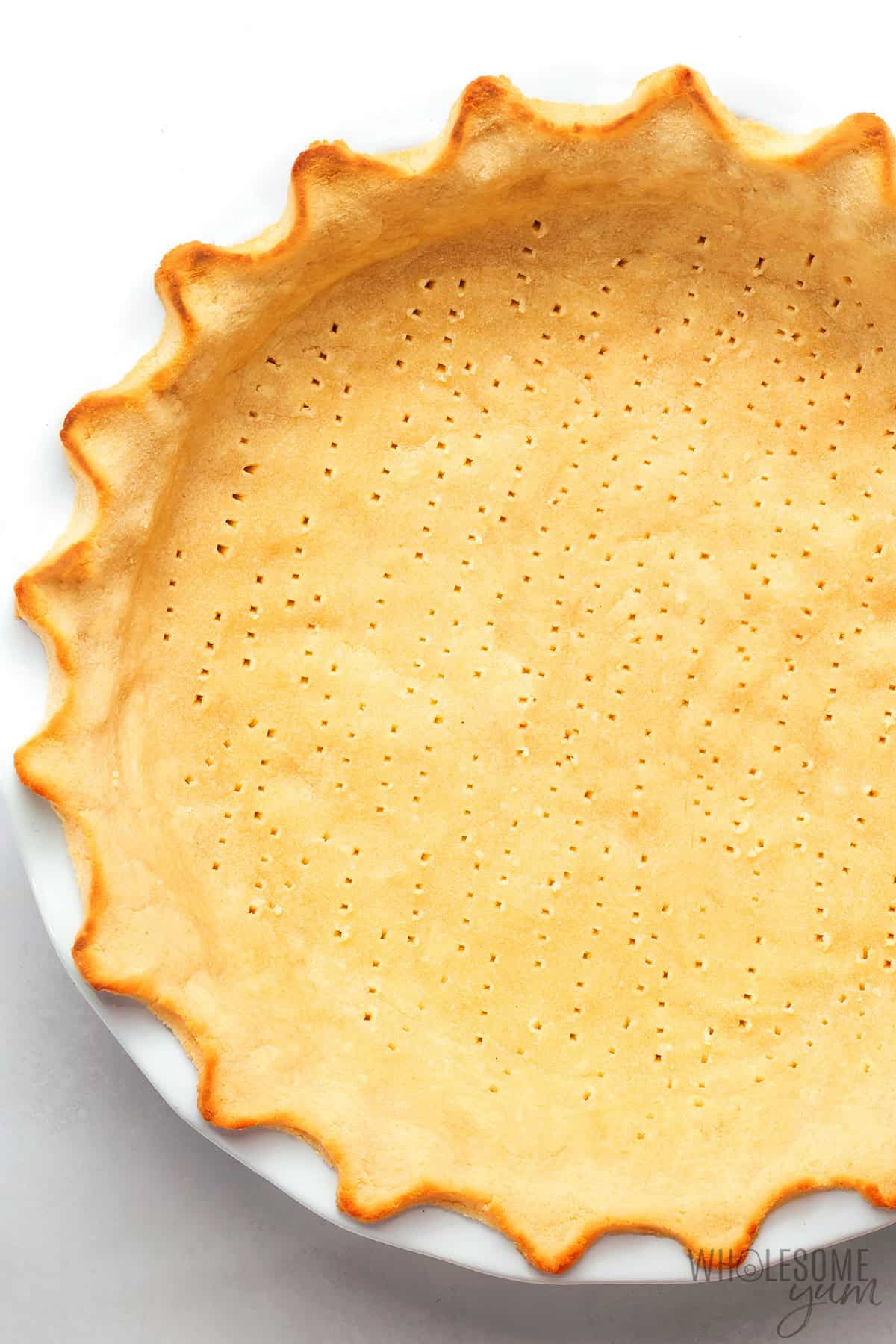
Pies To Make With Coconut Pie Crust
You can use this crust in all kinds of pies! I especially like the way the buttery, lightly coconut-flavored base works with creamy desserts, but the flavor isn’t strong, so it’s just as handy for savory fillings when you skip the sweetener.
- Creamy, chilled pies – Try my coconut cream pie or key lime pie! The light coconut flavor really complements these.
- Baked dessert pies – This makes a good base for my keto pumpkin pie or sugar-free pecan pie. Just cover the rim when baking with the filling. It could also work for gluten-free apple pie but only if you’re okay with not having a top crust, since this coconut pie crust won’t work on top.
- Savory pies and quiche – Use the savory version to make low carb quiche or my Greek spinach pie. If you’re worried about the coconut flavor, you can add some garlic powder and Italian seasoning to cover it up, but it’s not strong anyway!











100 Comments
Ana
0Wow, this worked out so well and was super easy to make. I was only scared when I added eggs and it turned quite soft (and not a little crumbly as expected) but was still OK to press down the tin and came out perfect. Even my boyfriend who is mocking anything made out of non-gluten flour ate half of the pie and even wanted the recipe. Thank you! X
Theresa Amor
0This recipe was excellent!! Although next time I will try rolling it out to make it more even and thinner.
I made this recipe for my Moms birthday (chocolate cream pie with whipped cream) everyone raves over the pie and especially the delicious crust. They were amazed it was a gluten free pie it was so good! Thank you for sharing!!
Denise
0If I add a no bake filling, and not putting it back in the oven, how long would I bake the crust for? Thank you.
Wholesome Yum M
0Hi Denise, Bake for another 25-30 minutes. I would check it around 20 to make sure the outside crust isn’t getting too brown. Cover the edges with foil if needed.
Angie
0Can you double the recipe to make 2 pie crusts at the same time?
Wholesome Yum M
0Hi Angie, I think that should work out fine.
KayCee
0I used Land O lakes salted butter and made 2 old-fashioned quiche recipes. The mixture doubled-up well, and was successful using a metal spoon. (My food processor quit last week!) The taste is divine and the texture light and crumbly. I did not have to adjust my recipe’s cooking time, as it cooked like any other wheat crust. I want to do a pumpkin cheesecake next.
Crystal
0Hi. I am making homemade apple pie. I am going to use your coconut pie crust recipe. I would like to make the crust and add the filling but not bake it at this time. Can I freeze the entire pie with crust and filling? I have done this over the years with regular white flour pie crust and the apple pie filling. But I do not know how the coconut pie crust will do frozen before baking with the apple pie filling in it. Any suggestions?
Wholesome Yum
0Hi Crystal, that should work if you pre-bake the crust before adding the filling. Let me know if you try it!
J
0Can you use this crust for a quiche ?
Maya | Wholesome Yum
0Yes, definitely!
Samaimgodheis
0This was just perfectly delicious for a cheesecake I made!! Thank you! Look forward to trying it with a savory dish too! I have been looking for a good crust forever…so great!
Slaphappy
0Really nice recipe… second one I tried, but the first one didn’t have a great consistency… but this was perfect for my savory recipe!
Chan
0I made this crust today and filled it with a keto chocolate mousse and it is amazing!!! The crust is similar to a semi-firm vanilla cookie and worked well with my recipe. Thank you!! <3
Chintamani
0Can you substitute flax eggs?
Maya | Wholesome Yum
0Hi Chintamani, Sorry, I haven’t tried that. Let me know if it works for you!
Brenda Speer
0Hi… would I be able to use a flax egg in place of the egg?
Maya | Wholesome Yum
0Hi Brenda, You could try, but I’m not sure if it would be sturdy enough to hold together. You can try adding xanthan gum along with the flax egg to help bind it, but haven’t tried it to know for sure. Let me know if it works for you!
Chris Thomka
0You mentioned a pumpkin filling for this pie crust. Can you post the recipe? What other types of low carb fillings do you suggest? I love your site! The recipes are great!
Maya | Wholesome Yum
0Hi Chris, You can find the pumpkin pie recipe here. Any kind of pie filling you like will work, though!
Pat Reeves
0Is there a way to be able to roll the crust out? I would like to also use it as a top crust.
Maya | Wholesome Yum
0Hi Pat, you can try rolling it out, but it won’t bend/fold like a wheat flour crust, so may be challenging to get it on top of the pie. Please let me know if you can get it to work!
Carol Slater
0I rolled it out to make mini tartlets, rolled it out between 2 sheets of parchment paper to help keep it in one piece as it’s quite fragile.
Lona
0Like the recipe but the pie crust seems rather soft so I’ve not put filling in yet. Will try to crisp it up this morning by returning to oven on low heat fan bake to dry it out then I’ll add gelatine to the cooked apple to reduce any liquid.
Is there anything I can add to the recipe to make a more solid/crisp crust next time?
Maya | Wholesome Yum
0Hi Lona, It should be firm but doesn’t get crispy. Coconut flour generally doesn’t crisp up the way wheat flour does, so the crust won’t be as crispy as a “regular” one. You can try baking for a bit longer like you suggested, though.
Flaviane
0Can we substitute butter for coconut oil? And make it dairy free? Thank you
Maya | Wholesome Yum
0Hi Flaviane, You probably can, but the flavor and consistency might be a little different.
Marnie
0I used coconut oil in place of butter but was careful to only add enough that gave me the right consistency. Enough to bring the dough together. A few tbsps. Also used honey instead of monk fruit or erythritol as I have found my family gets a weird throat clearing sensation from erythritol. Thanks for the great recipe!