
 Shop
Shop My
My Custom




Free Printable: Low Carb & Keto Food List
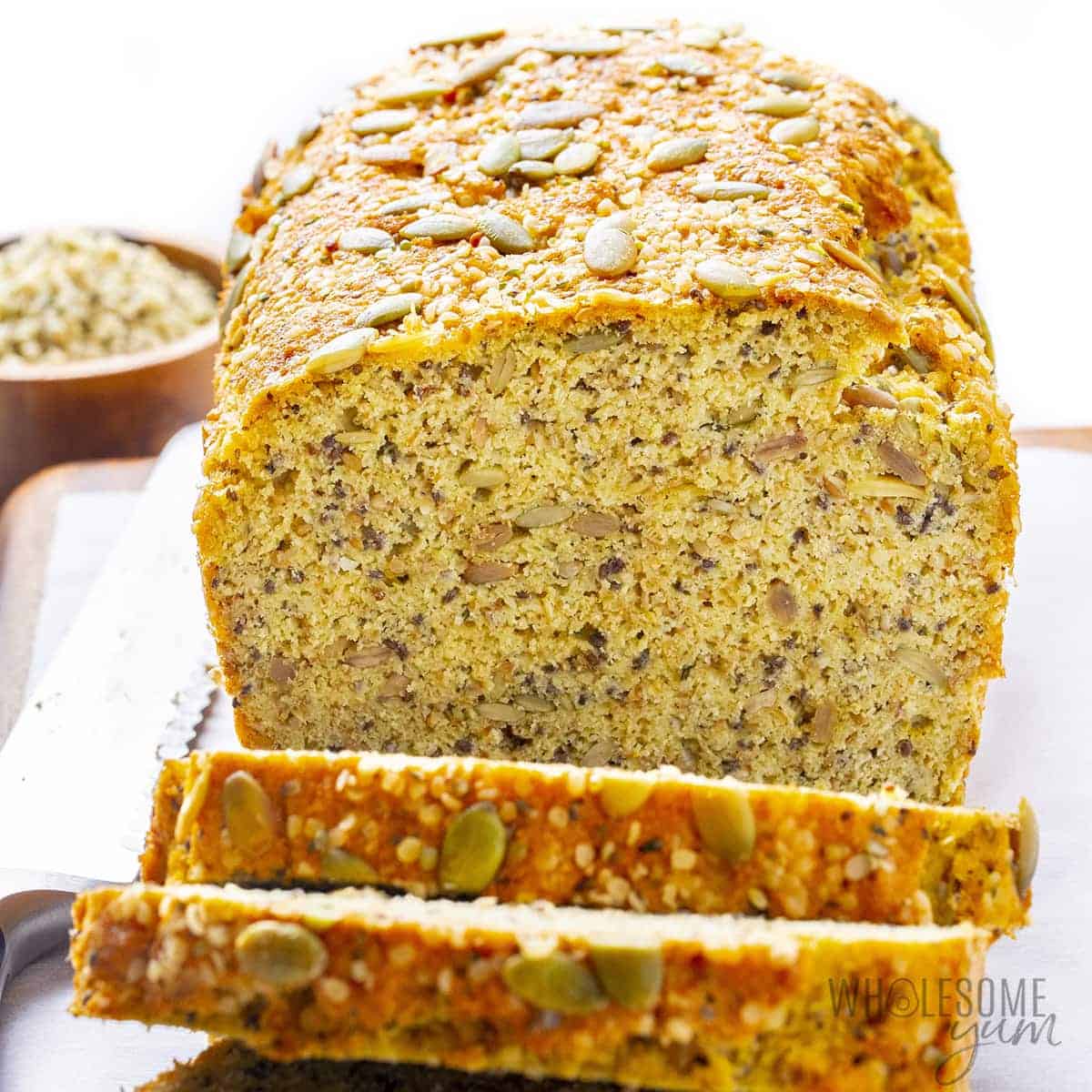
Get It NowI’ll be honest, I usually use coconut flour mainly as an addition to improve texture, rather than the main event. It’s so absorbent that it’s kind of a pain to work with. But so many of you often ask me for nut-free options that, every once in a while, I create a recipe where it’s the “main thing”. And this coconut flour bread is one of those times. And while it doesn’t have the light, airy texture of my keto white bread or the crust of my almond flour bread, I think it’s delicious in it’s own way. Make it with me!
Why You Need My Coconut Flour Bread Recipe

- Chewy, multi-grain texture – Even though this bread doesn’t have any nuts, it reminds me of those multi-grain loaves with nuts and seeds all over them. It’s not white and light, but it’s perfect if you miss whole wheat bread and like texture.
- Tried and tested with this tricky flour – Let’s be real: Many coconut flour bread recipes are dense and dry, because this flour absorbs so much liquid. And it’s coconut-y, which is delicious on its own, but not so much what you want in a simple sandwich bread. I tested this recipe 5 times and made it several times since, to take the guesswork out of it for you.
- Easy to make – This batter comes together in about 15 minutes, then the baking time is hands-off.
- Special diet friendly – My coconut bread is low carb, keto, gluten-free, grain-free, and nut-free. I even have a dairy-free option if you need it!

Ingredients & Substitutions
Here I explain the best ingredients for my coconut flour bread recipe, what each one does, and substitution options. For measurements, see the recipe card.
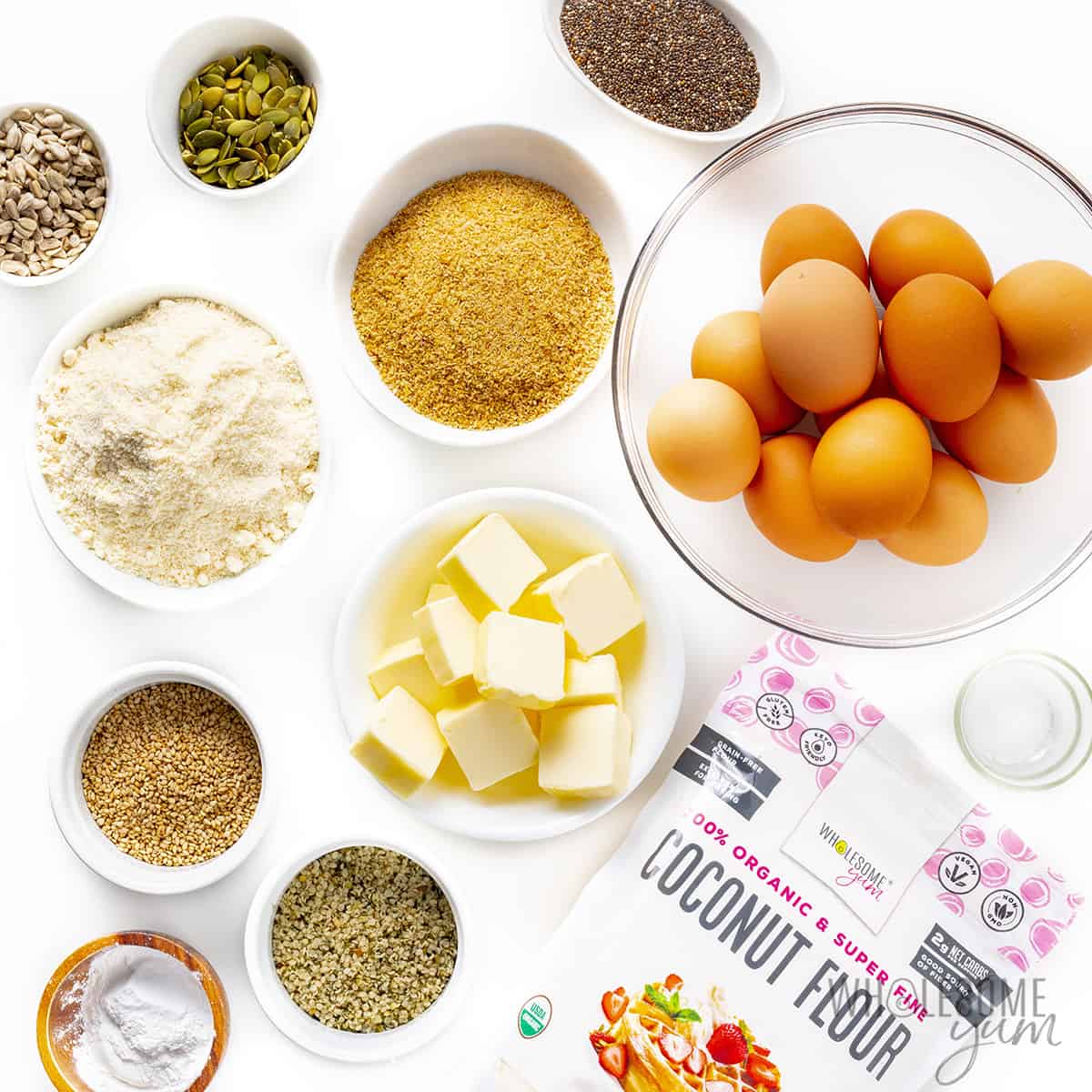
- Wholesome Yum Coconut Flour – Different brands vary in moisture level, consistency, and density, which can dramatically change the results. I used this flour in my testing, so it’s what I recommend. It’s finely milled and the flavor is not super strong.
- Eggs – If you’ve made other coconut flour recipes, you know that this type of flour needs a lot of eggs. This is because it’s highly absorbent, doesn’t provide any structure, and tends to be dense on its own. Because this recipe has so many eggs, I don’t recommend using an egg substitute. If you’re worried that your bread will taste too eggy, you can try replacing 6 of the eggs with 9 egg whites — you’ll need to whip them and then fold into the batter gently.
- Seeds – I used a blend of hemp hearts, sunflower seeds, pepitas, chia seeds, and sesame seeds to add a variety of crunch and give a multi-grain vibe. Bonus: they mask the eggy taste and add a variety of nutrients! If you don’t have so many different types, you can definitely use more of the ones you have. Just keep in mind that too many big ones (like pepitas or sunflower seeds) can make the bread fall apart.
- Flaxseed Meal – This helps with structure, makes the coconut flour bread chewy, and gives it a flavor that reminds me of whole wheat bread. I use and recommend golden flaxseed meal, which has a milder flavor than the regular kind. You can also grind golden flaxseeds yourself to make it.
- Butter – Butter gives the best flavor, but for a dairy-sensitive option, you can substitute ghee or coconut oil. My favorite alternative in my testing was butter-flavored coconut oil.
- Baking Powder & Sea Salt
How To Make Coconut Flour Bread
I have step-by-step photos here to help you visualize the recipe. For full instructions with amounts and temperatures, see the recipe card.
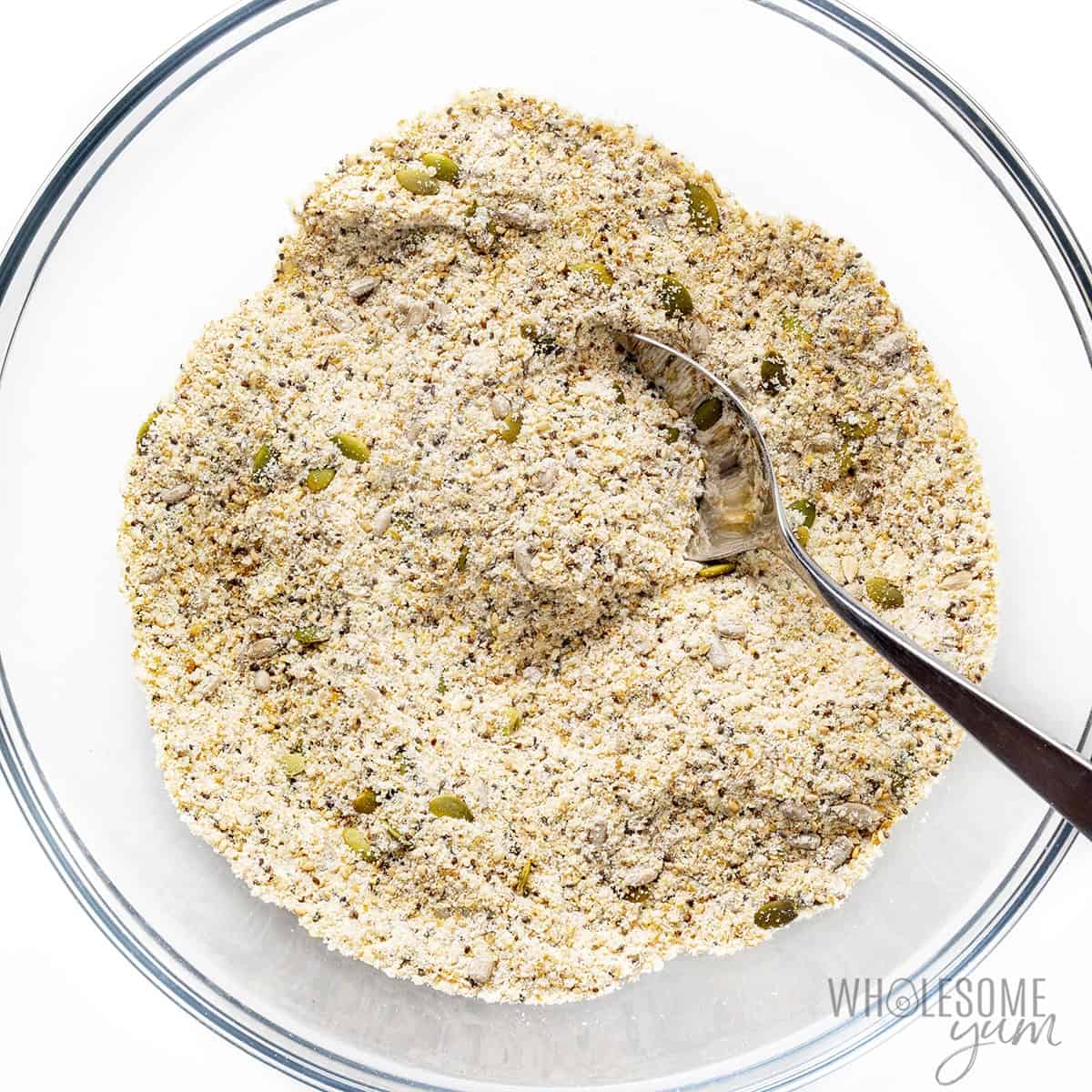
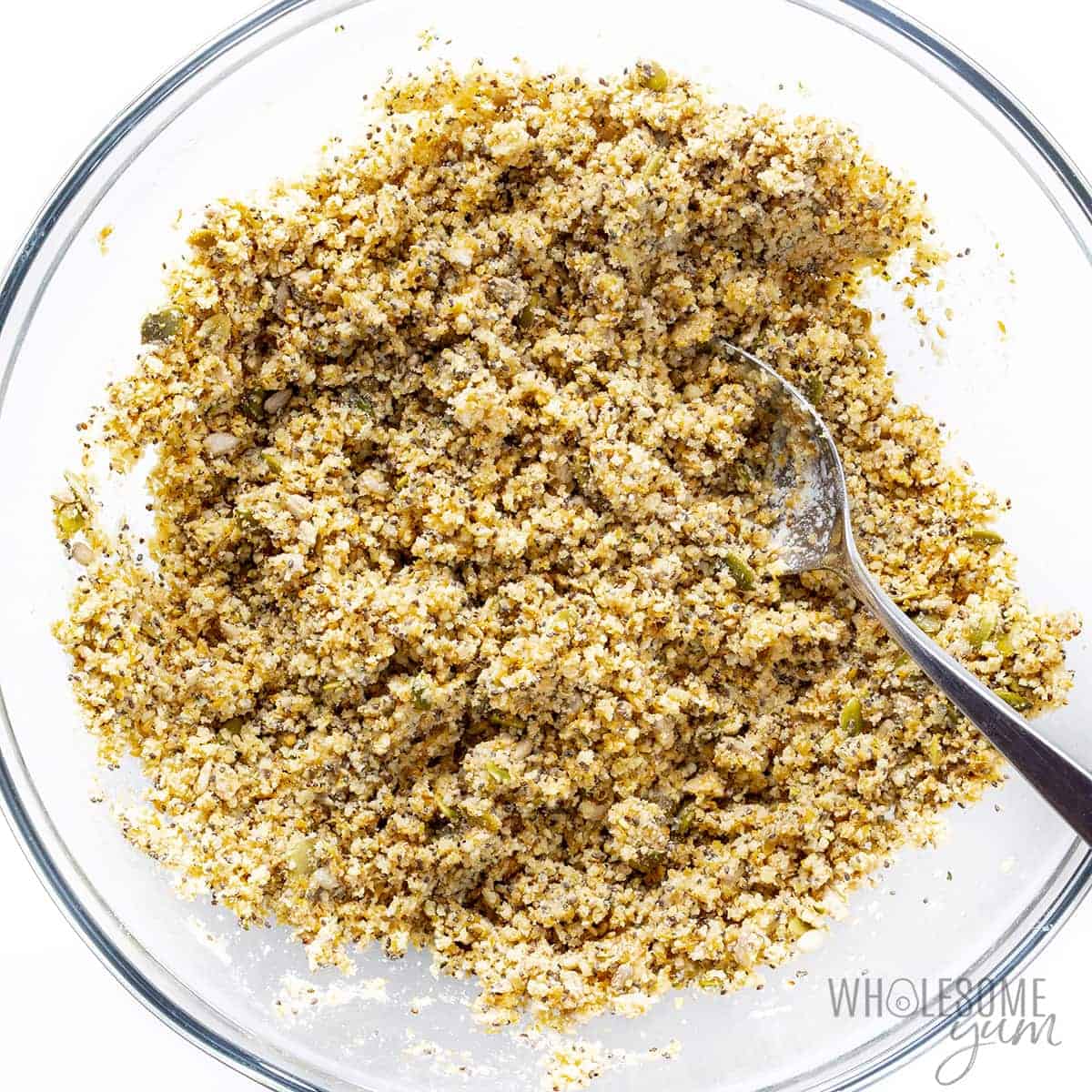
- Combine the dry ingredients. In a large bowl, stir together the coconut flour, flaxseed meal, all the seeds, baking powder, and salt.
- Add the melted butter. Stir in until crumbly.
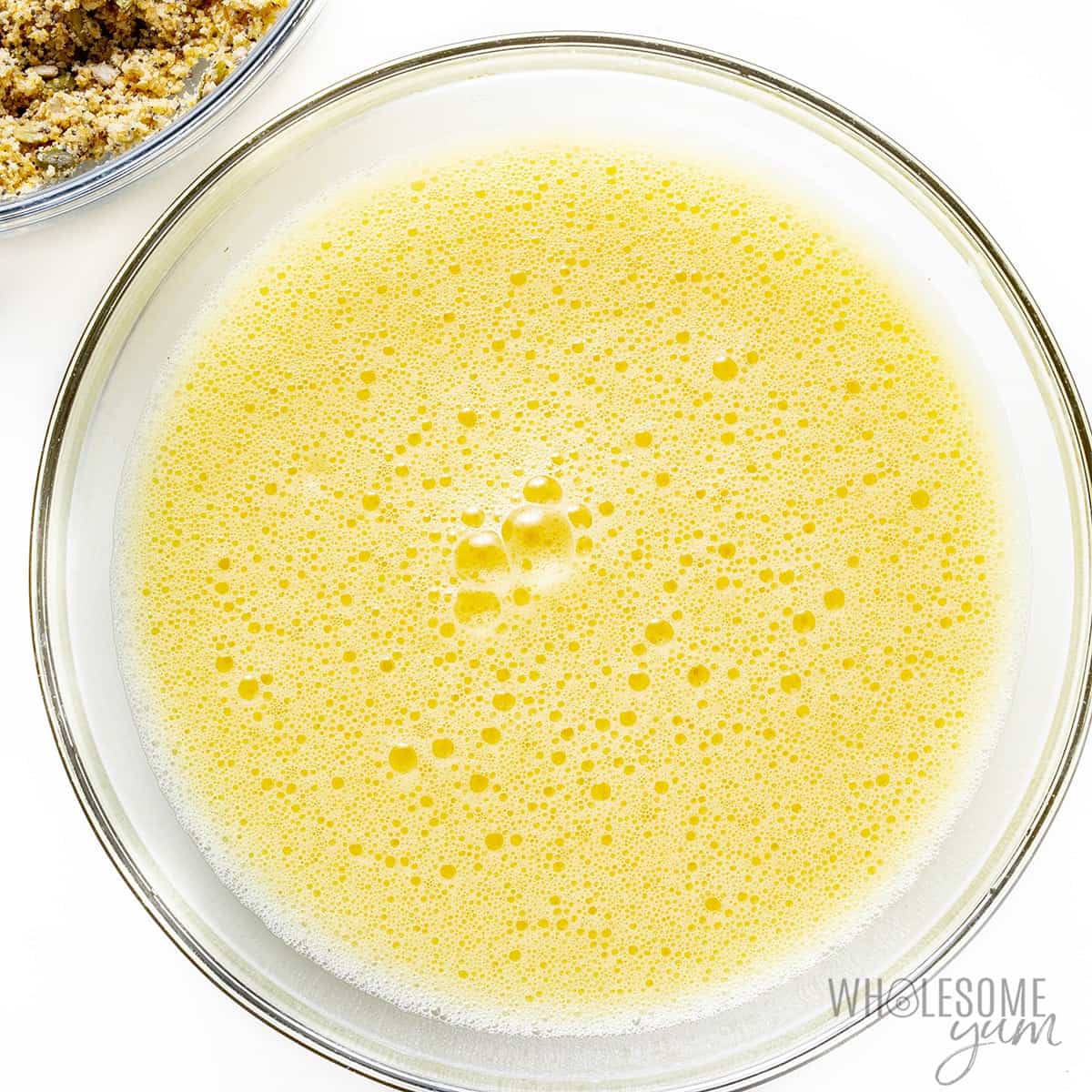
- Beat the eggs. In a separate bowl, beat them at high speed until tripled in volume. This is crucial to make your bread rise!
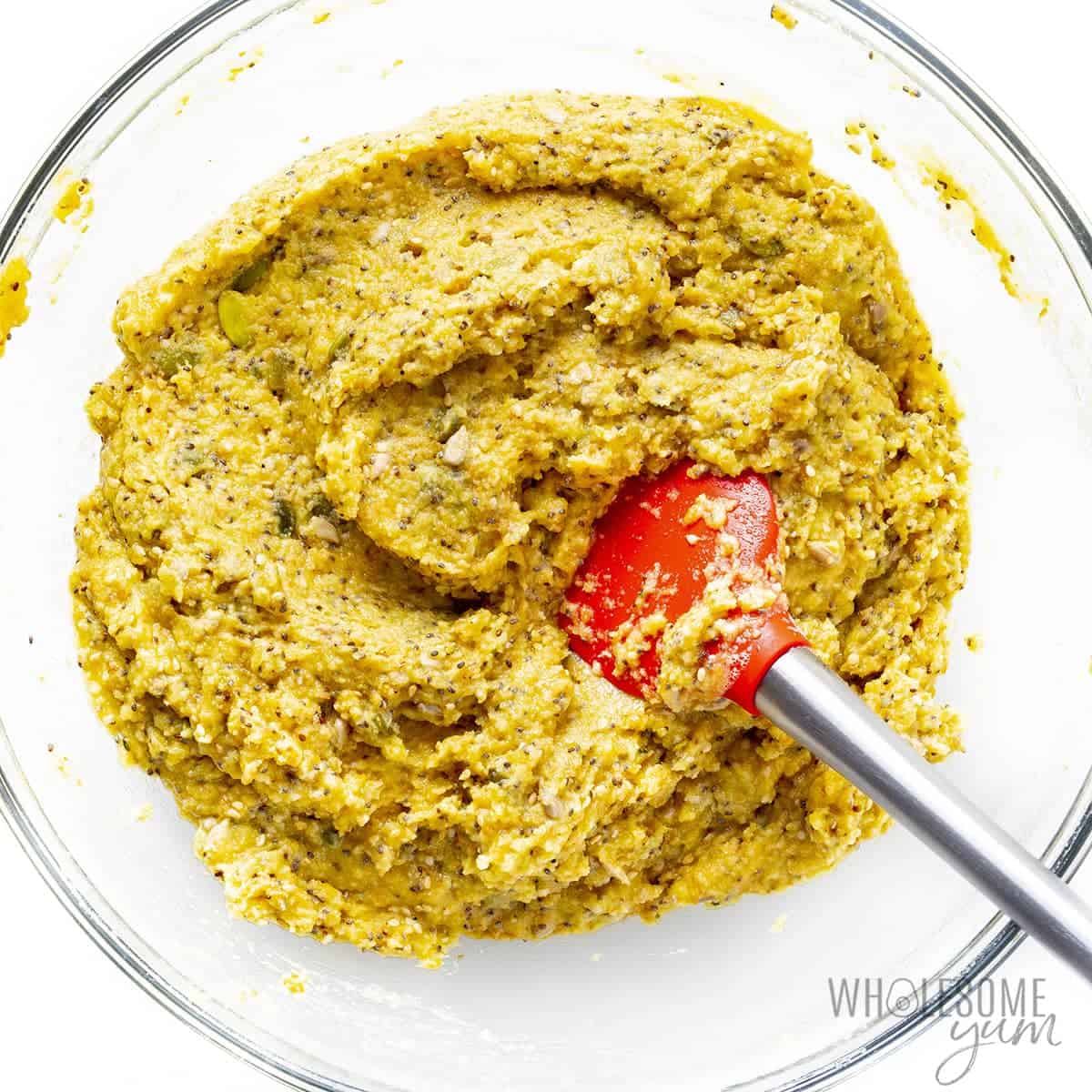
- Combine. Pour the eggs into the batter and fold in. Let the batter thicken for a few minutes.
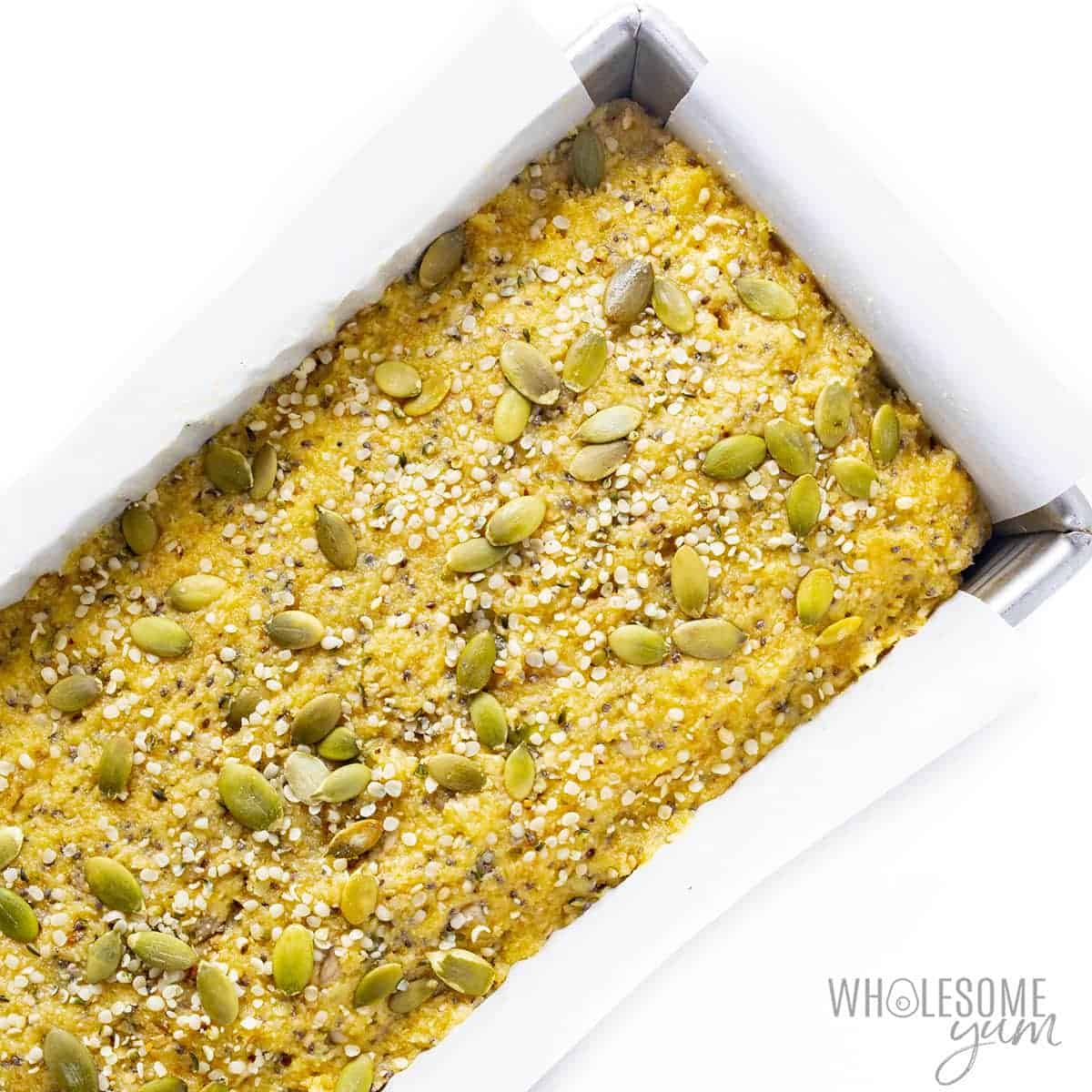
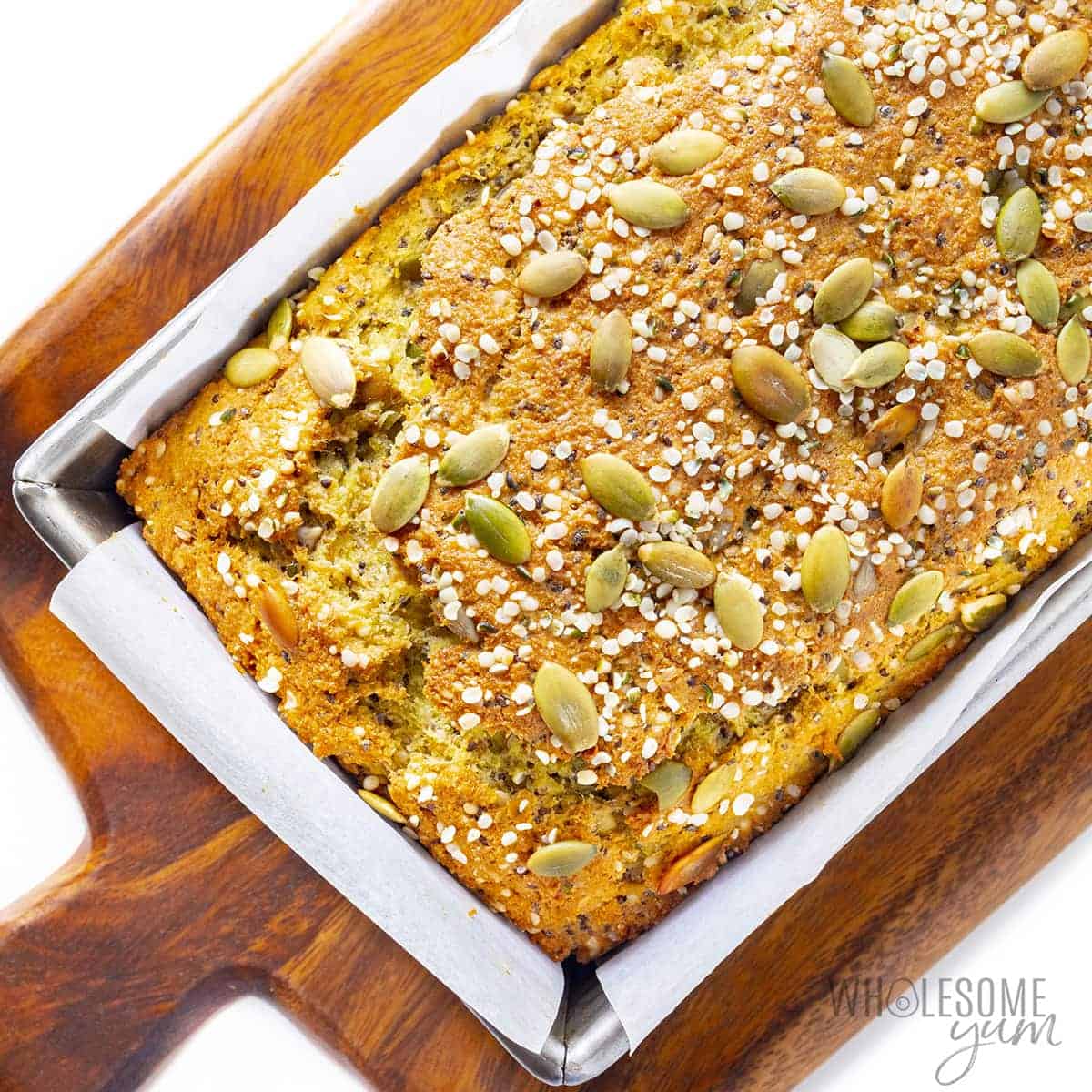
- Bake. Transfer batter to a loaf pan lined with parchment paper. I use this pan, which is a bit smaller than most, and recommend it for a tall loaf. Bake the coconut flour bread until golden, then tent the top with foil and continue baking until an inserted toothpick comes out clean.
- Cool. Cool completely in the pan before slicing.

My Recipe Tips
- Use room temperature eggs. They’ll beat up more fluffy that way than if they are cold. Use my trick if you forget to take them out of the fridge: Just place them in a bowl of warm water to come to room temp quickly.
- Be careful not to break down the eggs. Beating the eggs until they triple in volume helps introduce air into the batter, so that your coconut flour bread isn’t too dense. But for this to work, make sure to fold (don’t beat or stir!) when you incorporate the eggs into the other ingredients.
- Round the top of the bread. I find that this helps it rise into a nicer shape.
- Wait for the batter to thicken. Coconut flour absorbs a lot of moisture, but it takes some time, and it needs to happen before you bake.
- Cover during baking if needed. In my experience, this bread usually browns on top before it’s done in side. Simply tent it with foil and continue baking until done. The time when you need to cover can vary, but generally the total baking time stays close to the same.
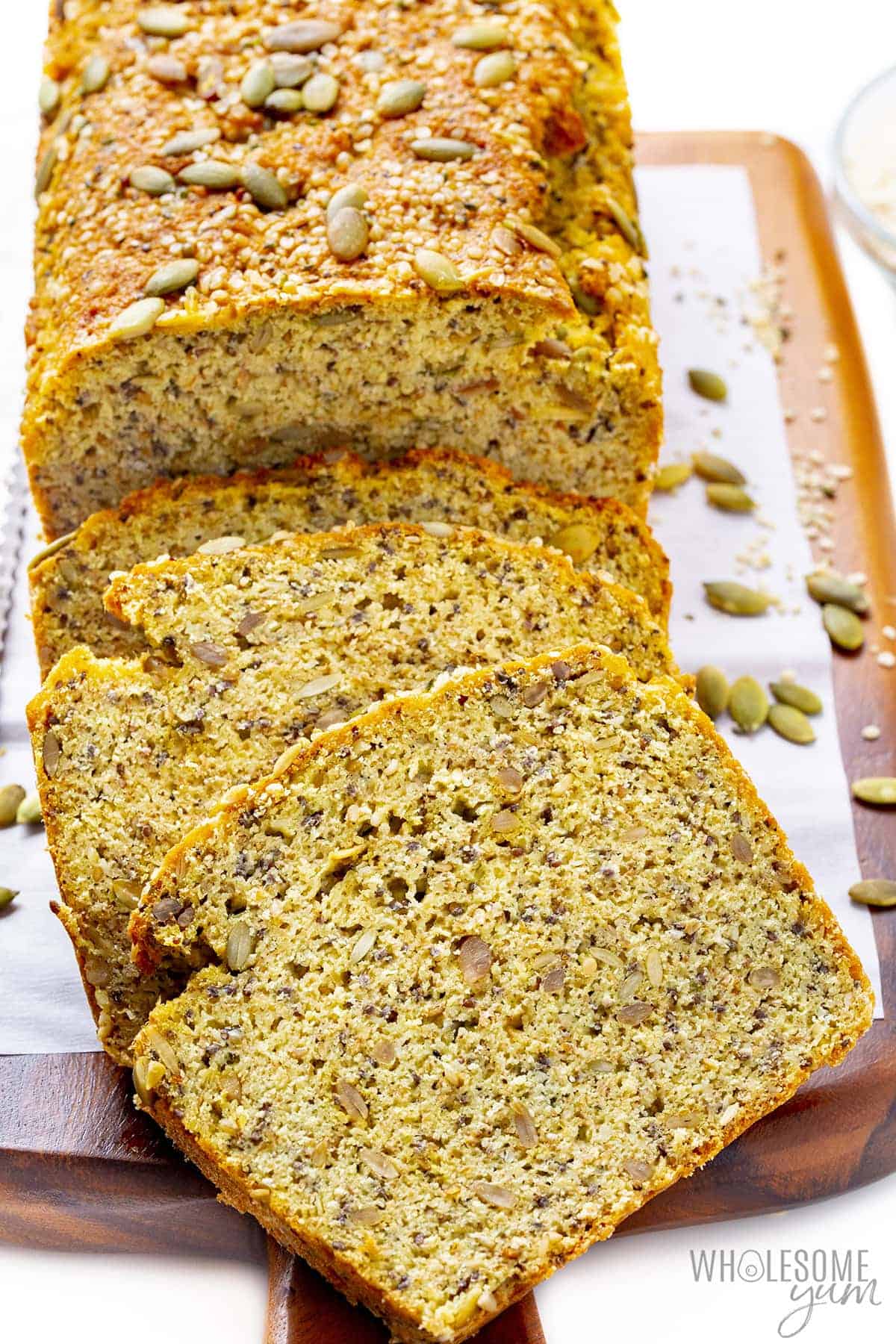
- Don’t slice before it’s fully cooled. The structure firms up as it cools, so your bread will fall apart if you slice it too soon. I usually like to wait until the next day for best results.
- Want your bread more chewy? It’s a little chewy as-is, but you can add 1/4 teaspoon of xanthan gum with the dry ingredients if you want it extra chewy. I don’t recommend more than that — it made my coconut bread gummy when I increased the amount.
- Toast it for a better flavor and texture. I do this for most of my gluten-free bread recipes and it’s almost always an improvement. Toasting this coconut flour bread removes any eggy taste and also makes it hold up better for a sandwich.
Ways To Use It
You can enjoy this coconut flour bread in any way you’d have (or used to have) regular bread. Here are some of the other recipes I like to combine it with:
- Sandwiches – Most often when I make it, I do a BLT, turkey sandwich, or slather it with keto chicken salad or avocado egg salad.
- Toast – Top the toasted version with my chia seed jam, sugar-free jelly, or sugar-free Nutella. One of my faves is a shmear of peanut butter and a drizzle of keto honey.
- French Toast – Just use my recipe for keto French toast, and swap the bread with this one. So delicious with sugar-free whipped cream and fresh berries!
Coconut Flour Bread
This nut-free, low carb coconut flour bread recipe is loaded with seeds and tastes like whole wheat bread! Perfect for sandwiches or toast.


Instructions
Tap on the times in the instructions to start a kitchen timer.
-
Preheat the oven to 325 degrees F (163 degrees C). Line a small loaf pan like this with parchment paper, with the paper hanging off the long sides.
-
In a large bowl, stir together the coconut flour, flax seed meal, all the seeds, baking powder, and sea salt.
-
Stir the melted butter into the bowl until crumbly and uniform.
-
In another large bowl, beat the eggs on high using a hand mixer (or stand mixer) with a whisk attachment, until tripled in volume. Fold the eggs into the batter. Wait a few minutes for the batter to thicken.
-
Transfer the batter to the lined pan. Round the top with your hands. If desired, sprinkle more seeds on top (optional).
-
Bake the bread for about 50 minutes, until browned on top. Tent the top with foil and continue baking for another 15-25 minutes, until the bread internal temperature is 170 degrees F (77 degrees C).
-
Let the bread cool completely in the pan without moving or slicing. Once cooled, run a knife along any edges of the bread that touch the pan, then lift out of the pan using the parchment paper hanging over the sides.
Did You Like It?
Leave a rating to help other readers (this also helps me continue to provide free recipes on my site), or get the recipe sent to your inbox.
Maya’s Recipe Notes
Serving size: 1 slice (1/2 in thick)
- Tips: Check out my recipe tips above to help you to help you get a tall, fluffy loaf with the best texture.
- Store: It’s okay on the counter for up to 2 days, but if you plan to store it longer, wrap the bread in parchment paper and keep in the fridge for up to a week. It does absorb some moisture over time, so I recommend toasting it if it was refrigerated. Don’t wrap it in plastic wrap, which traps moisture.
- Freeze: I like to freeze slices in a zip lock bag with layers of parchment paper between them, so I can grab one anytime. You can pop them in the toaster straight from the freezer!
📖 Want more recipes like this? Find this one and many more in my Keto Cheat Sheet System and Keto Ebook Bundle!
I provide nutrition facts as a courtesy. Have questions about calculations or why you got a different result? Please see my nutrition policy.
Add Your Notes Your Notes
Try More Of My Recipes




© Copyright Maya Krampf for Wholesome Yum. Please DO NOT SCREENSHOT OR COPY/PASTE recipes to social media or websites. We’d LOVE for you to share a link with photo instead.
Coconut Flour Bread















285 Comments
Roberta
0This recipe is great, but (without misunderstanding, it’s just a note), you shouldn’t classify it as “Keto paleo bread”, since butter and xanthan gum aren’t paleo ingredients. Butter is just Primal and the thickener is controversial in both of these diets. So: perfect for keto and low carb, but not definitely Paleo… I just specify it to avoid people finding the recipe with key-source and then be disappointed leaving your marvelous blog if they are at first sight of it, they may consider it not worthy pf more visits (losing great opportunities of wonderful and helathy, also really Paleo recipes!). Hope you understand my intention to help, if you’ll consider my note and correct the title/option, it’s your choice of course!
Maya | Wholesome Yum
0Hi Roberta, Thank you for sharing. It’s true that butter and xanthan gum can be controversial for paleo diets, but some people do choose to include grass-fed butter. That being said, you can probably substitute coconut oil or ghee if you prefer not to use butter. I actually omitted xanthan gum in the main recipe on the recipe card, since many paleo followers prefer not to consume it, but added it as an option in the post for people who want a chewier bread and don’t mind using it.
Nola Roden
0Just wondering if cream of tartar would help with the rising process. I have another keto bread recipe that uses it! I am anxious about making this one with the seeds. Yummy!
Thanks so much for the recipe!
Maya | Wholesome Yum
0Hi Nola, Possibly a little. Primarily, cream of tartar is used either to react with baking soda (not needed here since we use baking powder) or to stabilize egg whites/increase their whipped volume. I haven’t tried, but I suppose in theory adding it to the eggs when beating will increase their volume even more, which could help. Let me know if it you try it!
Doreen
0Looks like a lovely recipe that I will definitely try! Who would have thought that GF Keto cooking/eating would lead to so many gorgeous baking recip items! GF loaves from the shops are SO FULL of carbs and taste like cardboard. I have been medically GF for a long time now, and been eating Keto for quite a while as it’s the only way I have found of losing weight successfully, and I had virtually given up any hope of eating bread or the occasional cake for a treat as well. So thank you Maya! You have made my eating habits bearable again! Your website is now my go to for delicious GF Keto recipes that do actually work for me.
Maya | Wholesome Yum
0Totally agree with you, Doreen! It means a lot that the site and recipes are helping you. Enjoy the bread!
Chef William
0Thank you for sharing this recipe. I can get all the ingredients right here in Puerto Vallarta, Mexico. Tomorrow morning around 4 a.m. I will make a loaf, so that I can try a slice when I finish my IF at around 2 p.m. I will be making some of your almond breads soon but for now coconut flour is what I have on hand so this is the way I will go. Before keto I always bought the breads with seeds, the more seeds the better, it looks like you have that covered nicely here.
Maya | Wholesome Yum
0Glad to hear that, William! Hope you like the bread.
Dora Marquart
0You may have just made it possible for me to stick to this new way of eating, thank you!
Maya | Wholesome Yum
0Yay, so glad to hear that, Dora! Hope you love the bread.
Melissa
0Just a quick question, in regards to the bread rising, what kind of pan is best? I have a “loaf” type pan, but when I make my breaks they never rise, I have to assume this is because I never beat my eggs, is that the key? Or is it my pan?
Maya | Wholesome Yum
0Hi Melissa, You need a small loaf pan like this. Coconut flour bread just doesn’t rise very well, but beating the eggs does help, so don’t skip that step.
Sylvia Sanchez
0Hello,
Any thoughts on separating eggs and only using egg whites for this? Would it taste “less eggy?” Thoughts about using a bit of yeast to this and/or using unflavored beef gelatin?
Also, I have shelled hemp seeds, would that work? Thanks!!
Maya | Wholesome Yum
0Hi Sylvia,
I haven’t done it that way but you can try that! I did only use whites in my other keto paleo bread recipe here. You’d probably need more whites if using only whites; the exact equivalent is 18 whites for 12 eggs, but not sure if that’s the right conversion to work for the recipe. Let me know if you try something like that.
I haven’t added yeast or gelatin to it either. I can see how gelatin might improve texture. I tried xanthan gum and that definitely does. To add yeast, you’d also need to add some kind of sugar for the yeast to consume, which wouldn’t be in the end result.
Shelled hemp seeds are the right kind to use.