
 Shop
Shop My
My Custom





FREE 5-Ingredient Recipe EBook
GET IT NOWIf you’re after the perfect ribeye steak recipe, I’ve got it! Cooking ribeye in a cast iron skillet is my favorite simple path to a juicy, flavorful result every time. This method is also a bit easier than most of my steak recipes (including sirloin steak, chuck eye steak, and filet mignon) that use my stovetop-to-oven method. If you don’t know how to cook ribeye steak yet, or if you’ve ruined one before and don’t want to do that ever again, make this recipe with me and you’ll look like a professional chef!
Why You Need My Ribeye Steak Recipe

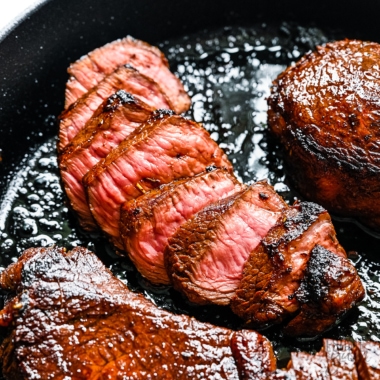
- Tender and juicy with a golden crust – My foolproof method has everything you want in a good steak, from a golden crust to a juicy, tender inside. It makes the perfect wow-factor steak for a special occasion!
- Time chart to avoid overcooking – With an expensive cut like this, the last thing you want is to overcook it! With my easy time and temp chart, I’ll show you how to cook ribeye to just the doneness you like.
- Fast and easy, with no oven step – A high-quality ribeye steak doesn’t need too many ingredients. The key is to cook it correctly — and quickly. For the method I use here, all you need is your stovetop and a heavy skillet!


Ingredients & Substitutions
Here I explain the best ingredients for my ribeye steak recipe, what each one does, and substitution options. For measurements, see the recipe card.
Ribeye Steaks:
- What are they? Ribeye steak, sometimes spelled rib-eye, rib eye, or simply rib steak, is an exceptionally tender, rich, and beefy cut. It comes from the rib cage of the cow, a.k.a. from the rib roast. While filet mignon is still my fave, ribeye is the cut that got me to enjoy more marbled steaks!
- Bone-in vs. boneless? Bone-in steaks are a bit more flavorful, but I prefer boneless ones and used those in this ribeye recipe, because they cook more evenly. (Meat near the bone tends to cook more slowly than the rest.) When the bone is left in and sticks out, this is called a tomahawk steak.
- Thickness is important: The best ribeyes will be at least 1 inch thick, preferably 1.5 inches thick, with a good amount of marbling. Thicker steaks are less prone to overcooking. My cook times here are based on 1.5-inch-thick steaks.
Other Ingredients:
- Seasoning – Don’t skimp on salt (I use sea salt) and pepper. Salt draws out the moisture, creating a dry brine that is then re-absorbed back into the steak to make it juicier and more tender. My rule of thumb is 1 teaspoon of salt and 1/4 to 1/2 teaspoon of pepper per pound of beef. Feel free to use other seasonings, though, like my Montreal steak seasoning.
- Oil – Restaurants often use canola oil to cook their ribeye steak recipes, but I prefer less processed avocado oil, which handles the high heat well. Light olive oil works, too. Any oil is fine as long as it’s heat-safe.
- Compound Butter – I made my homemade compound butter with fresh garlic cloves, fresh parsley, rosemary, and thyme. You can use any fresh herbs you like.

How To Cook Ribeye Steak
I have step-by-step photos here to help you visualize the recipe. For full instructions with amounts and temperatures, see the recipe card.
- Make the garlic butter. Just follow my compound butter recipe here. Freeze for 30 minutes, or chill in the refrigerator for several hours or overnight before using.
- Season the steak. Pat both sides of your ribeye steak dry with a paper towel. (This helps you get a better sear.) Season generously with salt and pepper.
- Sear the steak. Heat the oil in a cast iron skillet, until screaming hot. Move one steak to the pan. Cook for 5-6 minutes, flipping every 30 seconds with tongs, but not moving around in between.
- Add the butter. With one minute left in cooking, add the compound butter to the pan and let it melt. Spoon it over the ribeye as you finish cooking.

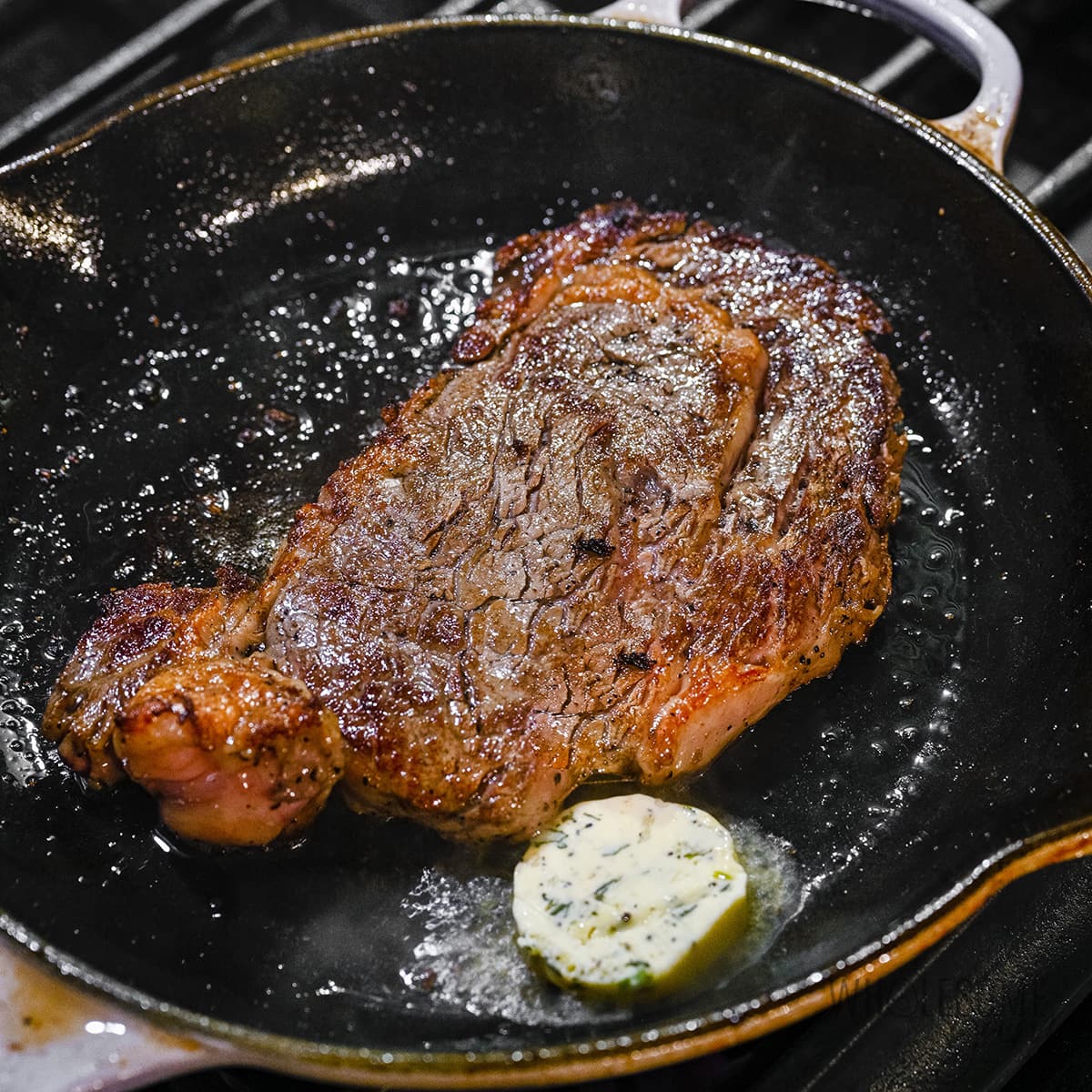
- Rest and serve. Remove the steak from the pan and cover with foil for 10 minutes to rest before slicing. Repeat the cooking process with the second steak. I like to serve this ribeye steak recipe with an extra tablespoon of compound butter on top.

How Long To Cook Ribeye?
For a perfect medium rare steak, I cook it for 5-6 minutes, flipping every 30 seconds, or until it reaches an internal temperature of 130 degrees F. Rest for 5 minutes to reach 135 degrees F.
For just the right doneness, I always recommend checking with a meat thermometer like this. (For many other steak recipes I prefer a probe, but since this ribeye recipe requires flipping it often, the regular kind works best here.)
If you prefer a different doneness, use my ribeye cook time chart below, for 1.5-inch-thick steaks:
| Doneness | Total Time | Internal Temperature |
|---|---|---|
| Rare | 3-4 minutes | 120 degrees F |
| Medium Rare | 5-6 minutes | 130 degrees F |
| Medium | 7-8 minutes | 140 degrees F |
| Medium Well | 9-10 minutes | 150 degrees F |
| Well Done | 11-12 minutes | 160 degrees F |
Note: The times and temperatures above are when you should remove the steak from the pan. It will rise an additional 5 degrees while resting. My times also assume that you removed the steaks from the fridge for 30 minutes before cooking (see my tips below), so it will take a bit longer if you don’t. If your steaks are only 1 inch thick, it will be 1-2 minutes faster.

My Tips For Juicy, Tender Results
- Make the compound butter ahead to save time. I usually make it the night before, so I can start cooking your ribeye steak right away the day-of. Prepping ahead also allows the flavors to develop in the butter.
- Bring your steaks to room temp if you can. It’s okay to skip this if you’re in a hurry, but it helps with even cooking. FYI, the cook time can be a bit longer if you skip this step.
- Flip the steaks frequently, but leave in one spot in between. I’ve found that when I cook steaks on the stovetop only (without an oven step), flipping every 30 seconds makes them cook more evenly than flipping just once. But, don’t move them around constantly, or they won’t get a nice sear.
- Don’t squeeze or pierce your steaks when flipping. Using a fork or squeezing the beef will make all those yummy juices run out! I prefer tongs (just use them gently to avoid pushing the juices out), but a turner also works.
- Be careful not to overcook. Use a meat thermometer and my temperature chart above for perfect results! For a juicy ribeye steak, I recommend medium doneness or less.
- Remember to rest your steaks. If you cut into them right away, all the juices will run out. Let them sit on a cutting board for 5-10 minutes to let the juices settle. And don’t rest them in the pan, or they’ll overcook!
- Slice against the grain. This helps to break apart the muscle fibers in the meat, resulting in a more tender texture that is easier to chew. I check the grain direction before I start cooking, as it’s easier to spot when the steaks are still raw.
Storage Instructions
- Store: Obviously ribeyes taste best fresh, but you can keep leftovers in an airtight container in the refrigerator for up to 3 days. They’re perfect for my steak salad!
- Reheat: I always reheat this ribeye steak recipe in the oven at 250–300 degrees F, with some broth to keep it juicy. For more details on the method, check my instructions for reheating filet mignon or reverse sear steak, as it will be the same.
- Freeze: You can freeze cooked steak for up to 3 months, or raw steak for up to 1 year. I vacuum seal it to prevent freezer burn. Thaw overnight in the fridge.

Serving Ideas
Now that you know how to make the perfect ribeye, the next question is what to make with it. Here are my favorite side dish recipes to go with it:
- Veggies – I usually have compound butter left over, so I wipe down the pan and use the rest to saute asparagus (shown in photo above), saute broccoli, or saute zucchini. You can also just roast vegetables in the oven while you cook the steaks. For classic steakhouse sides, try my creamy spinach, sauteed mushrooms, or roasted green beans.
- Potatoes – For my plate above, I used my air fryer potatoes recipe with baby potatoes. You can also opt for steak fries, roasted potatoes, or lighter mashed sweet potatoes or mashed cauliflower.
- Sauces – I think this ribeye steak recipe tastes flavorful all on its own, but you can add a drizzle of chimichurri sauce, blue cheese sauce, or simply extra compound butter.
- Salads – I like a spring mix salad, wedge salad (your typical steakhouse pairing), or Caprese salad to balance out the rich ribeye steak.
- Breakfast – If you want to get fancy for breakfast, make my steak and eggs!
More Easy Steak Recipes
If you like my ribeye steak recipe, you may enjoy some of my other ways to cook steak:



My Tools For This Recipe
- Cast Iron Pan – Ribeye in cast iron tastes the best, and this is my favorite pan for it. It gets hot enough to sear the exterior and evenly enough to avoid any overcooked spots.
- Meat Thermometer – I use this to make sure my steak is done just right.
Ribeye Steak Recipe (Tender & Easy!)
Cooking a perfect ribeye at home is surprisingly easy! My ribeye steak recipe comes out juicy, tender, and flavorful every time.
 Remove Ads

Instructions
Tap on the times in the instructions to start a kitchen timer.
-
Make the compound butter according to the instructions here. Freeze for 30 minutes, or chill in the refrigerator for several hours or overnight before using.
-
Pat both sides of the ribeye dry. Season with salt and pepper. If you have time, let the steak sit at room temperature for 30 minutes, which will help with more even cooking. (It’s okay to skip this if needed.)
-
Add oil to a cast iron skillet and preheat to 450 degrees F (232 degrees C; on most stoves, this is medium high heat). The oil should be just barely smoking.
-
For medium-rare steak, set a timer for 5 minutes. Move one of the steaks to the pan. Cook the ribeye for 5-6 minutes, flipping every 30 seconds but not moving around in between. With one minute left in cooking, add a pat (~1 tablespoon) of the compound butter to the pan and spoon over steak. If you want a different level of doneness, aim for about 3-4 minutes for rare, 7-8 minutes for medium, 9-10 minutes for medium well, or 11-12 minutes for well done. The final internal temperature should be 120 degrees for rare, 130 degrees for medium rare, 140 degrees for medium, 150 degrees for medium well, or 160 degrees for well done (internal temperature will rise an additional 5 degrees when resting in step 5).
-
Once the steak is done, remove from the pan to prevent overcooking, and cover with aluminum foil for 10 minutes to rest before cutting.
-
Repeat steps 4-5 with the other ribeye steak.
-
Serve each steak with an additional tablespoon of compound butter on top.
LAST STEP: Leave a rating to help other readers, or tag me @wholesomeyum on Instagram. I’d love to hear from you!
Maya’s Recipe Notes
Serving size: 1/2 12-oz ribeye steak
- Tips: See the details in the post above! I’ve got tips to help you get a perfect ribeye every time — juicy and tender, not dry. I also made a time and temperature chart, so you never have to overcook it again.
- Store: 3 days in the fridge.
- Reheat: Place in a baking dish with a little broth, cover with foil, and pop in the oven at 250-300 degrees F. This will keep your ribeye juicy!
- Freeze: Up to 3 months after cooking, or 12 months when raw. But let’s be real, ribeye steak recipes taste best fresh!
I provide nutrition facts as a courtesy. Have questions about calculations or why you got a different result? Please see my nutrition policy.
Add Your Notes Your Notes
Try More Of My Recipes

© Copyright Maya Krampf for Wholesome Yum. Please DO NOT SCREENSHOT OR COPY/PASTE recipes to social media or websites. We’d LOVE for you to share a link with photo instead.
Ribeye Steak Recipe













18 Comments
Julia
1This is my go-to recipe for the most satisfying comfort food! My husband and kids frequently request it. I usually pair mine with mashed potatoes and either a Caesar salad or asparagus. It always turns out amazing! You can’t mess it up, the recipe is super simple to follow!
Sarah Campbell
0Just absolutely perfect, again my go to recipe for rib eye from now on. You are an amazing chef and will continue to use your recipes. Thank you so much Maya for making my husband a happy man xxx
Maya | Wholesome Yum
0Thank you so much, Sarah! I’m so happy this is your go-to recipe now. Best wishes to you and your husband!
Melissa
0I have never been able to make a good steak. I even bought A1 in case it didn’t turn out very well. However, this was one of the best steaks I’ve ever tasted. I didn’t have an iron skillet, but it still turned out great using a regular pan. Thank you, now I don’t have to go out and spend $45 for a good ribeye.
Wholesome Yum D
0That’s amazing to hear, Melissa! I’m so glad it turned out great, even without the cast iron. Sounds like you nailed it and I love that you don’t need to splurge at a steakhouse anymore!
Steve
0Hi Ms Maya olive is not for frying even people say ok it’s not, I use peanut oil to do all cooking and frying. I sometimes use avocado oil. I use olive oil for salad and spaghetti.
Maya | Wholesome Yum
0Hi Steve, We’ll have to agree to disagree, I think it’s great for frying. 🙂 You can definitely use avocado oil if you like! I use both.
deborahetrick
0Fantastic! I used this recipe for our Valentine dinner for 2. I don’t have a regular cast iron pan, so I used my cast iron griddle instead. It did take a little longer and I left the steak in one place longer than 30 seconds. It still turned out perfect. Thank you for giving the step by step instructions. I love your recipes.
Abby
0The best steak I’ve ever made! Turned out perfect. Can’t wait to make this again.
Gary T
0Simple and absolutely perfect! Everyone loves this steak and I will definitely make it again.
Sha
0What a great date night recipe! Indeed so tender and juicy!
Sindey
0Perfection done easy!!!
Anna
0This steak was perfection! My Hubby loved it so I will be making it again soon!
Abby
0Loved the way this turned out! So juicy and tender. A fool proof recipe.
Marianne
0This recipe is easy to follow, delicious and has only 5 ingredients made it simple to substitute alternative for butter since I am dairy intolerant. The juices left in pan got spooned over the steak on my plate and became a sauce for the broccoli, too. The chart for doneness the best ever. Yummy!
Wendy
0This was easy to make and so delicious!
Roxie
0So perfect and juicy. Love the medium rare. Thanks for the recipe.
Cam
0I love making steak and this one helped me very well! Thanks for sharing this!