
 Shop
 My
 Custom




I’ve been buying balsamic glaze (or call it balsamic reduction if you want to feel fancy) for as long as I can remember — this sweet, gooey condiment is such an easy, tasty way to elevate so many dishes. But once I figured out how to make balsamic glaze myself, I wondered why on earth I bothered with the expensive stuff at the store. Making it at home is super simple, sweet, and thick, and I actually think making it fresh tastes better. Make this balsamic glaze recipe with me, and I promise you’ll find so many ways to use it!
Why You Need My Balsamic Glaze Recipe

- It just tastes better – Homemade sauces are always better, and balsamic reduction is no exception. Try it and you’ll see.
- Adjust the consistency to your liking – I make it nice and thick for drizzling, but it’s so easy to customize. Can’t do that with the store-bought stuff!
- Clean ingredients – Most balsamic glaze options at the store have added sugar (or worse, corn syrup), preservatives, and sometimes even caramel color. Mine has none of these! And I love that I don’t have to scour ingredient lists when I just make it myself.
- Delicious addition to your healthy meals – People have been asking me how to make balsamic reduction ever since I topped my balsamic chicken with it, but I also use it for Caprese salad, as part of my recipe for sausage and peppers, and many other ways below. You won’t find a shortage of uses!


Ingredients & Substitutions
Here I explain the simple ingredients for my homemade balsamic glaze recipe, what each one does, and substitution options. For measurements, see the recipe card below.
- Balsamic Vinegar – This balsamic vinegar of Modena is one of my favorites! The quality of your vinegar will impact the flavor in your glaze. I highly recommend ones from Italy — even better if they are aged. There’s no substitute for the vinegar, because that’s the main ingredient.
- Sweetener Of Your Choice – You actually don’t need a sweetener at all, but you do if you want it to taste sweet like the store-bought stuff. I use Besti Monk Fruit Allulose Blend, because it dissolves effortlessly and tastes like sugar, with zero calories. Be aware that most sugar substitutes won’t work because they don’t dissolve well, but regular sugar does if you’re okay with that. You can also sweeten with honey (I love my balsamic glaze sweetened with this natural sugar-free honey) or even maple syrup.
FREE 5-Ingredient Recipe EBook
GET IT NOWHow To Make Balsamic Glaze
I have step-by-step photos here to help you visualize the recipe. For full instructions with amounts and temperatures, see the recipe card.
I wanted to show you pictures of the progression here, but there are literally almost no steps.
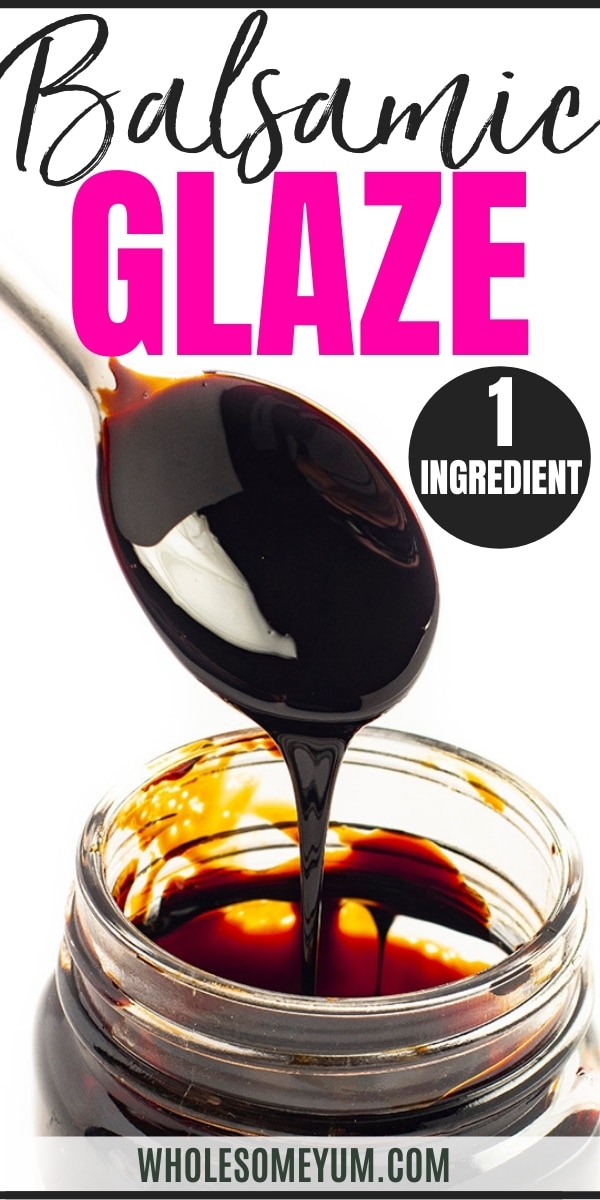
Just pour the balsamic vinegar (and your sweetener, if using) into a saucepan over medium heat. Bring to a boil, and simmer until the balsamic reduction thickens to your liking. Look for it to coat the back of a spoon!



My Recipe Tips
- The larger your saucepan, the faster your balsamic reduction will thicken. So grab the largest one you’ve got to make it as quickly as possible.
- Consistency is the main indicator of doneness. Look for it to coat the back of a spoon, like my picture above. Another good estimate is how much it reduces — it’s usually done when the volume has reduced by half.
- Balsamic glaze will thicken more as it cools. So, I recommend removing it from heat once it passes the spoon test.
- If you reduce the vinegar too much, it will actually harden when it cools. You can decrease the cook time the next time around, but you can usually save what you made! Just reheat it gently with a splash of water or more balsamic vinegar to thin it out.
- If you refrigerate it, bring to room temperature before using. Again, it will become very stiff in the fridge.
- What if it turns out too thin? You can easily heat again if it’s too thin after cooling.
- Why is my balsamic glaze not thickening? This usually means it just needs more time. Your stovetop temperature, as well as the size and material of your pan, will play a role.

Ways To Use It
Once you make balsamic glaze, you’ll want to put it on everything! In particular, it’s a common addition to Mediterranean or Italian recipes that have tomatoes, basil, or Italian seasoning. I like to drizzle my balsamic reduction on:
- Salads – I love Caprese salad (pictured above), which is why I have so many versions of it (avocado Caprese salad, Caprese chicken salad, and Caprese skewers). Balsamic reduction is also wonderful on my antipasto salad.
- Pizza & Pasta – If you make these with Mediterranean toppings or add-ins, balsamic vinegar glaze works great on top.
- Vegetables – My all-time fave types for this sauce are balsamic roasted brussels sprouts and roasted mushrooms. You can drizzle it on all kinds of roasted vegetables, though, or even my roasted veggie salad.
- Chicken – Try it on my marinated balsamic chicken or baked chicken Caprese (there’s that Caprese again!).
- Ice Cream – A surprise pairing, but balsamic reduction adds delicious flavor to vanilla ice cream.
- Eggs – Another surprising one, but it can work well particularly if you cook them with tomatoes. It’s a lovely finishing touch on my pesto eggs!

Balsamic Glaze Recipe (Easy)
 By
You'll love my super easy balsamic reduction recipe! Learn how to make balsamic glaze for salads, chicken, veggies, and more.


Instructions
[ See step photos See my tips ]Tap on the times in the instructions to start a kitchen timer.
-
Add balsamic vinegar to a small saucepan over medium heat and bring to a gentle boil. (If you want glaze to be sweeter, add Besti or other sweetener that dissolves easily to the saucepan when you add the balsamic vinegar.)
-
Reduce heat to medium-low and simmer for about 20 minutes, until volume reduces by half and it coats the back of a spoon. (It will thicken more as it cools.)
Did you make it? Leave a review or tag me @wholesomeyum on Instagram!
Maya’s Recipe Notes
Serving size: 2 teaspoons
- Tips: Check out my recipe tips above to help you get the right consistency in your balsamic glaze, and how to salvage it if it turns out too thin or too thick.
- Storage: Keep your balsamic reduction in a glass jar in the refrigerator for up to 1 month. It will become more stiff or even hard, so take it out 1-2 hours before using to become more runny again. If it’s still too thick, see my tips above to thin it out.
- Freezing: I don’t recommend freezing balsamic glaze, because the flavor changes, but you can if you really want to. Again, you’ll need to thin it out after thawing.
I provide nutrition facts as a courtesy. Have questions about calculations or why you got a different result? Please see my nutrition policy.
Add Your Notes Your Notes
Try More Of My Recipes


© Copyright Maya Krampf for Wholesome Yum. Please DO NOT SCREENSHOT OR COPY/PASTE recipes to social media or websites. We’d LOVE for you to share a link with photo instead.
How To Make Balsamic Reduction











36 Comments
Laura
0Could I roast vegetables with this glaze or would it burn?
Wholesome Yum M
0Hi Laura, I would reserve this glaze to drizzle on veggies after they have been roasted. You don’t want the glaze to harden in the oven.
Julie Marrero
0Made this balsamic glaze for my wedge salad and loved it! Even my husband enjoyed it!
Priya Lakshminarayan
0This recipe is a keeper! Thank you so much for sharing.
Beth
0This is perfect for the chicken for dinner tonight! I can’t wait to make this! Looks so delicious!
Sisley White
0How wonderful! What a simple glaze and it tastes soo good!
Tara
0Oooh, I love balsamic glaze! Yours looks wonderful. It comes together so easily too! Definitely perfect for drizzling over veggies.
Brenda
0Love how clean and simple this balsamic glaze is!!! I have been looking for stocking up some simple condiments to add some variety to my cooking while staying with a healthy diet. This is absolutely on the list!!