
 Shop
Shop My
My Custom




FREE 5-Ingredient Recipe EBook
GET IT NOW- This Roasted Eggplant Recipe Made Me Love Eggplant
- Ingredients & Substitutions
- The Best Way To Cut Eggplant
- How To Roast Eggplant In The Oven
- My Tips For The Best Texture
- Roasted Eggplant (Tender, Caramelized, Easy) Recipe card
- Troubleshooting Roasted Eggplant
- Flavor Variations & Toppings
- What To Serve With Baked Eggplant
- More Easy Eggplant Recipes
- Recipe Reviews
This Roasted Eggplant Recipe Made Me Love Eggplant

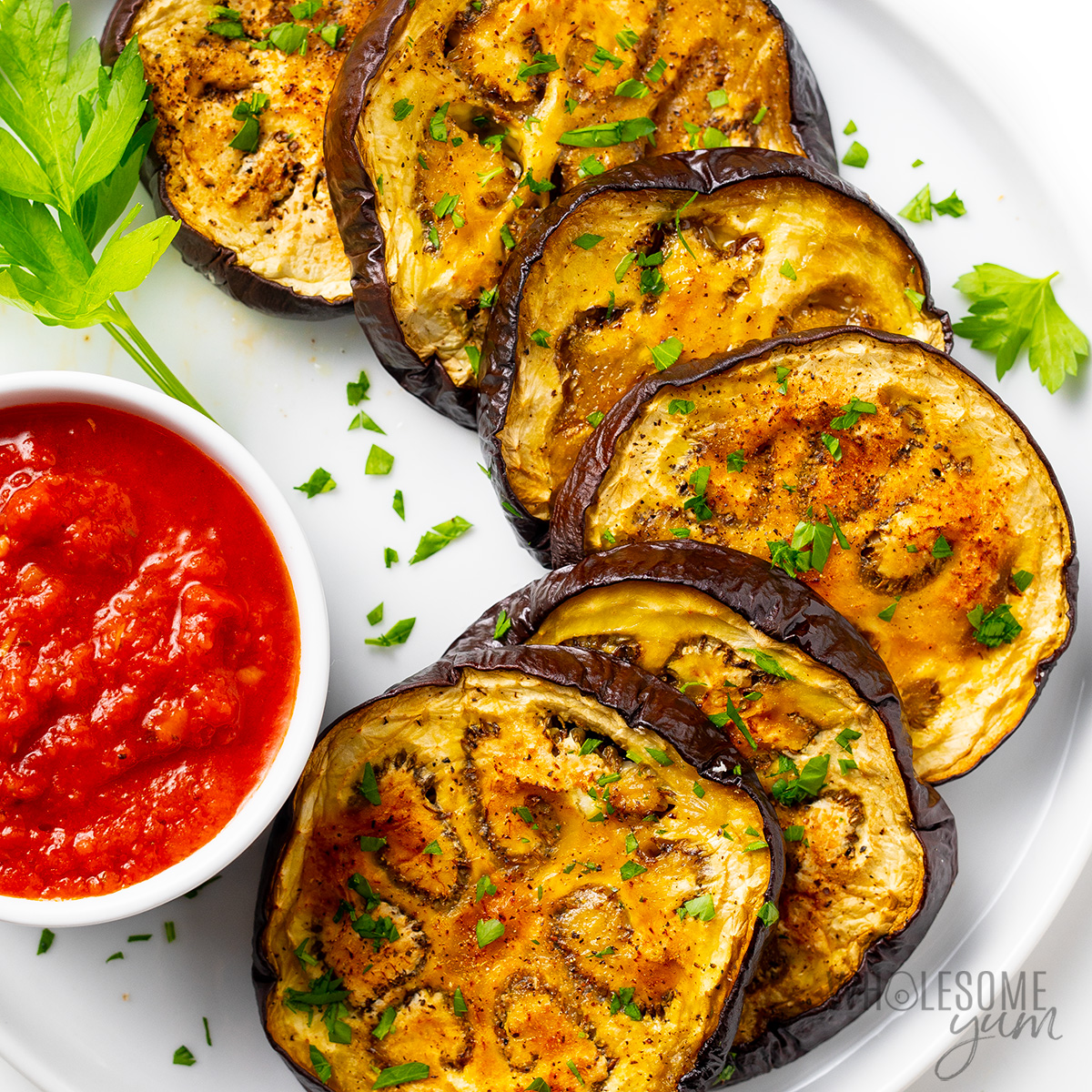
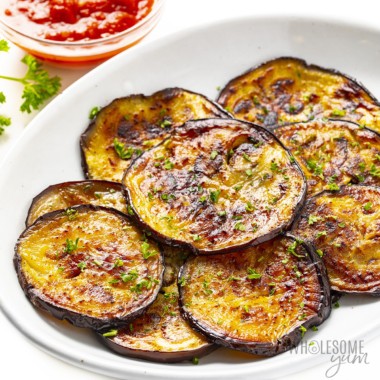
Roasted eggplant was the recipe that finally made me understand why people love eggplant so much. I used to think it was bland and mushy, but when you cut it into thick slices, brush on enough olive oil, and let the oven do its thing, it turns soft and creamy in the middle with golden, caramelized edges. Here’s why I think this simple baked eggplant belongs in your regular veggie rotation:
- Sweet, tender, and caramelized – Roasting brings out the natural sweetness in eggplant, with golden brown edges, a creamy center, and a deep caramelized flavor (my favorite part!).
- Easy, hands off cooking – I rarely have more than 30 minutes to spend on dinner, do you? And while I love the crispness of sauteed eggplant, my roasted eggplant recipe is more hands-off, so you can make your main dish while the side dish cooks.
- Foolproof base recipe – Many eggplant recipes lean into one flavor profile, but I kept this one simple so it goes with almost anything. Make it basic, or use my variations below to change the flavor.
- Works with so many meals – I serve it as a healthy side dish with chicken, steak, seafood, or lamb (I’ve included specific serving ideas below), but leftovers are also great tucked into eggplant lasagna or stirred into eggplant caponata.
Whether you love this vegetable or you’re on the fence, I hope you’ll try this roasted eggplant with me — it might become one of your new favorites. Make it with me!


“The eggplant was easy to make and came out crispy and tasty. Brushing on the olive oil made it cook evenly and brown nicely. Even without flipping halfway, it turned out great. I’ll definitely make this again!”
-Marilyn
Ingredients & Substitutions
Here I explain the best ingredients for my roasted eggplant recipe, what each one does, and substitution options. For measurements, see the recipe card.
- Eggplant – I usually use globe eggplant, which is the common large purple kind in most U.S. grocery stores. I recommend smaller to medium eggplants, because they’re less bitter with fewer seeds. Look for smooth, shiny skin and firm flesh with no soft spots. In other countries, you might see it labeled as aubergine, brinjal, or melongene.
- Olive Oil – Oil is very important for caramelization and preventing dryness, so don’t skimp. I like cooking eggplant with extra virgin olive oil, but you can totally swap in another heat-safe oil, like avocado oil. For a little zing, mix fresh lemon juice or balsamic vinegar with the oil before brushing it on.
- Seasoning – I usually just stick with garlic powder, salt, and pepper. (Don’t use fresh garlic, because it will burn before the eggplant gets tender.) You can also sprinkle with Italian seasoning or your favorite dried herbs, like basil, parsley, or thyme. See my flavor variations below for more ideas!

The Best Way To Cut Eggplant
Some roasted eggplant recipes call for chopping it up into cubes, but I much prefer circles. It’s faster, you get better caramelization, and there’s no extra bowl to wash (just season right on the baking sheet!). To prepare the eggplant:
- Slice crosswise into 1/2 inch rounds, or sometimes I do 3/8 inch. This thickness is the sweet spot for tender centers and browned, caramelized edges. Thinner slices cook more quickly, but burn more easily. Thick ones take longer and I find the browned-to-creamy-inside ratio is less ideal.
- Keep the slices the same thickness. That way they roast at the same rate. If some are much thinner, they can burn before the thicker ones are tender.
- Don’t peel the skin. I always leave the peel on for roasted eggplant recipes like this, because it helps hold the eggplant together as it cooks.
- Cut off the leafy end only after you are done slicing. This way, you’ll have more to grab onto as you slice.

You can cut eggplant other ways, too, but the cooking time and texture will change:
- Cubes – Better for bowls, salads, pasta, or tossing into other dishes. Cut them into large chunks, not tiny dice (small pieces shrink a lot and turn mushy fast). You’ll also need a bowl to coat evenly in oil.
- Lengthwise slices – Great if you want to use the baked eggplant for rollatini, sandwiches, or layering into eggplant lasagna.
- Halves – Best when you want to scoop out the flesh for dips or stuffed eggplant, but they take longer to cook and don’t pick up nearly as much roasted flavor.
How To Roast Eggplant In The Oven
I have step-by-step photos here to help you visualize the recipe. For full instructions with amounts and temperatures, see the recipe card.
- Season the eggplant slices. Arrange them on an extra large baking sheet in a single layer (or two if you don’t have room). Brush or drizzle them with the olive oil, and season with garlic powder, salt, and pepper. Flip over and repeat the oil and seasonings. (I season both sides, because eggplant slices are thick enough that one-sided seasoning can taste flat.)
- Roast eggplant until tender. Pop the pan in the oven and cook eggplant until it’s soft, golden, and starting to caramelize. Don’t remove it when it still looks pale — wait for that caramelization!
- Serve warm. The roasted eggplant should feel very soft when pierced with a fork, with a golden outside. If you want extras like herbs or sauce, I add those after baking. See variations below!



My Tips For The Best Texture
- Use enough oil. Eggplant acts like a sponge, and too little oil makes it dry instead of silky.
- Brush on the olive oil instead of drizzling. I used to drizzle (as shown in my picture above), but now prefer brushing because the eggplant soaks up the oil so quickly. You get a more even coating if you brush it on. You can also use an oil mister instead, which is faster.
- Don’t crowd the pan. If the slices overlap or sit too close together, they steam and turn soggy. I usually grab my largest pan (which is also non-toxic, non-stick, and made in USA!), which helps, and even use a second pan when needed.
- Should you line the pan? I don’t line the baking sheet I linked above, because the nonstick surface is excellent and it gets me better browning. You can also get great browning by lining with aluminum foil — just make sure you brush or spray the pan with oil to prevent sticking. Parchment paper works, but you won’t get as much browning or caramelization, so it’s not my favorite option.
- Do you flip halfway through? It’s up to you! I’ll be honest, sometimes I do and sometimes I don’t. You do get more even browning if you flip, but I’m often juggling multiple tasks at once, and the baked eggplant recipe still turns out great if I don’t flip it.
- Watch the color and texture, not just the clock. The slices are done when they’re fork-tender, creamy, and a little collapsed, with golden brown edges. If they are soft but still pale, I give them a few more minutes.
- If you want more browning, you can roast eggplant at 425 degrees F. You have to check on it earlier and it can burn more easily before the inside gets creamy, which is why it’s not the temperature I usually use for slices. However, 425 or even 450 degrees F works nicely for eggplant cubes, because the inside cooks through faster.
See the troubleshooting section below to help you avoid common issues.
Roasted Eggplant (Tender, Caramelized, Easy)
Learn how to cook eggplant that actually tastes good! My easy roasted eggplant recipe is creamy, golden, caramelized, and customizable.


Instructions
[ See my tips ]Tap on the times in the instructions to start a kitchen timer.
-
Preheat the oven to 400 degrees F (204 degrees C).
-
Slice the eggplant crosswise to make circles, about 1/2 inch (1.25 cm) thick. Cut off the leafy end only after you are done slicing, so that you'll have more to grab onto as you slice.
-
Arrange the eggplant slices on an extra large baking sheet in a single layer. Brush with olive oil, and sprinkle with sea salt, garlic powder, and black pepper. Flip and repeat the olive oil, salt, garlic powder, and pepper.
-
Roast eggplant in the oven for 30-35 minutes, until soft, golden, and caramelized. You can flip halfway through if you like, but you don't have to.
LAST STEP: Leave a rating to help other readers, or tag me @wholesomeyum on Instagram. I’d love to hear from you!
Maya’s Recipe Notes
Serving size: 4 slices, or 1/4 entire recipe
- Tips: Check out my recipe tips and troubleshooting sections to help you avoid mushy, dry, or bitter roasted eggplant.
- Variations: See my flavor variations below for parmesan herb, Mediterranean, balsamic, and spicy options.
- Storage: Keep leftovers in an airtight container in the refrigerator for 3-5 days. I like to use them for eggplant lasagna or eggplant pizza, or chop them to toss in eggplant caponata, omelettes, bowls, or roasted vegetable salads.
- Meal prep: You can roast eggplant in advance, but I don’t recommend slicing and storing the raw slices, because they will turn brown.
- Reheat: Warm up the eggplant in the oven at 350 degrees F. (I use a lower temperature for reheating than for roasting, so that they don’t burn the second time around.)
- Freeze: Cool completely, freeze the slices on a parchment-lined baking sheet until solid, then transfer to a zip lock bag for up to 3-4 months. Thaw in the fridge overnight before reheating.
I provide nutrition facts as a courtesy. Have questions about calculations or why you got a different result? Please see my nutrition policy.
Add Your Notes Your Notes
Try More Of My Recipes


© Copyright Maya Krampf for Wholesome Yum. Please DO NOT SCREENSHOT OR COPY/PASTE recipes to social media or websites. We’d LOVE for you to share a link with photo instead.
Roasted Eggplant
Troubleshooting Roasted Eggplant
Why Is My Roasted Eggplant Soggy?
Roasted eggplant usually turns soggy when the pan is too crowded, the slices are too thin, the eggplant was pulled before the edges had time to brown, it was baked too long, or there’s too much oil. I always check on my eggplant towards the end of roasting, and if it looks super soft but not browned at all, I crank up the heat to 425 or 450 to brown it more.
Why Is My Roasted Eggplant Dry?
Dry eggplant is a sign it needs more oil, or the oil wasn’t applied evenly. The slices should look lightly coated on both sides before baking, so if they look chalky or dry, I add more oil as needed.
Why Is My Roasted Eggplant Tough?
This is usually a sign that you need to cook the eggplant for longer. It should be very soft when pierced with a fork, with golden brown edges and a creamy center. If it still feels spongy or looks pale, give it more time.
Why Is My Roasted Eggplant Bitter?
Bitterness is more common with large, seedy, or older eggplants. I usually avoid it by choosing smaller to medium eggplants, but salting the slices first can help if yours looks extra seedy. Speaking of salting…
Should You Salt The Eggplant?
People often ask why I don’t do this when I cook eggplant. There are two reasons: Most eggplants today are bred to avoid bitterness, and I always get small to medium ones, which aren’t usually bitter.
However, if your eggplant is large, it’s more likely to be bitter, so you can salt it if you like. To do this, sprinkle the eggplant slices generously with salt (I recommend ~1 teaspoon of salt per eggplant) and place into a colander over the sink to drain for an hour. (It seems like a lot of salt, but much of it gets rinsed off, and it helps draw out moisture.) Then, rinse with water, pat very dry, and proceed with my roasted eggplant recipe as written.

Flavor Variations & Toppings
I made this easy roasted eggplant simple on purpose, but it takes on different flavors really well. I just keep the base method the same and change the finish:
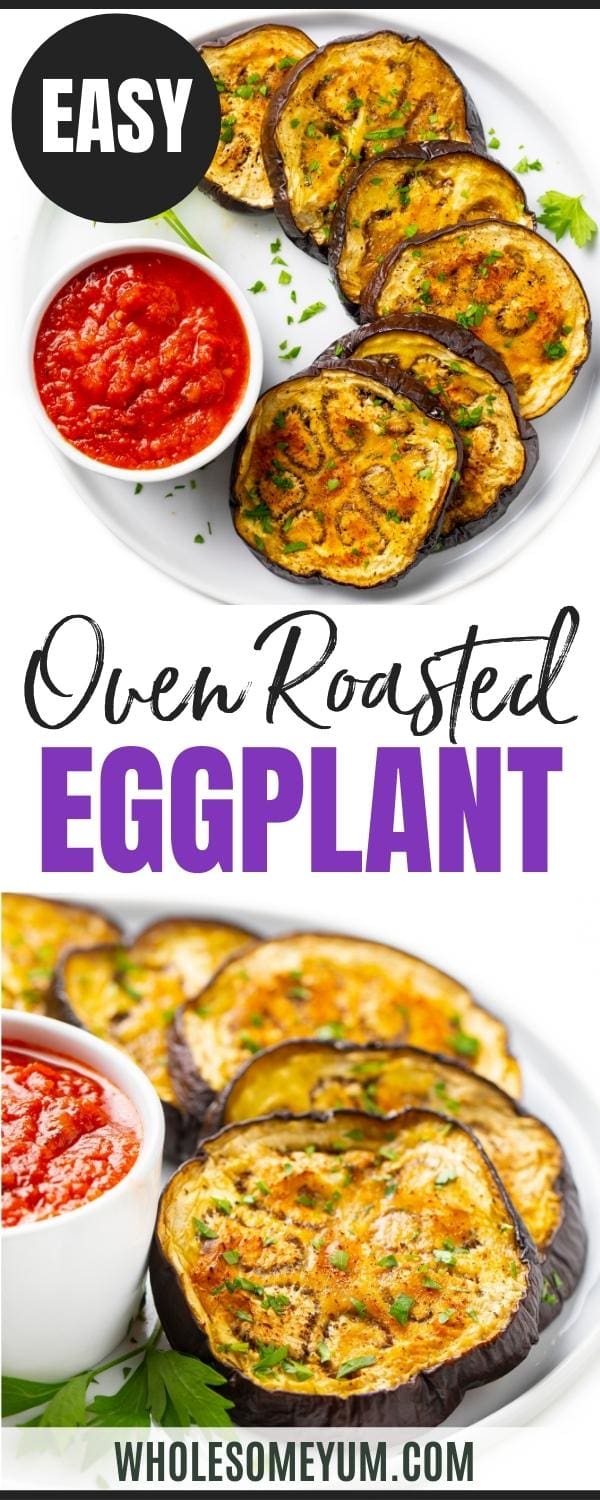
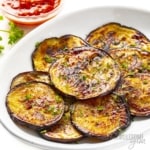
- Parmesan Herb – Add Italian seasoning before roasting, then sprinkle with shredded parmesan and fresh parsley after baking. I like this version with marinara sauce on the side (as pictured above), or you can opt for a light drizzle of lemon butter before adding the cheese.
- Mediterranean – Finish with a drizzle of basil pesto or tzatziki sauce (or simply fresh lemon juice), fresh parsley or dill, and crumbled feta. This works especially well if you are serving the eggplant with lamb, fish, or a Greek-style bowl.
- Middle Eastern – Season with cumin and smoked paprika, then finish with tahini sauce, a shower of fresh parsley and mint, and toasted pine nuts at the end.
- Balsamic – Mix a small splash of balsamic vinegar into the olive oil before brushing the slices, or just drizzle with balsamic glaze at the end. I like this version with quartered cherry tomatoes and fresh basil on top.
- Spicy – Add red pepper flakes before roasting, or drizzle with chili oil (I like this one without seed oils) after baking.
What To Serve With Baked Eggplant
This easy side dish goes with so many meals! You’ll find all my healthy dinner recipes here, but here are some of my favorite pairings:
- Chicken – Keep it basic with my crispy drumsticks or air fryer chicken breast. For an Italian-inspired meal, try my chicken cacciatore or chicken marsala.
- Fish – I’ve got lots of fish options, from classics like pan seared salmon (my favorite) or baked cod, to more interesting sea bass, trout, or haddock.
- Steak Or Lamb – This is one of my favorite ways to make a simple protein feel more Mediterranean. Try my sirloin steak or lamb kofta kebab for an everyday meal.
- Special Occasions – If you’re feeling fancy for date night or even a birthday, make my baked lamb chops, filet mignon, crab legs, or lobster tail.
- Brunch Dishes – Roasted eggplant is so good with saucy eggs. I love it next to shakshuka or even tucked into a plate of pesto eggs.
More Easy Eggplant Recipes
Roasting is one of the easiest ways to cook eggplant, but I’ve got many other ways! Try some of my others:














179 Comments
Toni Wellhausen
0Making right now! I’m cubing the eggplant as I have done before – is that ok? Only other time I’ve roasted eggplant the salt feature was highly recommended….I felt it did nothing but waste my time. Your recipe sounds so much better & easier. Just hoping cubing it works as well. Many thanks.
Maya | Wholesome Yum
0Hi Toni, Yes, that will probably work, but the roasting time will vary. Please let us know how it turns out!
Sarah
0Do you need to flip halfway through?
Maya | Wholesome Yum
0Hi Sarah, You can if you like but it’s not required.
Nancy
0Do you need to salt eggplant slices and layer between paper towels to weep before cooking?
Maya | Wholesome Yum
0Hi Nancy, This step is not necessary, unless your eggplant is large. See my tips in the post above for details.
Gail
0A very tasty recipe. I made my slices a little thicker so I could top it with chilled diced tomatoes with basil.
Henry Montrose
0For the rest of the world, what prey tell is 400 degress, and why not the correct temparatures for fan assisted/ You want us to read, but you seem to think, we are all Americans, why nor be radical and broaden your horizons
Tashia
1I bet you could google the answer in the time it took you to write your snarky comment.
Karen
0Or Henry could look up a temperature conversion. Thank you for this free recipe!
Maya | Wholesome Yum
0Hi Henry, You’ll want to preheat your oven to 204 degrees C. I list both Fahrenheit and Celcius on the recipe card.
Lillian
0What kind of sauce you used for the dip, what ingredients I need to make this sauce?
Maya | Wholesome Yum
0Hi Lilian, I served the eggplant with my healthy marinara sauce. I have a couple other sauce ideas in the post above.
Monica
0This is such a great resource for making eggplant! Thanks for explaining it so well!
Elaine
0I love making eggplant as a side to so many of my favorite meals! It adds so much taste to the overall experience! Chicken parmesan is one of them!
Kristine
0Oh my gosh! This was so easy and so yummy! I’ll definitely make these again, thank you!
Krissy Allori
0Yum! I can’t wait to try this.
Alison
0I love this simple recipe for roasted eggplant. I roast eggplant to make babaganoush. It’s so delicious!
Micki
0Yum! These are so good just by themselves! Next time I’m adding them as lasagna layers in eggplant lasagna – I love your idea to try that!
Lauren Vavala
0I’ve only had eggplant once in my life. I think it’s time I try it again because you have made it look SO good!!
Taylor
0So easy and delicious! Perfect for meatless Monday!