
 Shop
Shop My
My Custom





FREE 5-Ingredient Recipe EBook
GET IT NOWMy Be-All, End-All Filet Mignon Recipe For Juicy, Tender Steak

Many years ago, when a friend showed me how to cook filet mignon at home, I didn’t believe her that it could be that easy. After all, it’s one of the most expensive dinners you can get at a restaurant! But oh, was she right. And since this is my absolute favorite cut of steak, I’ve tweaked it and made this filet mignon recipe probably about 100 times since I first published it in 2017… and saved a fortune on eating out. So can you. Here’s why it’s just as good as — if not better better than — a restaurant:
- Tender, juicy, and flavorful – Filet mignon steak is very lean, but when you cook it correctly, it tastes melt-in-your-mouth tender and juicy. Not to mention that perfect browned crust you get with my recipe. The flavor is more mild than many other cuts, but I actually love that. It also doesn’t have the issue of chewy parts that many cuts have.
- Quick and easy – Just season, give it a quick pan sear, then transfer to the oven to finish. It’s easier than you might think, and takes me less than 15 minutes!
- Choose your doneness – Everyone in my family likes their steaks done differently, so that means I always have an excuse to make a time chart for you. 😉 And I did! Together with my tips below, you can use it to make your filet mignon medium rare, totally rare, well done (not for me but you do you), or anywhere in between.
- Cost effective option for special occasions – Not going to lie, this is an expensive cut. But you can still make it restaurant-quality at home for a fraction of steakhouse prices — and that’s a win. It’s one of my fave Valentine’s Day recipes for that reason. I also love it for date nights and other holidays.
- Simply the best way to cook filet mignon – I’ve cooked filet mignon recipes in many other ways, including air fryer filet mignon, just cooking filet mignon on the stove the entire time, grilling filet mignon, and even wrapping filet mignon in bacon. But this is the one I make the most, because it’s just so simple and works perfectly for me every time. And it will work perfectly for you, too!
This was the first way I ever cooked a steak using the stovetop-to-oven method that has been my favorite way to cook virtually all steaks for years now. I now use this same method for many other cuts of meat, including my sirloin steak, fancier tomahawk steak, juicy baked pork chops, classic New York strip, and even asparagus stuffed chicken.
If you’re looking for a steak dinner with unbeatable tenderness, grab some filet mignon and cook this recipe with me. You won’t regret it!


“Amazing, 5 Stars! Such an easy recipe to follow and you were right, it turned out better than a 5 star restaurant. I will be using your recipe every time and it’s just so easy. Me personally, medium rare is the best way to enjoy this amazing recipe. Thank you so much.”
-Sarah
Ingredients You’ll Need
Here I explain the best ingredients for cooking filet mignon, what each one does in my recipe, and substitution options. For measurements, see the recipe card.
How To Select Your Steak:
Filet mignon is a small, mild, and tender cut from the beef tenderloin, which is a lean meat that runs along the sides of the cow’s spine. Sometimes my butcher calls it tenderloin steak. Here are my tips on what to look for:
- Thickness – This is the most important! Filet mignon steaks come in a range of thicknesses from 1/2 inch up to 3 inches. Avoid the thinner ones. 1 inch thick is the bare minimum, but I always choose ones that are at least 1.5 inches thick. This time I snagged 2-inch-thick steaks, which is even better if you can find them.
- Source – Your local butcher will usually have higher quality beef than a grocery store, but I often get mine from my local warehouse club. I’ve also been happy with ones from this grass fed steak delivery service, though they are smaller.
- Grade – Steak grades range from Prime (the best and most expensive, but hard to find) to Choice (the next best and my recommendation) to Select (which will work if that’s all you can get). It’s well worth it to get the best you can.
- Marbling – I prefer mine lean, but you can get steaks with a little marbling if you like.
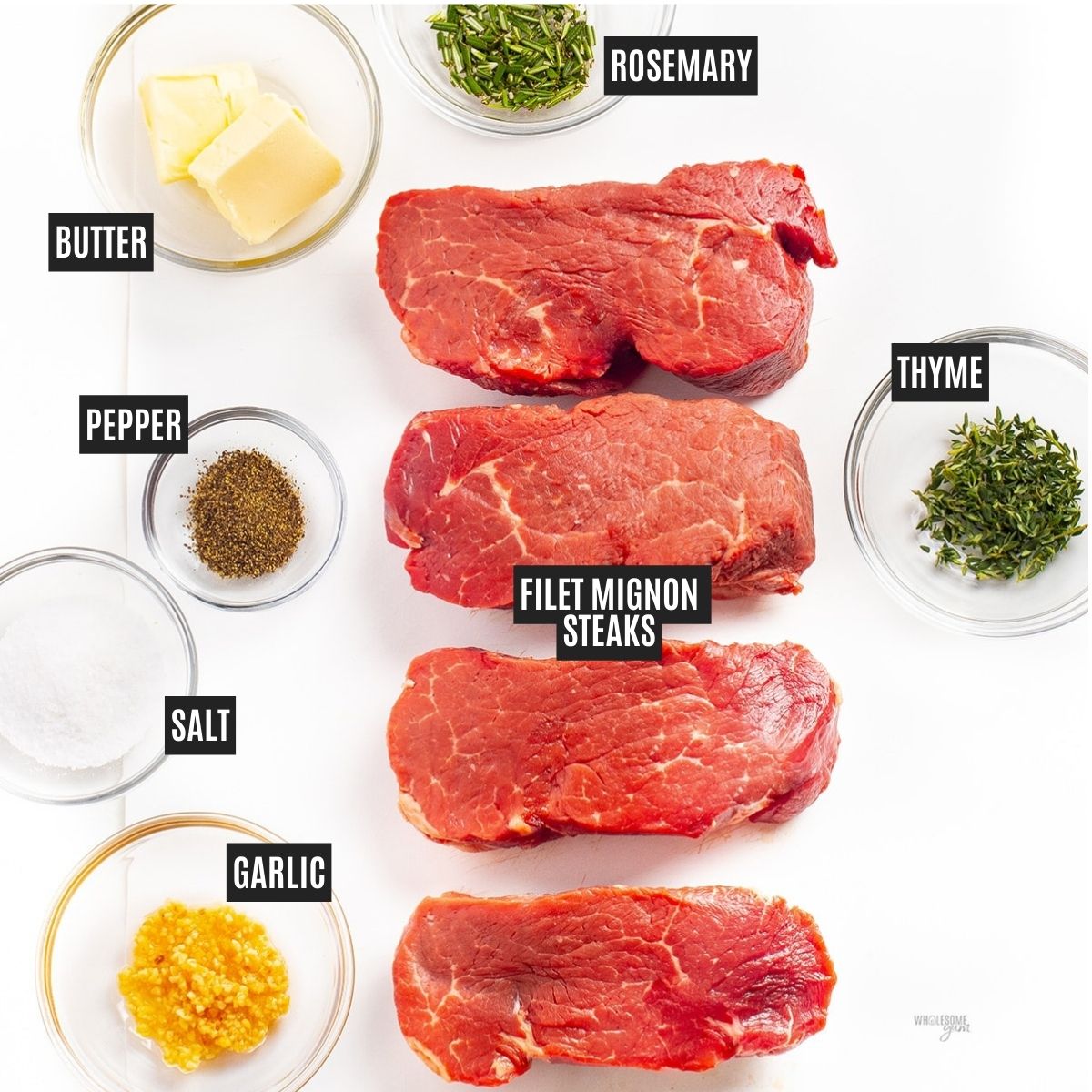
Other Ingredients:
- Seasoning – In my opinion, filet mignon recipes (like many high quality steaks) don’t need a marinade or fancy spices to shine. All you need is a generous amount of salt and pepper!
- Butter Or Oil – I love the flavor I get from cooking filet mignon in butter, despite knowing that it’s not the ideal choice for high heat. You can use olive oil or avocado oil if you’d rather not.
- Compound Butter – Regardless of what you use for searing, I highly recommend this for serving. It’s easy to make with unsalted butter, fresh herbs (I used rosemary and thyme) and minced garlic (either fresh or jarred garlic works). Long before I published my compound butter recipe, I prepared it for this filet mignon recipe. Make it, you won’t be sorry!
How To Cook Filet Mignon
I have step-by-step photos here to help you visualize the recipe. For full instructions with amounts and temperatures, see the recipe card.
- Bring the steaks to room temperature. If you have time, take your steaks out of the fridge 30 minutes before cooking. I always try to do this for more even heating.
- Make the garlic herb butter. In a small bowl, mash together the butter, minced garlic, rosemary, and thyme. Form the butter into a log, wrap in plastic wrap, and refrigerate until ready to serve. (If you’re not a fan of garlic butter, I honestly don’t get it ;), but you can try my chimichurri sauce or steak Diane sauce instead.)
- Season the steaks. Pat each filet mignon steak dry with paper towels. Sprinkle both sides liberally with salt and pepper. (See my tips or recipe card below for the perfect amount.)
- Give them a quick sear. Melt more (plain) butter in an oven-safe skillet over medium-high heat. (See my note below on pan types.) Add the steaks and sear on both sides until browned, flipping only once. They will not be cooked through at this point — you just want to brown the outside.
- Finish the filet mignon in the oven. Transfer the skillet to the oven and finish cooking to your desired doneness. See my tips and time chart below for perfect results!
- Let them rest. I like to top with compound butter (right away so that it starts to melt), but you could also opt for my blue cheese sauce for steak. Or nothing at all. Transfer the steaks to a plate or cutting board, and let them rest for 5 minutes before serving and slicing.



My Tips For Super Tender, Flavorful Steak
- Trim if needed. Filet mignon sometimes comes with a layer of connective tissue along the edges. If your butcher didn’t remove this, cut it off for the best texture.
- Patting dry matters. This helps the steaks sear well, so that they form that gorgeous brown crust on the outside.
- Season liberally. All you need is salt and pepper, but do use a generous amount. My rule of thumb is 1 teaspoon of sea salt and 1/4 to 1/2 teaspoon of black pepper per pound of meat.
- Use high heat, with the right pan. High heat is critical to getting a good sear on your steak, so you need a pan that heats up well and retains that heat. (That means put away that nonstick cookware.) I use and recommend this cast iron skillet.
- Don’t move the steaks around. I flip often when I’m cooking a steak exclusively on the stovetop, like my ribeye recipe, but you don’t want to do that when you cook filet mignon using my method here. Since they only get a quick sear before going in the oven, keep the steaks in one spot except when you flip them (just once).
- Don’t squeeze or pierce the meat when flipping. This will cause all the juices to run out! Instead, you can use a turner, or I usually just do it gently with tongs.
- Check your steak temperature with a thermometer. I recommend this for all my steak recipes, but especially for cooking my filet mignon recipe, since this cut is so lean and can dry out. Measuring the internal temperature is the best way to know that it’s done perfectly. I use this probe thermometer, which beeps at the right temp so I don’t have to keep checking, but a regular meat thermometer works, too. See my temperature chart below to use with it. Do not cut open your steak to check if it’s done!
- Don’t slice your steak right away. If you do, all the juices will spill out onto your plate and it will be dry. Resting lets the juices re-absorb into the meat, leaving you with the tender filet mignon that you want. Just make sure to remove from the hot pan first, so that it doesn’t continue to cook from the residual heat.
- Slice against the grain. The grain is the direction that the muscle fibers run, and I find it easier to look for them before cooking. Once cooked, slicing in the opposite direction breaks them up, leaving each bite extra tender.
How Long To Cook Filet Mignon?
The cook time depends on the thickness of your steak and how you like it done. For medium rare filet mignon that is 2 inches thick, I sear it for 2 minutes per side on the stove to brown, then bake in the oven for 5-6 minutes, until the internal temperature reaches 130 degrees F.
Use my time and temperature chart below to get any doneness you want! I recommend going by the temperature and using a meat thermometer (see my tips above), but if you don’t have one, these times are a good estimate. They are based on 2-inch-thick steaks; steaks that are 1 or 1.5 inches thick will cook 1-2 minutes faster.
| Doneness | Sear On The Stove | Then Oven For | Target Internal Temp * |
|---|---|---|---|
| Rare | 2 minutes per side | 4-5 minutes | 120 degrees F |
| Medium Rare | 2 minutes per side | 5-6 minutes | 130 degrees F |
| Medium | 2 minutes per side | 6-7 minutes | 140 degrees F |
| Medium Well | 2 minutes per side | 7-8 minutes | 150 degrees F |
| Well Done | 2 minutes per side | 8-9 minutes | 160 degrees F |
*NOTE: The steak temperature will rise by 5 degrees as it rests. My guidelines above are the temp that the steak should be when you take it out of the oven, before resting.

Filet Mignon Recipe (Perfect Every Time)
Learn how to cook filet mignon perfectly like a steakhouse (with time chart)! My easy filet mignon recipe is melt-in-your-mouth tender.


Instructions
Tap on the times in the instructions to start a kitchen timer.
-
If possible, remove your steaks from the fridge about 30 minutes before cooking to bring it to room temperature. (This will ensure even cooking.)
-
In a small bowl, mash together half of the butter (1 tablespoon or 14g), rosemary, thyme, and garlic. (Sprinkle in a little sea salt if using unsalted butter.) Form into a log and refrigerate until the last step.
-
Preheat the oven to 400 degrees F (204 degrees C).
-
Trim any connective tissue around the edges of the steaks. Pat them dry with paper towels.
-
Season the filet mignon liberally with sea salt and black pepper on all sides.
-
Heat a large cast iron skillet over medium-high heat for 2-3 minutes, until very hot. Add the remaining butter (1 tablespoon or 14g) and let it melt.
-
Add the steaks to the pan in a single layer. Sear for 2 minutes on each side, without moving them around.
-
Transfer the skillet to the preheated oven. Cook filet mignon in the oven to the doneness you want. (I recommend medium rare or medium.) For a 2-inch (5 cm) thick filet, it takes about 5 minutes for rare, 6 minutes for medium rare, 7 minutes for medium, or 8 minutes for medium well.
For best results, use a meat thermometer to check for the right temperature — 120 degrees F (52 degrees C) for rare, 130 degrees F (54 degrees C) for medium rare, 140 degrees F (60 degrees C) for medium, and 155 degrees F (68 degrees C) for medium well. The temperature will rise by another 5 degrees F while resting (see next step).
-
Transfer the steaks to a plate. Top each with 1/2 tablespoon of garlic herb butter (slice the log of herb butter into four parts and place one on each steak). Let the steaks rest for 5 minutes before serving and slicing.
LAST STEP: Leave a rating to help other readers, or tag me @wholesomeyum on Instagram. I’d love to hear from you!
Maya’s Recipe Notes
Serving size: 4 oz, or 1/2 of an 8-oz filet mignon with compound butter
- Tips & timing: Check out my recipe tips and time chart to help you get the most tender, juicy filet mignon every time.
- My top tip: Use this alarm thermometer! I set the temperature I want and it beeps when it gets there. It’s my “secret” for perfect filet mignon every time.
- Storage: Keep leftovers in the refrigerator for up to 3-4 days. I usually use them in sandwiches, steak tacos, or sliced on top of salads (it’s amazing on my steak salad).
- Reheat: To avoid drying it out, I reheat my filet mignon recipe the same way that I reheat reverse sear steak (which can be made with any cut of meat but I used filet there as well). Just place the steaks in a baking dish and add a little broth to the bottom — this will create steam to keep moisture in. Seal the top with foil, then heat in the oven at 250 or 300 degrees F for about 10 minutes.
- Freeze: You can freeze cooked filet mignon for up to 3 months, or freeze it raw for up to 6-12 months. It really tastes best fresh, though!
📖 Want more recipes like this? Find this one and many more in my Low Carb Holiday Cookbook and 30 Dinners In 30 Minutes!
I provide nutrition facts as a courtesy. Have questions about calculations or why you got a different result? Please see my nutrition policy.
Add Your Notes Your Notes
Try More Of My Recipes


© Copyright Maya Krampf for Wholesome Yum. Please DO NOT SCREENSHOT OR COPY/PASTE recipes to social media or websites. We’d LOVE for you to share a link with photo instead.
Filet Mignon Recipe

Serving Ideas
Now that you know how to cook the perfect filet mignon, complete your meal with some of my easy sides:
- Vegetables – My fave side for this steak is roasted brussels sprouts (pictured above) or fried brussels sprouts, but you can also opt for other classic steakhouse sides, like my roasted asparagus or creamed spinach. Or try my roasted green beans or broccoli if you prefer different veggies. I recommend preparing your vegetables before the steak, as they take longer and can better handle being covered to keep warm.
- Potatoes – I make an air fryer baked potato for the fastest road to comfort food, but you can’t go wrong with a side of roasted potatoes or roasted sweet potatoes. If you want to balance your filet mignon with something lighter, whip up my mashed cauliflower or roasted rutabaga.
- Salads – Any steak goes well with my Caesar salad or wedge salad. And they’re so easy!
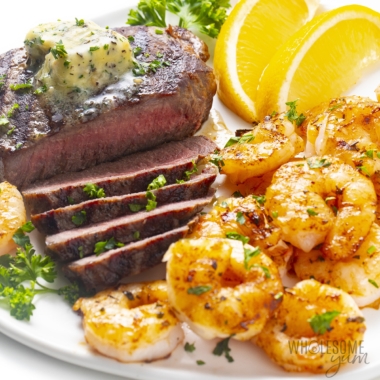
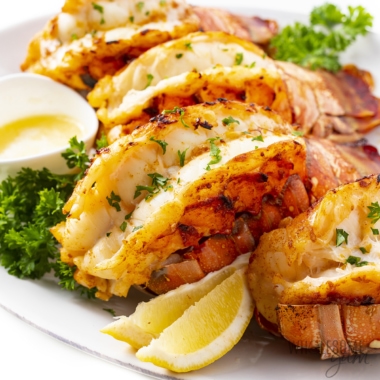
- Surf And Turf – For a special occasion, serve my filet mignon recipe with crab legs, lobster tail, or for a less expensive option, my garlic butter shrimp.
















152 Comments
Brenda
0The recipe sounds wonderful. Will the times be the same with a 3 lb tenderloin?
Maya | Wholesome Yum
0Hi Brenda, I recommend following my beef tenderloin recipe if you have a whole one.
Brenda Smith
0Thank you! Can’t wait to try it!
Elizabeth Burke
0Sounds delish but you don’t mention oven temp in your blog.
Maya | Wholesome Yum
0Hi Elizabeth, The oven temperature is on the recipe card above.
Doreen
0Scrummy! If there is such a word! Thanks Maya! Another winner!!
Maya | Wholesome Yum
0Yay! I am so happy you liked it, Doreen! Have a nice day!
Toni
0Loved this recipe. It was so helpful having the temperatures listed out. My steaks were perfectly cooked! Thank you!
Maya | Wholesome Yum
0I am so happy to hear that, Toni!
Nicole
0The compound butter is so simple but it adds so much flavor. There are a couple brands that have a premade compound butter if you don’t have time to make your own too!
Maya | Wholesome Yum
0Thank you, Nicole!
Jessie A.
0Can I make the butter log the night before and refrigerate? Thanks!
Maya | Wholesome Yum
0Hi Jessie, Yes, absolutely!
Matthew Sarratt
0Just tried this method – absolutely BEST steak I’ve ever had! (Not bragging). Very quick to make.
Maya | Wholesome Yum
0Thank you, Matthew! I’m so glad you liked it!
Katie Dunn
0I have never heard of trimming the edges on a filet mignon before, but I like the idea! However, I now see that I’ve been cooking this piece of meat wrong all along, and so I’m going to start doing that. If the trimmings are fatty, however, I may still cut them off but keep them in the pan so that the meat can soak up the flavor from the fat.
Maya | Wholesome Yum
0Thank you, Katie! The edges around a filet mignon are typically connective tissue, not fat, so they don’t provide extra flavor by cooking with them. It does apply to other cuts of meat, just not usually a beef tenderloin. You don’t have to cut it off, but you’ll notice that restaurants do cut off the connective tissue.