
 Shop
Shop My
My Custom




FREE 5-Ingredient Recipe EBook
GET IT NOWMy Maryland Crab Cake Recipe Has More Crab, Less Filler, And Multiple Binder Options

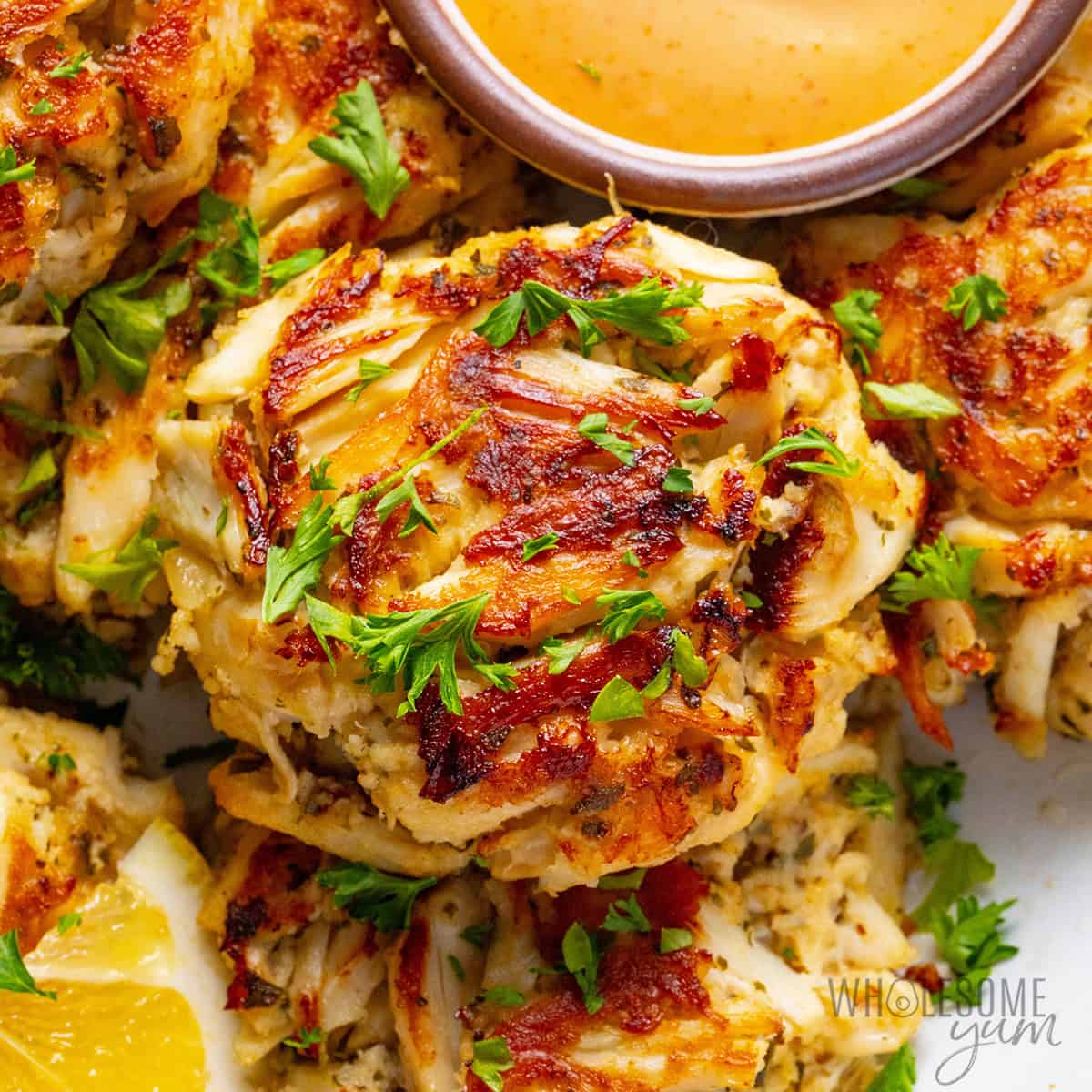
Crab cakes have always been one of my favorite types of seafood at restaurants, especially when I visit the East Coast. But they can also be expensive and even disappointing when they’re too mushy. I’m a big fan of chunky Maryland-style crab cakes, with all those juicy lumps of crab, and would rather have less of the other stuff. That’s one of the reasons I created this crab cake recipe. It checks not only that important box, but a bunch of others too:
- Restaurant-worthy, with big lumps of crab and not a lot of filler – I firmly believe that the best crab cakes let the actual seafood shine instead of mashing and drowning it in filler, and that’s exactly what you’ll find in my recipe. Generous lumps of crab throughout. Just like fancy seafood restaurants.
- Golden outside, tender and flavorful inside – I love the lightly crisp, golden edges that come from frying, but the incredibly soft, delicate inside is my favorite part. Mayo locks in moisture, while Old Bay, Worcestershire, and mustard add savory, tangy flavor that brings out the sweetness of the crab.
- Your choice of binder – I’ve made these crab cakes with all kinds of binders. First with almond flour, then gluten-free breadcrumbs (my go-to these days), then regular breadcrumbs just to test those out for you. With my most recent round of testing, I increased the amount of binder to help them stay together better, but they still have more crab and less filler than most crab cake recipes.
- Quick and easy – For something so fancy, these are surprisingly simple to make. Just mix together, form patties, chill in the fridge, and fry for a few minutes per side. The hands-on time is less than half an hour.
If you love Maryland crab cakes but have been intimidated by making them at home, don’t be. I’m here to show you they’re so simple. Make these with me for a restaurant feel right at home!

“This is the best crab cake recipe EVER!! They are delicious. I’ve made them twice now and as a seafood fan I could and would never get tired of eating these.”
-Zee
Ingredients & Substitutions
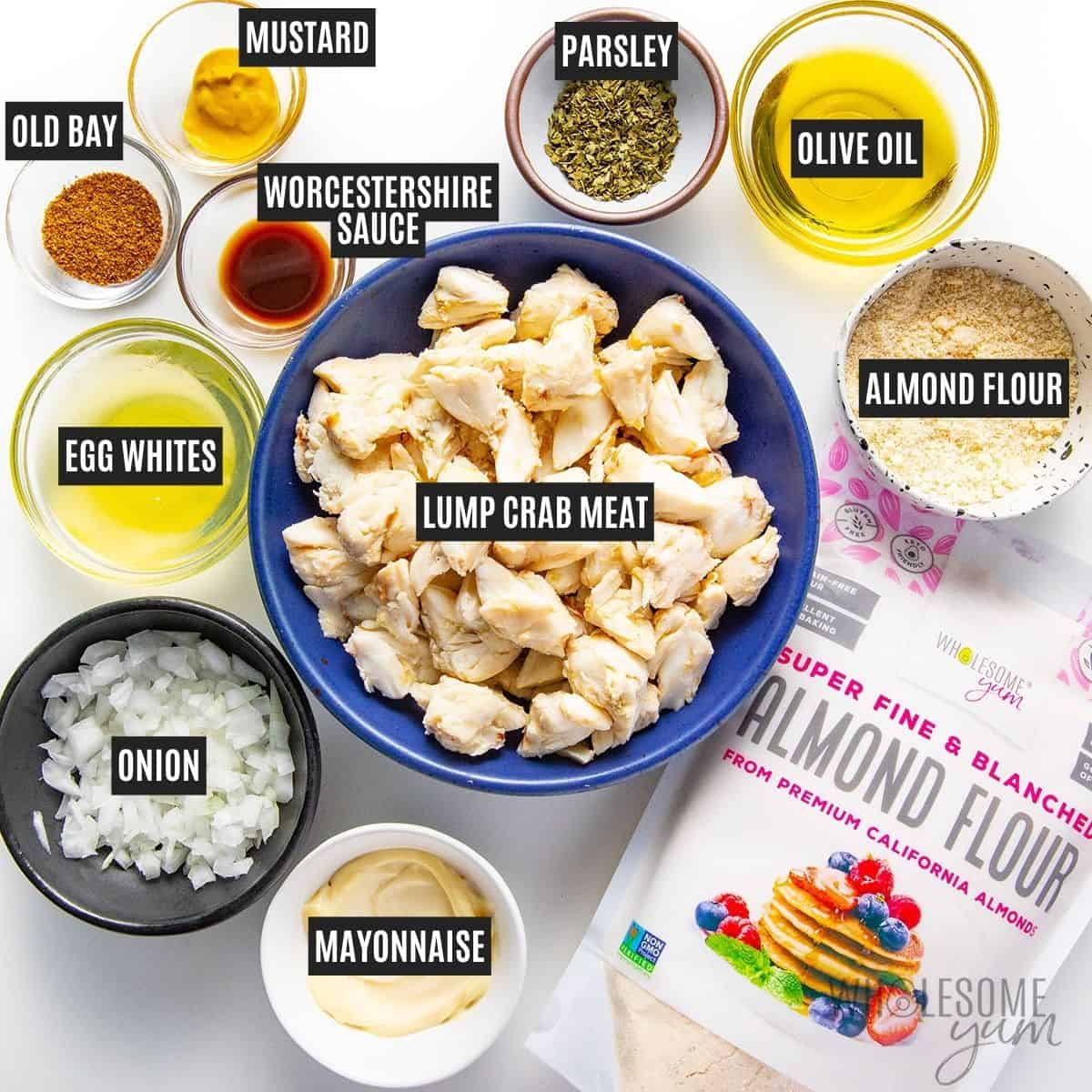
Here I explain the best ingredients for my Maryland crab cake recipe, what each one does, and substitution options. For measurements, see the recipe card.
- Lump Crab Meat – The quality and type of crab meat you use will have the biggest impact on the end result. Whichever kind you use, gently check it for stray shell pieces without breaking up the lumps. Here are the different types and my recommendations:
- I recommend jumbo lump crab meat if you can get it, because the larger pieces give you those visible chunks in each crab cake, but I really love regular lump crab meat here, too.
- Cooked meat from leftover crab legs is also fabulous for homemade crab cakes!
- Backfin and claw meat have good crab flavor and are less expensive, but they won’t give you those big chunks. I save them for hot crab dip.
- I don’t recommend imitation crab, which has a totally different texture, tastes different, and won’t hold together as well.
- Binder Of Your Choice – I originally made this crab cake recipe with Wholesome Yum Blanched Almond Flour, which is ground super fine and helps keep the cakes moist. I’ve since tested regular breadcrumbs (more bready but more sturdy), gluten-free breadcrumbs (similar result), and panko breadcrumbs (light and airy). Crushed plain saltines can work if they fit your lifestyle, too, and are the classic choice for Maryland crab cakes. Pick the one that fits your needs!
- Egg Whites – I like these instead of whole eggs for better binding (they set more firmly than yolks, helping the crab cakes hold together) and more neutral flavor. The mayo already provides enough fat and moisture to keep them tender. You can use 2 fresh egg whites or 1/4 cup from a carton. If you prefer a whole large egg, you might be able to get away with just 1, as 2 might taste too eggy. I don’t recommend egg alternatives here, because the crab cakes are already delicate and you really need the binding power of real eggs.
- Mayonnaise – Adds richness, flavor, and moisture. You can use store-bought mayonnaise or make my homemade mayo.
- Onion – White or yellow onions both work. I saute the onions just until browned, but caramelized onions are also delicious here for a richer flavor.
- Worcestershire Sauce & Mustard – For savory, tangy flavor. I use this Worcestershire sauce, which is naturally gluten-free, and yellow mustard, but you can choose Dijon mustard if you prefer.
- Old Bay Seasoning – I love this classic seasoning for my seafood recipes! And because crab cake seasoning tends to be a complex combo of many spices, using this seasoning (which is a blend of 18 herbs and spices!) saves me so much time. When I re-tested this crab cake recipe this year, I cut the old amount in half because it felt like too much salt. It already has some heat, but if you like more spice, feel free to add some extra black pepper or even cayenne.
- Dried Parsley – You can use fresh parsley instead, but double it because it’s less concentrated.
- Olive Oil – For sauteing the onion at first, and later for pan frying the crab cakes. Avocado oil works, too!
How To Make Crab Cakes
I have step-by-step photos here to help you visualize the recipe. For full instructions with amounts and temperatures, see the recipe card.
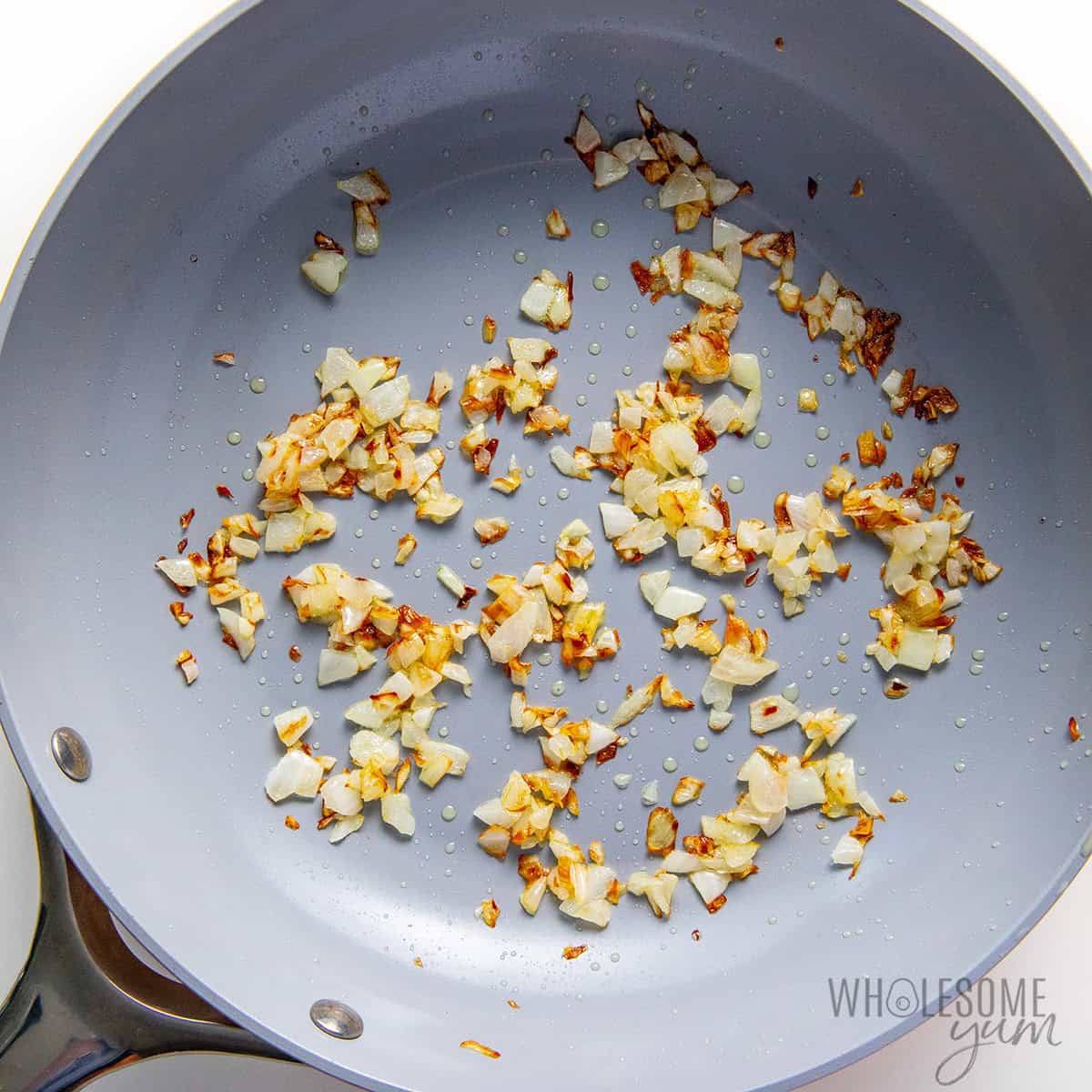
- Saute the onion. Heat olive oil in a skillet over medium heat. Add the finely chopped onion and cook until lightly browned.
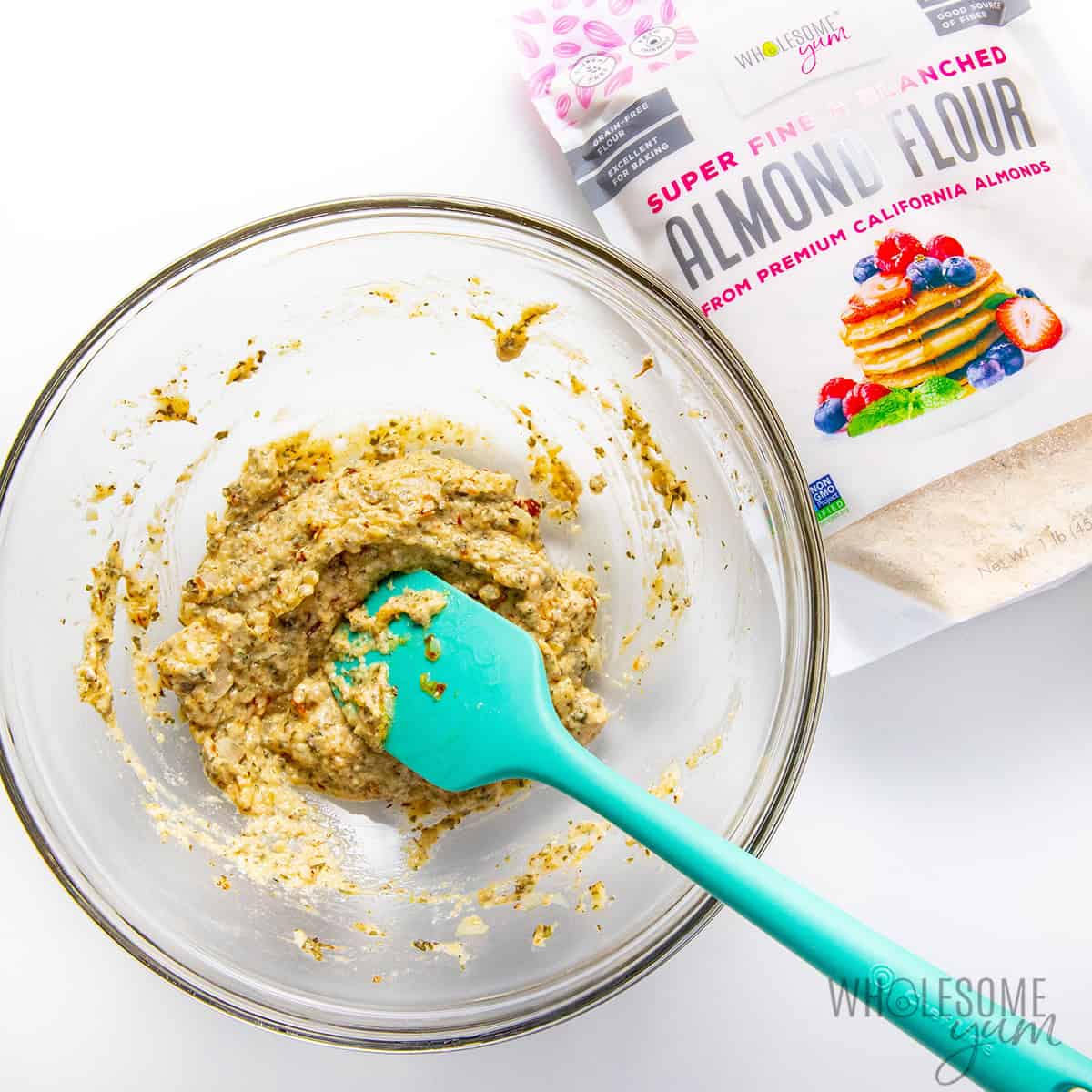
- Mix the crab cake base. In a large bowl, stir together your favorite binder (almond flour or breadcrumbs), egg whites, mayonnaise, Worcestershire sauce, mustard, dried parsley, Old Bay, and the sauteed onion. The mixture will be fairly thick.
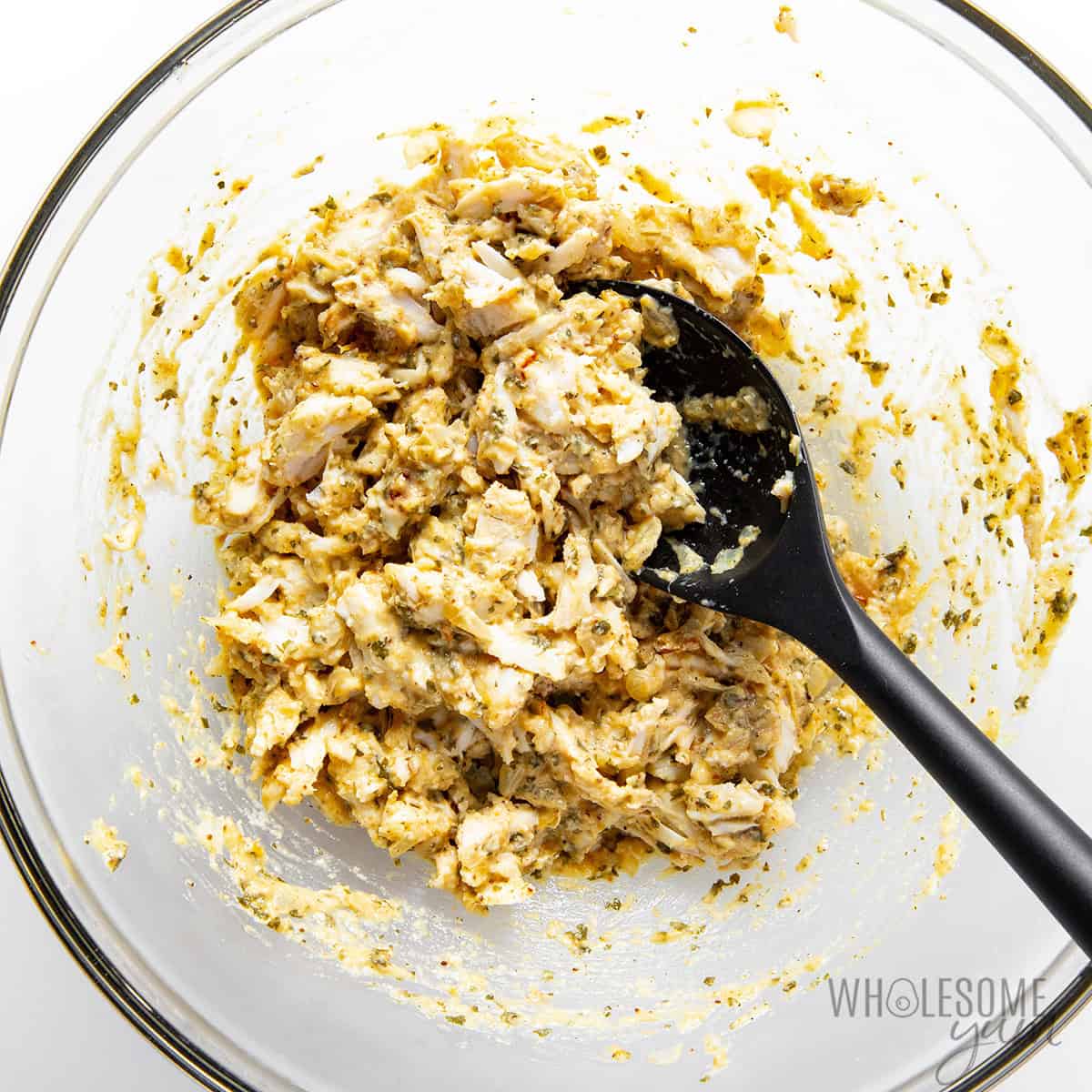
- Fold in the crab gently. Use a folding motion instead of aggressive stirring, so the big pieces stay mostly intact, but break up just a little bit. (See my tips below!)
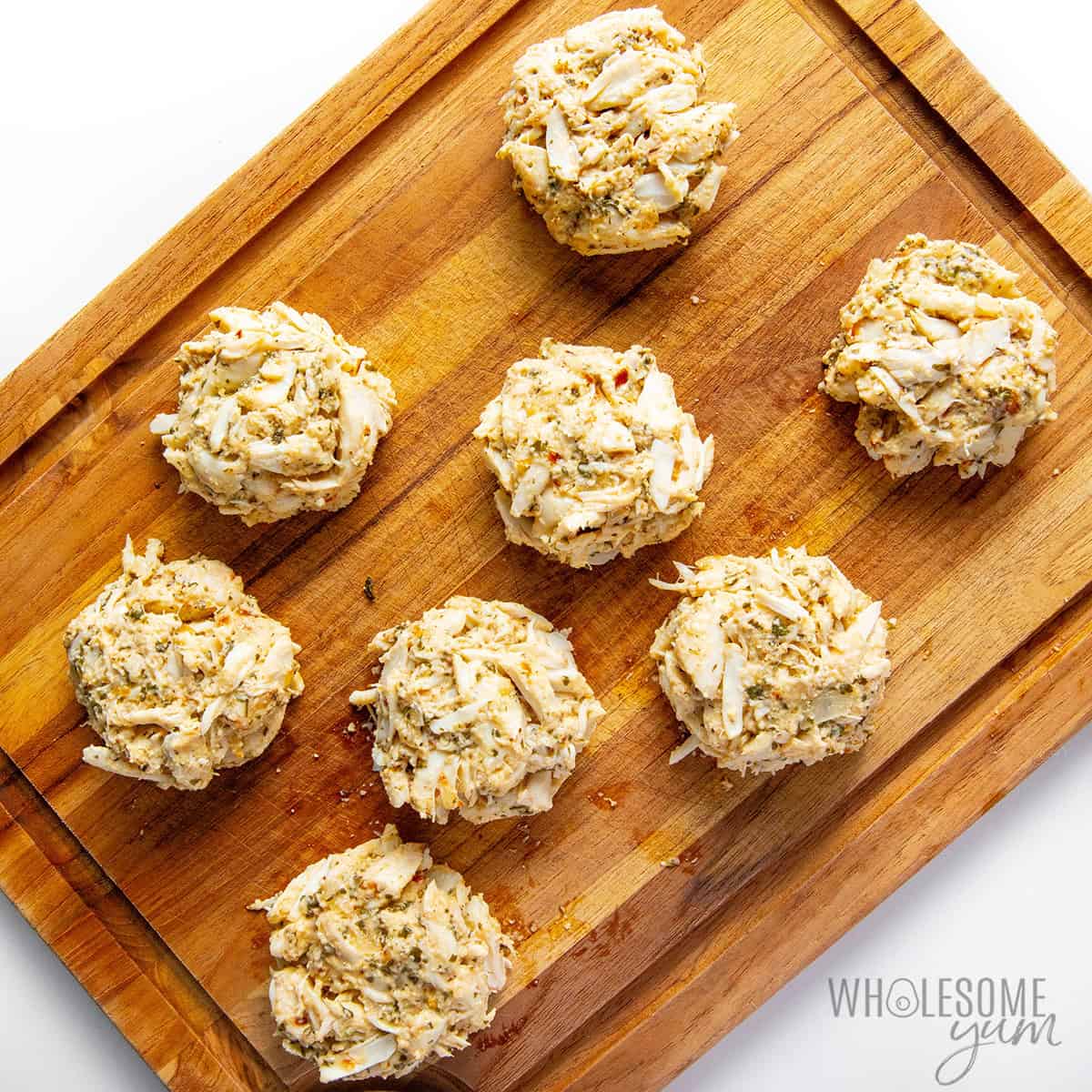
- Form and chill. Shape the crab mixture tightly into 8 patties and place them in a single layer on a lined baking sheet or cutting board. Cover with plastic wrap and refrigerate for about an hour, or overnight if you can. I didn’t use to do this, but now highly recommend this step because it helps the crab cakes stay together when you flip them.
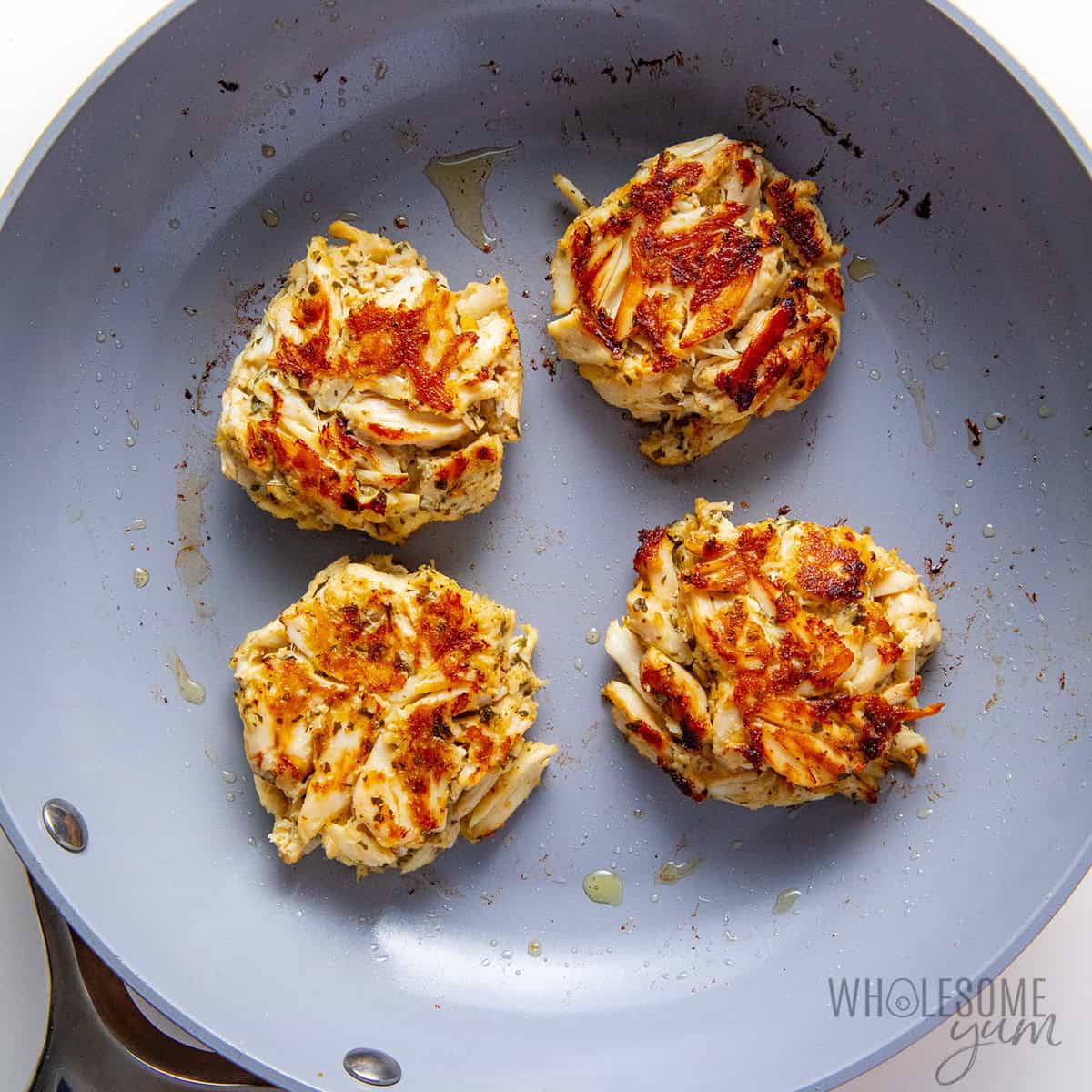
- Pan fry until golden. Cook the crab cakes in olive oil for a few minutes per side, until golden brown. They won’t all fit in the pan at the same time, which is fine! I do two batches of four and add a little more olive oil for each batch.

My Tips For Texture & Flipping
- If your crab meat feels very wet, pat dry with paper towels. Extra liquid can water down your crab cake base, making it too delicate.
- For the best texture, fold gently and leave some chunks of crab. That’s why I mix all the base ingredients first and then add the crab last, so it doesn’t break down too much. A folding motion works best rather than aggressive stirring.
- Don’t leave huge chunks of lump crab, either, because they can make the crab cakes fall apart. The sweet spot is to break jumbo lump crab pieces into 2, 3, or 4 pieces each as you stir, but not turn them to mush. You don’t want the mixture completely smooth. When I use regular lump crab meat instead of jumbo, I don’t have to break them up as much.
- I highly recommend refrigerating before cooking. I used to fry these right away but they fell apart fairly often, and some readers reported the same thing. At least an hour in the fridge helps them stay intact, but I often do overnight.
- Form the patties tightly to help them stay together. I press them tightly with my hands as I go, and again right before frying if they seem loose.
- Dice the onion very small. Large pieces can make the crab cakes fall apart.
- Use the right pan to reduce sticking. I recommend a ceramic-coated nonstick skillet (I used this ceramic one in my picture above — the surface has held up well!), or stainless steel with enough oil to keep the surface well coated. I find these crab cakes tend to stick in cast iron.
- Preheat the oil well before adding the crab cakes. This helps reduce sticking as well.
- A thin spatula makes it easier to flip. I like this mini cookie spatula, even though that’s not its intended purpose, because it’s so thin and slips under a delicate crab cake easily.
- Be patient and don’t flip too soon. You want the outside to form a nice golden crust before flipping. If the crab cakes start to break apart when you try to flip and seem light, push them down with a spatula and continue cooking before you try again.
- Watch the heat. You may need to turn it up or down to get the right browning. These are best when they have a golden crust but aren’t so dark that they taste burnt.
- While you cook the second batch, keep the first batch warm in a low-temp oven. I usually set it to 200 degrees F. Don’t do this for longer than 20 minutes, or the centers start to dry out.

Crab Cake Recipe (More Crab, Less Filler!)
My Maryland crab cake recipe has more crab and less filler for tender, chunky centers and a golden crust. Multiple binders & cooking options!


Instructions
Tap on the times in the instructions to start a kitchen timer.
-
Heat a tablespoon of olive oil in a large nonstick skillet over medium heat. Saute the chopped onion for 4-6 minutes, until translucent and lightly browned.
-
Meanwhile, in a large bowl, mix the almond flour, egg whites, mayonnaise, Worcestershire sauce, mustard, dried parsley, and Old Bay seasoning. When everything is well combined, add the sauteed onions, along with any oil left in the pan.
-
Fold in crab meat very gently. Try to avoid breaking up the lumps of crab meat.
-
Form 8 patties and place on a lined baking sheet or cutting board. If possible, refrigerate for at least 30-60 minutes, or overnight (This will help the crab cakes stay together when frying.)
-
Fry crab cakes on a skillet over medium heat, in two batches of four. Use about two teaspoons of oil for each batch, and cook for about 3-4 minutes per side, until browned on both sides.
LAST STEP: Leave a rating to help other readers, or tag me @wholesomeyum on Instagram. I’d love to hear from you!
Maya’s Recipe Notes
Serving size: 1 crab cake
- Tips: Check out my recipe tips above to help you get the best crab cakes with the right texture and prevent them from falling apart.
- Store: Keep cooked leftovers in the refrigerator for up to 3-4 days.
- Meal prep: Shape the crab cakes up to 1 day ahead, cover them, and refrigerate in a single layer. I do this often when I make these!
- Reheat: Warm them in a hot skillet over medium-low heat, so they don’t get too dark. The microwave or air fryer works too.
- Freeze: I usually double the batch to freeze! Freeze uncooked patties on a parchment-lined tray, then wrap and stash in a freezer bag for up to 3 months. Thaw overnight in the fridge and cook as usual.
I provide nutrition facts as a courtesy. Have questions about calculations or why you got a different result? Please see my nutrition policy.
Add Your Notes Your Notes
Try More Of My Recipes


© Copyright Maya Krampf for Wholesome Yum. Please DO NOT SCREENSHOT OR COPY/PASTE recipes to social media or websites. We’d LOVE for you to share a link with photo instead.
Crab Cake Recipe
Can You Bake Or Air Fry Crab Cakes?
Yes! I prefer to pan fry for a truly browned crust, but baking and air frying are convenient, more hands-off options. Since my crab cake recipe uses very little filler, refrigerate the formed patties first and handle them gently.
- Bake – Arrange the crab cakes on a parchment-lined baking sheet and brush or spray the tops lightly with olive oil. Bake in the oven at 425 degrees F for 12-15 minutes, until set and lightly golden. For a deeper golden color, pop them under the broiler for 1-2 minutes at the end.
- Air fry – Preheat the air fryer to 375 degrees F and lightly grease the basket. Arrange the formed cakes in a single layer without touching, then lightly spray or brush the tops with oil. Air fry crab cakes for 8-10 minutes, until golden and set in the center. You can try flipping them, but I usually don’t when I air fry.
For an even richer flavor, you can replace the olive oil spray with a small pat of butter on each crab cake (I do 1 teaspoon on each). A reader suggested this and I really enjoyed it!
Serving Ideas
One crab cake is ideal for an appetizer, or I serve 2 for a meal. Either way, I like a squeeze of fresh lemon at the end, then add one of these simple pairings:
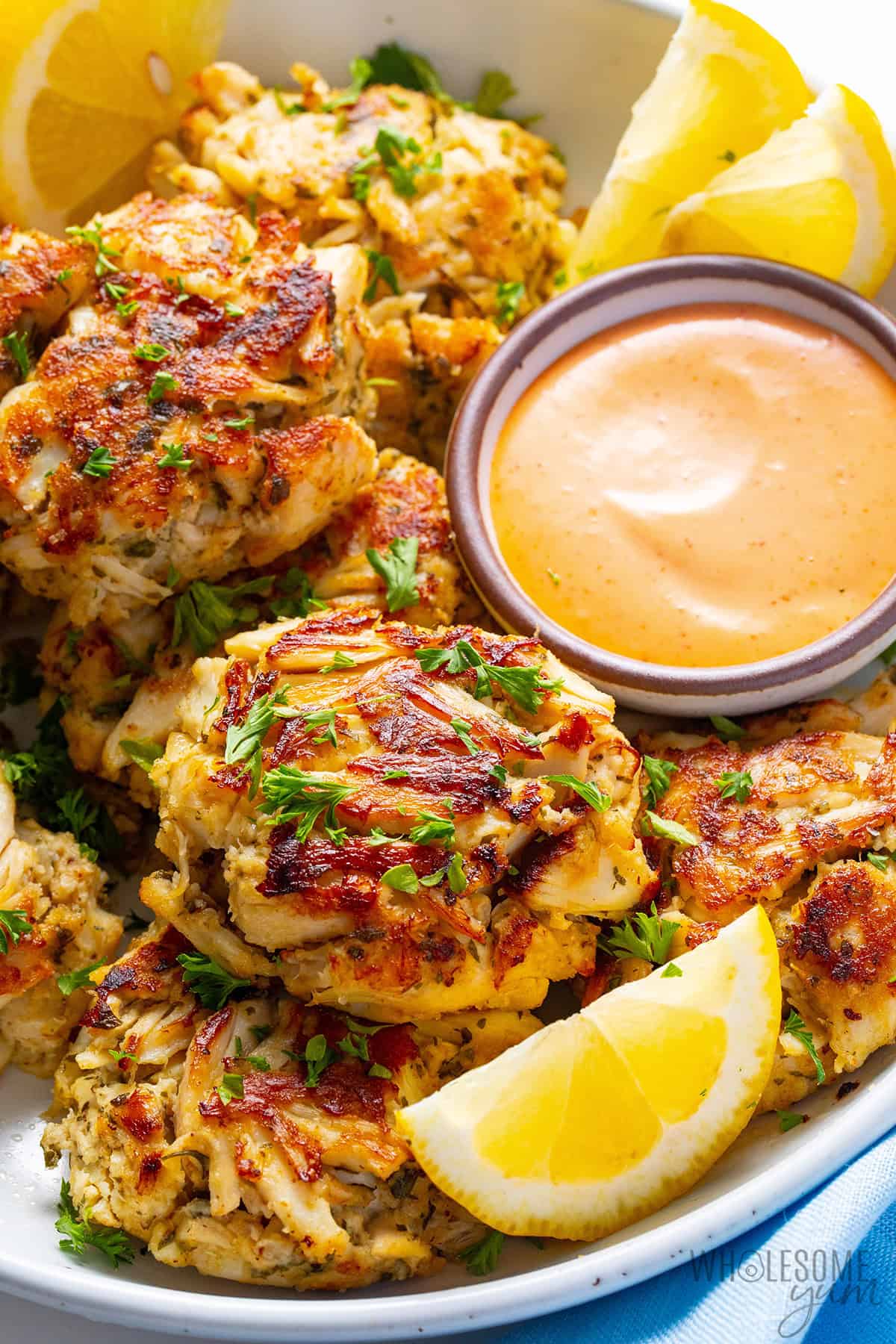
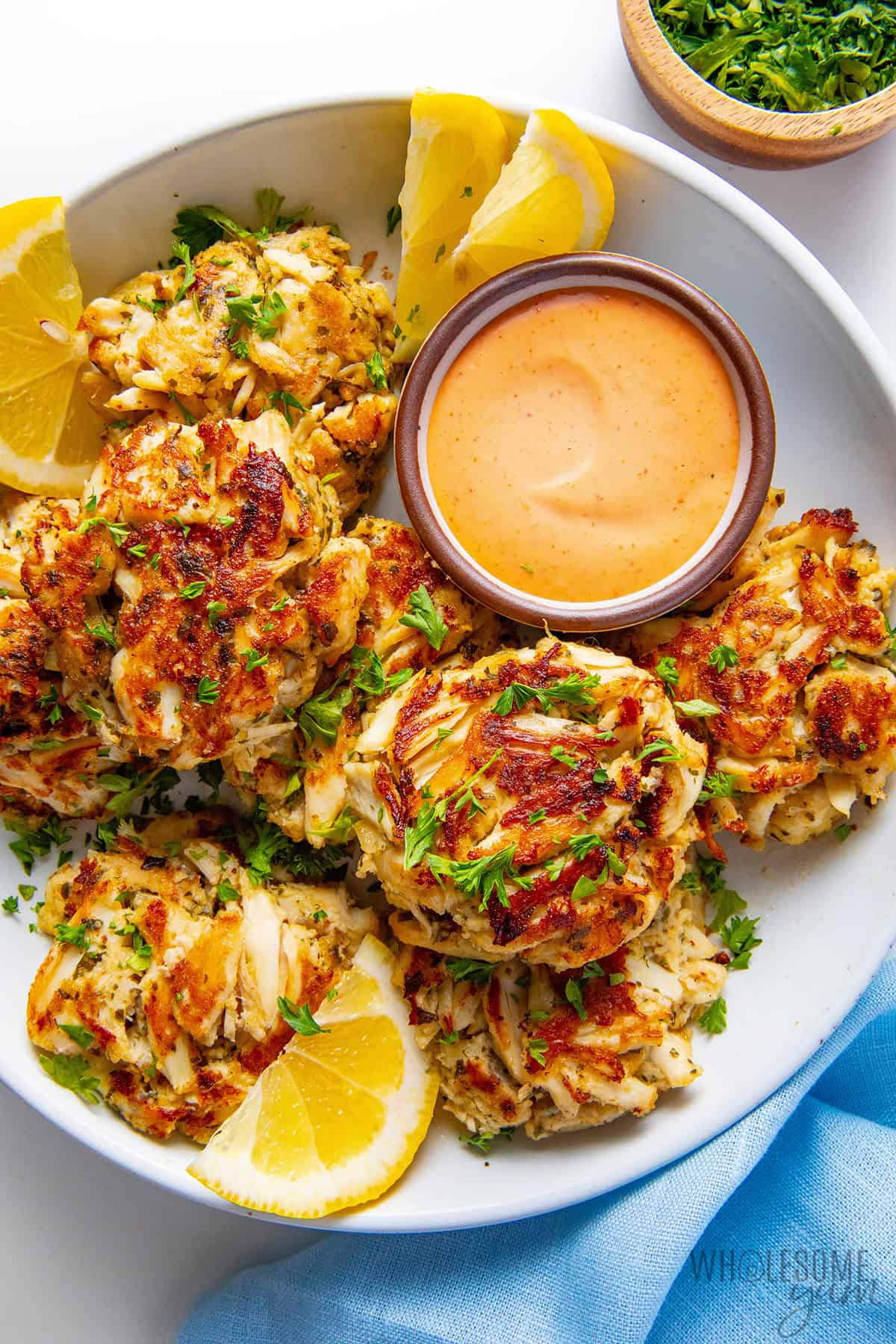
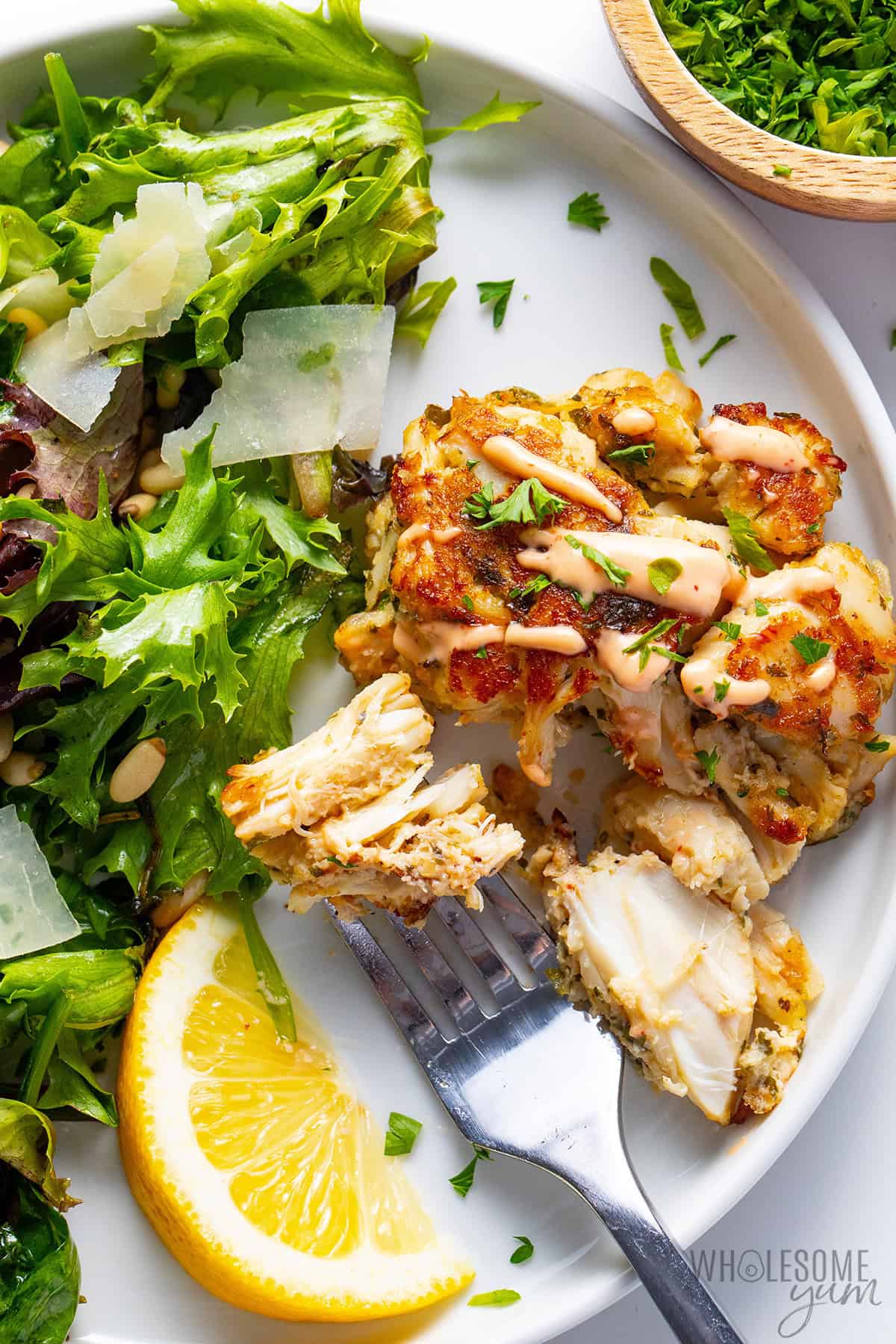
- Sauces – My fave is spicy mayo, pictured above! Aioli, tartar sauce, or remoulade also work well.
- Vegetables – Pair these with air fryer asparagus or roasted eggplant for a simple dinner.
- Brunch – Maryland crab cakes are perfect for making brunch feel a little fancy! Serve them with my asparagus casserole (with hollandaise drizzled over both!) or simply breakfast casserole.
- Salad – I served arugula salad in the picture above, but my spring mix salad or even fall salad also pairs nicely, depending on the season.













104 Comments
Kristine
0Hi, We don’t have Old Bay seasoning here in Australia so would you be able to suggest another seasoning please?
Wholesome Yum
0Hi Kristine, a cajun spice blend would be the next best substitute.
Bonnie
0Can you use canned lump crab meat in this recipe?
Maya | Wholesome Yum
0Hi Bonnie, Yes, absolutely!
Heather
0Oh my God! These are amazing. I’ve always loved crab cakes but never made my own and haven’t been able to get them in a restaurant in years due to a gluten sensitivity. Bravo! Thank you for sharing.
Gale Hunter
0Can you broil the crab cakes?
Maya | Wholesome Yum
0Hi Gale, Yes, you can, but you’d need to bake them first and then broil at the end.
Heather
0I didn’t have any parsley so I used basil instead. These were delicious! My boyfriend said “fabulous!” Will definitely be making them again!
Maya | Wholesome Yum
0Thank you so much, Heather! I’m glad you both liked them.
Dixie Burch
0So sorry, but these were the worst. I don’t blame the recipe, I blame the crab from Trader Joe’s… first product I’ve ever gotten there that was simply terrible. I will locate a new source for crab and try again. The ones you order in even very good restaurants are just too full of carbs.
Maya | Wholesome Yum
0Hi Dixie, Sorry they didn’t turn out for you. You’re right that a quality crab meat will make a big difference. Make sure you get lump crab meat – the other kinds won’t work very well.
Lisa
0Would it work to use salmon or tuna in place of the crab?
Thanks!
Maya | Wholesome Yum
0Hi Lisa, I haven’t tried it but you probably can!
Lisa
0Love wholesomeyum puts nutrition data after every recipe!
Maya | Wholesome Yum
0I’m so glad you find it helpful, Lisa!
Jennifer
0I also use virgin unrefined organic coconut oil to fry up the onions as to fry up the cakes! Delicious!
Jennifer
0Used this recipe three times now and love it!! I also add a bit of onion powder garlic powder and pepper to my mix and use 1 egg vs the egg whites and find them to hold together nicely. The trick is a nonstick pan and being patient, you don’t want to flip too soon and if your cakes do start to break apart push them down with a spatula and continue to cook before flipping. Cook them until nearly black before flipping. This does not burn the cake but gives it a nice firm crust! Just finished mixing up a batch for dinner tonight! Wanted to thank you for this recipe! 🙂
Maya | Wholesome Yum
0Thank you, Jennifer! I’m glad you liked my crab cakes recipe!
Maha
0I made these last night and doubled the recipe because I wanted left overs for lunches. What an adventure! I used 1/3 cup of mixture for each, but that turned out to be too big for each one. They didn’t hold together as well, so the next time I’ll try making them smaller and flatter. Next, I fried them in a cast iron skillet which turned out to be a bust, sort of. They ended up sticking to the cast iron, probably because of the egg white, so I ended up with “scrambled” crab cakes. This turned out to be a blessing in disguise. Stay tuned. I decided to cook the rest in a stainless steel skillet. The first four in the stainless steel skillet turned out pretty well and actually held their shape. The second batch of three didn’t do as well, probably because there was some stickage from the first batch. I also used coconut oil in the stainless steel pan, so maybe that had something to do with it. The next time I’ll use a non-stick skillet too.
Onto what I thought would be a flop but turned out really well. With the scrambled crab cakes (it was not egg-y, don’t worry), I topped two salads with some of the mixture for two lunches, made quesadillas with jack cheese and a little Olive Garden salad dressing, and a crab cake scramble melt with bacon, avocado and jack cheese (my dinner).
This whole recipe is so good and my mistake turned out quite well. Both of my kids loved the crab cakes, and the picky one even ate some scramble cold. Overall this is an excellent recipe that everyone in my family loved. I am rating this 5 stars in my recipe collection to make again and again. Simply awesome! Thank you!
Maya | Wholesome Yum
0Thank you, Maha! I’m glad you liked the crab cakes and found a way to use the ones that stuck. These do stick easily, so a non-stick pan is best, otherwise you need a lot of oil to prevent sticking. I usually use a ceramic non-stick pan with just a little avocado or olive oil.
Ansley Designs
0These were really good! I used seasoned salt because I didn’t have any Old Bay and cooked them in bacon fat! Because bacon! Thank you!
Dixie Burch
0Made today, haven’t eaten yet. Added 2 T melted butter to batter [like I do for deviled eggs] & deep chilled for 30 minutes & then refrigerated. After spraying with Pam, fried in Pam sprayed iron skillet in butter & olive oil very slowly & they formed up & browned up perfectly. Having with bacon fat sauteed Trader Joe’s Cruciferous Slaw
With half bulb of chopped fennel like hot slaw. Don’t be aghast, am on high protein low carb diet!
Maya | Wholesome Yum
0Thank you for sharing, Dixie! Sounds delicious.
Just Zee
0So delicious. I’ve made them twice already. Do happy I found this recipe.
Maya | Wholesome Yum
0Thank you, Ansley! Everything is better with bacon. 😉